Every year in mid-April, at the hottest point in the Thai calendar, the country stops what it's doing and throws water at itself for three days. This is Songkran: the traditional Thai New Year, a UNESCO-recognised festival of cultural heritage, and – by any objective measure – one of the most exhilarating things you can walk into in Southeast Asia. Bangkok in particular takes the occasion seriously, spreading events across the city from roughly 9 to 15 April, with the core national holiday falling on 13–15 April 2026.
If you happen to be in Thailand at this time and are not prepared for it, the experience will be disorienting. If you are prepared, it will be excellent.
The water fights are real and they are the point, but they are not the whole point, and understanding what lies underneath them makes the festival considerably more interesting.
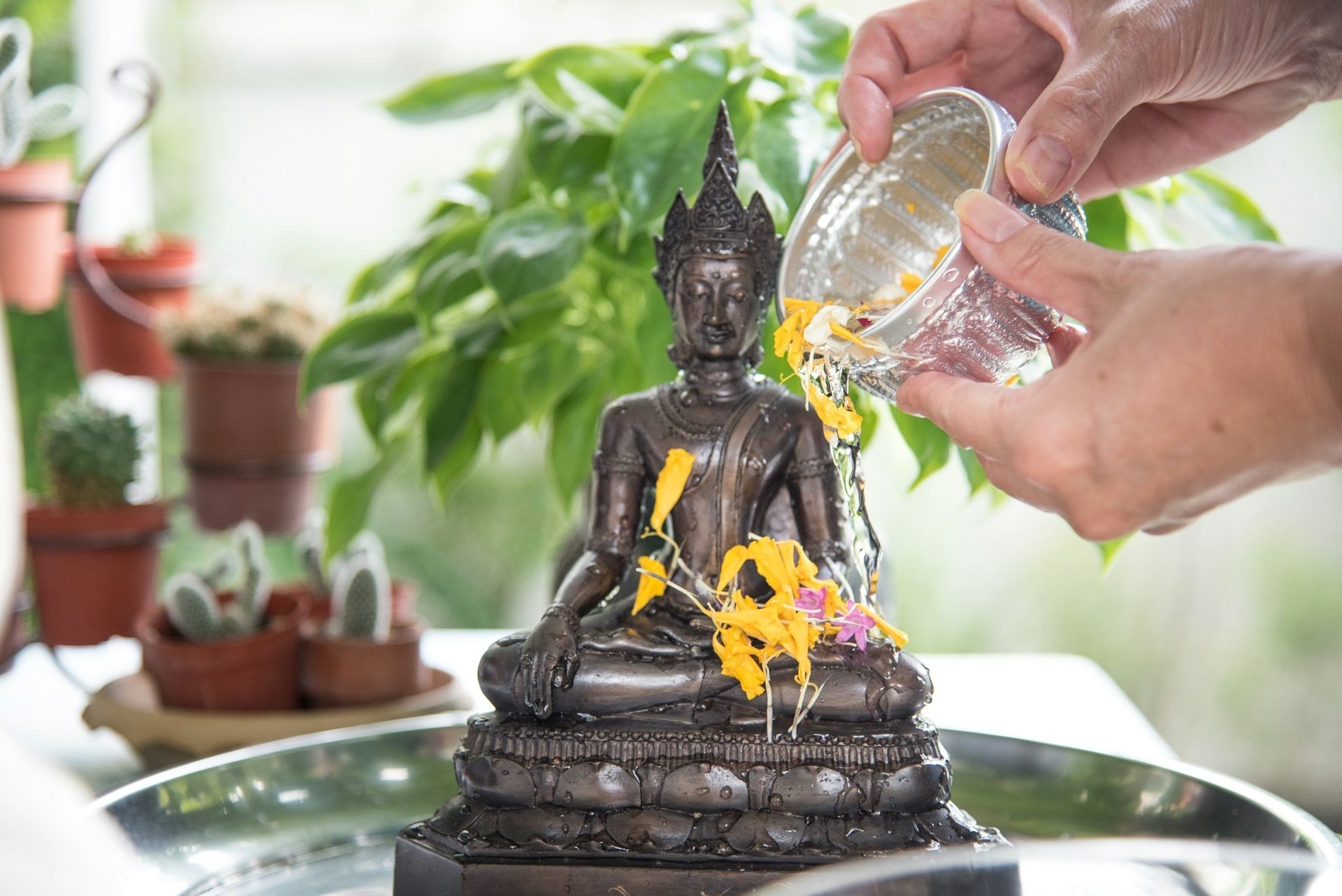
Songkran – from the Sanskrit sankranti, marking the sun's passage into Aries – is the traditional Thai New Year, observed since at least the Ayutthaya period and inscribed on UNESCO's Representative List of the Intangible Cultural Heritage of Humanity in 2023. Its spiritual core is the idea of cleansing: washing away the misfortunes of the old year to make way for the new. Water is the vehicle for this symbolism, and the ritual began not as a street battle but as the gentle pouring of scented water – infused with jasmine or marigold – over Buddha images in temples and over the hands of elders in a ceremony called Rod Nam Dam Hua.
That ceremony still happens. Across Bangkok on the mornings of Songkran, particularly at temples like Wat Pho, Wat Arun, and Wat Bowon, you will find merit-making, alms-giving, and families gathered to pour water over the hands of grandparents while asking for blessings. The sand pagodas built in temple courtyards – to replenish the earth carried away on visitors' feet throughout the year – are still there. The cultural substance of the festival has not been entirely drowned out by the street party, though you have to know to look for it.
By afternoon, the streets will be a different matter entirely.
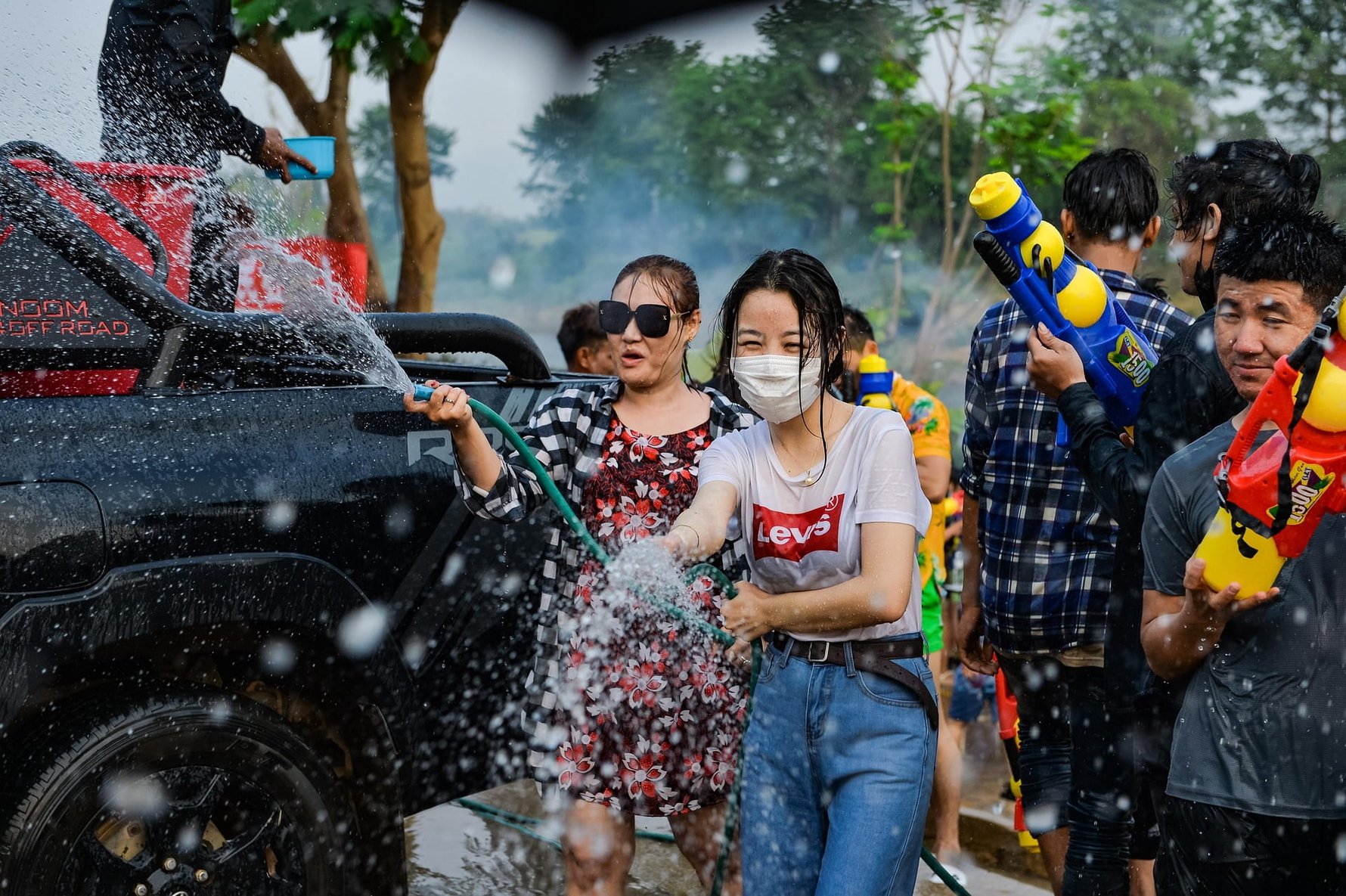
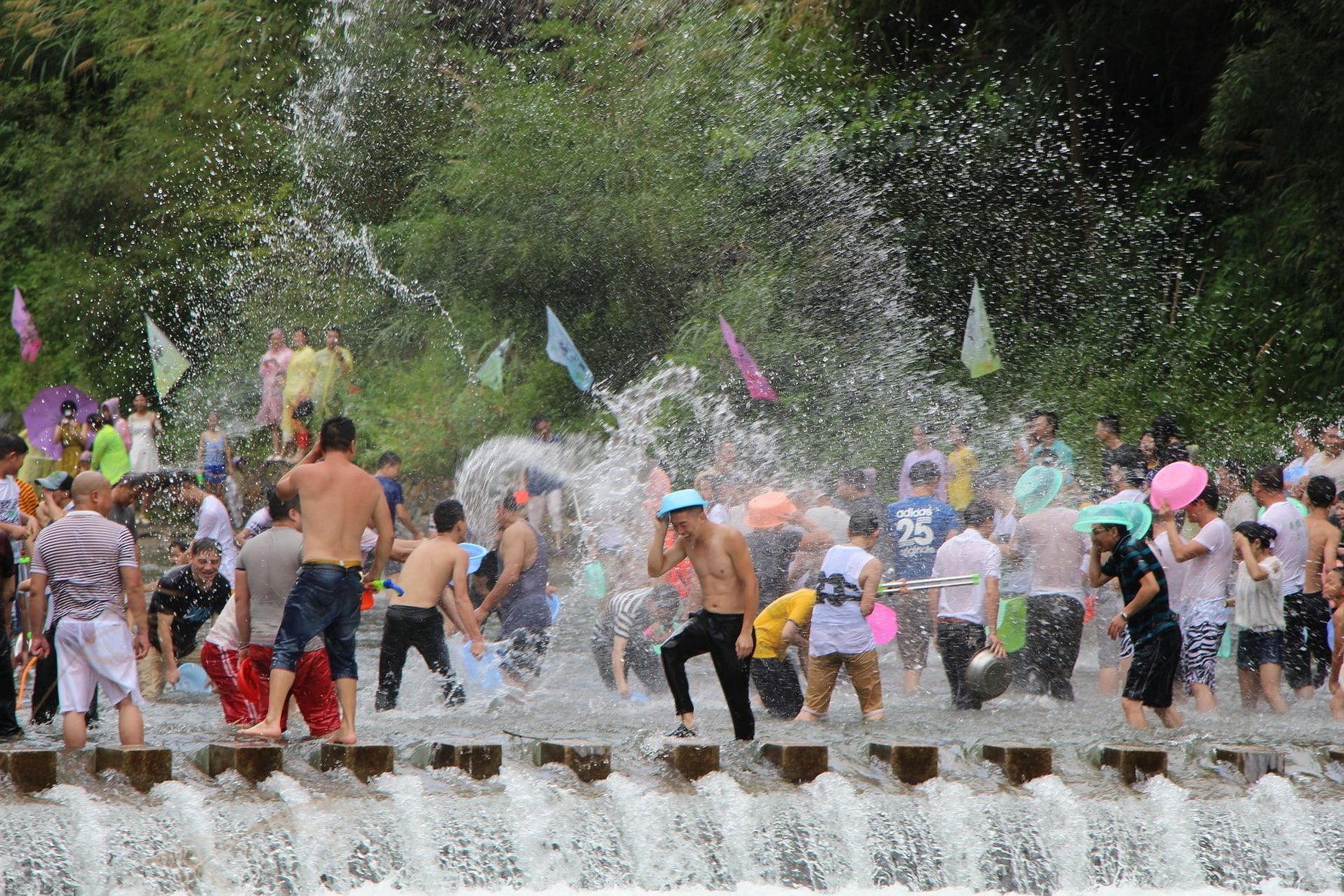
Songkran in Bangkok is total. There is no strategic position from which you can observe the water fight while remaining dry. If you are on a public street in the affected areas during the festival, you will get wet. This is not a figure of speech. The only reliably dry locations during peak hours are hotel lobbies, shopping malls, and your room.
The main battlegrounds in Bangkok are Silom Road and Khao San Road, both of which close to traffic, fill with people armed with water guns and buckets, and operate as sustained, city-scale water fights from midday until late evening. Silom is the more mixed and more boisterous of the two; Khao San is the backpacker centre of gravity and brings its own particular energy. Siam Square hosts family-friendly events with stages and performances. The riverside at ICONSIAM and Asiatique both run their own Songkran programmes. Benjakitti Park hosts the Maha Songkran World Event from 11–15 April.
Pickup trucks circulate through the streets with water tanks in the back and people firing from all angles. Hoses appear from shop fronts. Children ambush from sois. By about 2pm on the 13th, the city smells of wet clothing and is making a noise that has no direct equivalent in peacetime.
This is genuinely great fun, provided you have made two preparations: accepted that you will be soaked within approximately ninety seconds of leaving your hotel, and protected your phone and any other electronics accordingly. Waterproof pouches are inexpensive and sold everywhere in Bangkok in the weeks before the festival. Use one.
Bangkok's Songkran in 2026 runs as an extended citywide programme from around 9 April, with events at King Power Rangnam (9–14 April), Asiatique (9–30 April), ICONSIAM (10–15 April), Siam Square (12–15 April), and the official Amazing Bangkok Songkran Parade along Silom Road on 14 April. The Silom Road festival proper runs 12–14 April.
The music festival scene around Songkran has grown substantially. The S2O Music Festival (electronic music, water cannons, the full production) is Bangkok's most prominent ticketed Songkran event and draws large international crowds. The SIAM Songkran Music Festival at Siam Square is separately organised and aimed at a younger Thai audience, with pop and mainstream acts. These are effectively separate events from the street festival and worth distinguishing: attending S2O is buying a festival ticket; joining the Silom road water fight is simply stepping outside.
The Cultural Side: What to Seek Out
If you want to see Songkran as more than a water fight – and there is a genuinely interesting festival underneath the street party – the morning hours before noon are the time to do it.
Visit a temple early on the 13th or 14th. Wat Pho, Wat Arun, and Wat Bowon all draw local families for the morning ceremonies, and the atmosphere is different in kind from the afternoon streets: quieter, more considered, the festival at its most legible as a family and community occasion. You may see the Rod Nam Dam Hua ritual – younger generations pouring scented water over the hands of elders – in action. You may see the sand pagodas being built and decorated in the courtyards. You will certainly see merit-making and alms-giving. None of this requires any particular access or advance planning – just arrive respectfully dressed and early.
The city government is running cultural events at 50 temples across 50 districts this year, which spreads the traditional character of the festival across a much wider geography than Silom and Khao San Road. If you are staying in a neighbourhood with a local temple, it is worth asking or checking locally what they have planned.
Getting around: Major streets in the festival areas – Silom, Khao San, Siam – close to traffic during peak hours. The BTS and MRT continue to run normally throughout the festival period, which makes them not just useful but essential. Do not plan to use a taxi or Grab to get anywhere near the water fight zones during the afternoon. Get on the train, get off as close as you need to, and walk. You will be wet either way, but at least you'll arrive.
What to wear: Lightweight clothing that dries quickly. Anything you would be unhappy about soaking. A waterproof bag or pouch for your phone, wallet, and any other electronics. Sandals rather than shoes. Floral shirts are traditional and widely worn – this is one of the occasions when wearing one is entirely appropriate rather than tourist affectation. Avoid anything revealing; Songkran is a festival with cultural significance and the "it's hot and I'm getting wet" logic for beachwear does not really apply on Bangkok streets.
What not to bring: Your passport (leave it in the hotel safe), your good camera without a waterproof housing, your laptop, your non-waterproofed phone, or any cash beyond what you need for the day.
Cultural dos and don'ts: Do not direct water at monks, at elderly people, or at babies – this applies regardless of how caught up in the atmosphere you are. Do not splash motorcyclists or cyclists, which is dangerous regardless of the festive context. The festival is participatory and inclusive, but it has always carried an ethic of playful mutual consent rather than ambush of unwilling participants.
Book ahead: Songkran is one of the busiest travel periods in Thailand. Accommodation in Bangkok fills well in advance, particularly in the areas closest to the main festival zones. If you're planning to be here for Songkran, accommodation arrangements should not be left to the week before.
Heat: April is the hottest month of the year in Bangkok. Peak daytime temperatures sit at 35°C or above, occasionally considerably more. The water fights are, among other things, a rational response to the weather – getting soaked is genuinely cooling. Stay hydrated, take breaks in air-conditioned spaces when you need to, and do not underestimate how quickly you can overheat in a crowd under direct sun, even if you are wet.
Bangkok vs Chiang Mai for Songkran
This question comes up constantly and the honest answer is that they offer genuinely different things. Chiang Mai's Songkran runs for up to ten days, is centred on the ancient moat and old city walls in a way that gives the water fights a more atmospheric physical setting, and retains more of the traditional ceremonial character in its surrounding temples and communities. It is widely considered the more "authentic" Songkran experience, and there is truth in that characterisation.
Bangkok's Songkran is bigger, louder, more organised as a commercial event, and more international in its crowd. The organised music festivals and the sheer scale of Silom Road are things Chiang Mai doesn't quite replicate. If you are already based in Bangkok, it is entirely worth staying for the festival. If you are choosing between the two specifically for Songkran, Chiang Mai probably edges it on cultural depth; Bangkok on scale and infrastructure.
Both are, by any reasonable standard, excellent.
After the Festival
Bangkok returns to normal relatively quickly after 15 April – the streets are hosed down, the pickup trucks disappear, and within a day or two the city is back to its usual operational chaos. Hotels may offer lower rates in the days immediately following the festival as demand drops. The heat does not dissipate with the water fights, but the city's energy shifts noticeably, and late April in Bangkok has a particular post-festival looseness that is its own kind of pleasant.