Bangkok is the world's most visited city. That is not a boast we attach lightly – Euromonitor's global destinations index handed it the title again in 2025, with 30 million international arrivals. On the ground, this means very little. The city is so large, so layered, and so indifferent to the opinion of tourists that the crowds tend to dissolve into its fabric rather than define it. Come expecting a manageable theme-park experience and Bangkok will make you feel foolish. Come curious, even slightly humble, and it will reward you out of all proportion to the effort involved.
This is a city that operates simultaneously across about five different centuries. Monks collect alms at dawn on streets that run beneath elevated rail lines. Thousand-baht cocktails are served on rooftops above markets where a bowl of noodles costs forty. One of the world's great culinary capitals is largely conducted from carts and shophouse kitchens that have been doing the same thing for decades. Bangkok does not try to reconcile these contrasts. It just lets them coexist, and the result is more interesting than anything you were expecting.
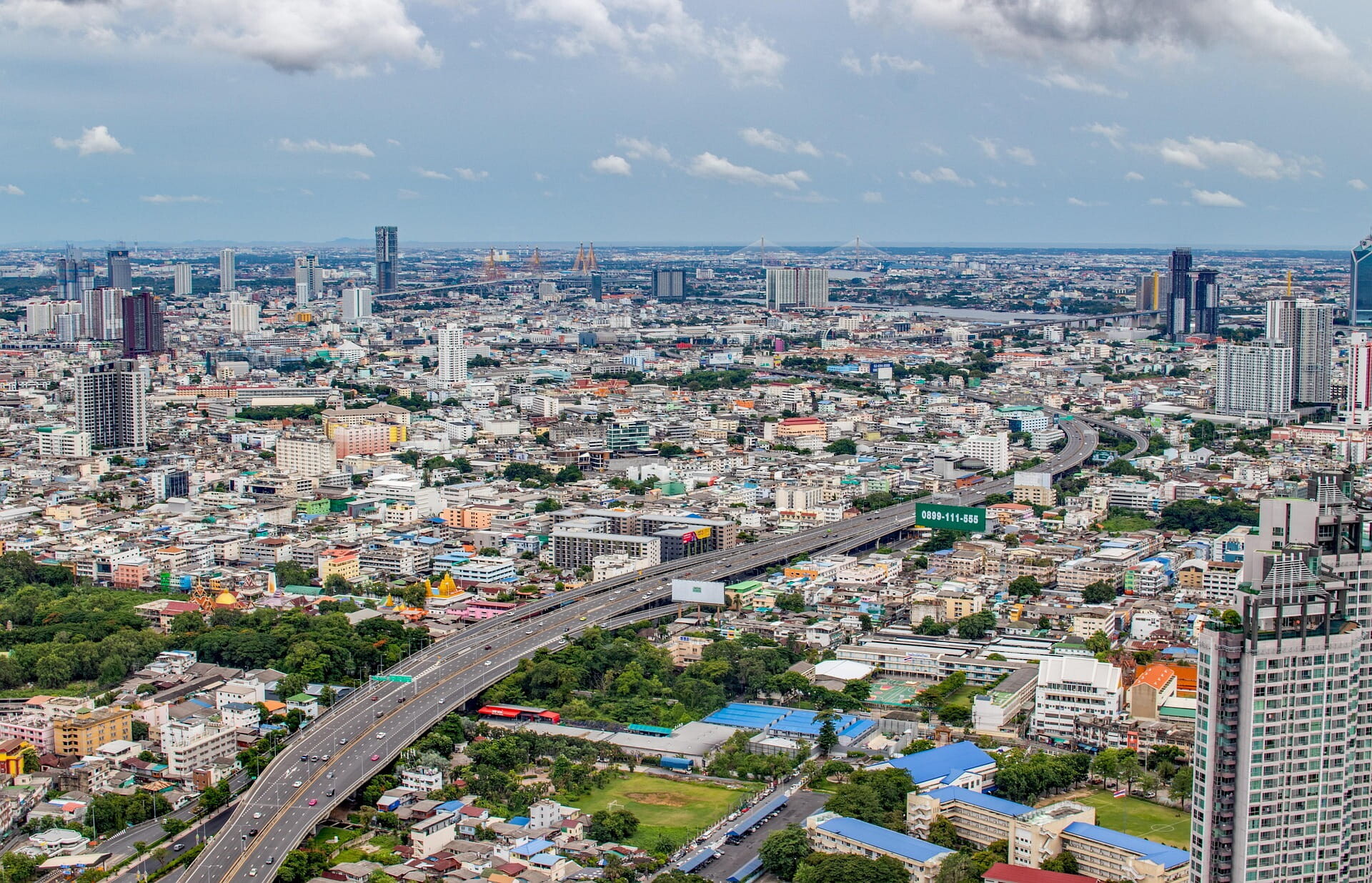
Bangkok covers 1,569 square kilometres and officially comprises 50 districts, which is a useful fact for approximately nobody. More practically, the city divides into an old half and a new half, separated in spirit if not in geography by the Chao Phraya River.
The Old City occupies the western side of Bangkok's tourist map. Rattanakosin Island – actually a peninsula encircled by canals – is the historic heart: the Grand Palace, Wat Pho, Wat Phra Kaew, the National Museum, all clustered into a relatively small area that is walkable if punishingly hot. The adjacent Banglamphu district contains Khao San Road, the backpacker axis that has been alternately beloved and despised for four decades and is currently undergoing a slow gentrification that may eventually render it unrecognisable. Across the Chao Phraya to the west sits Thonburi, quieter, less visited, and home to Wat Arun – which, viewed from the far bank at dusk, is among the better sights in Southeast Asia.
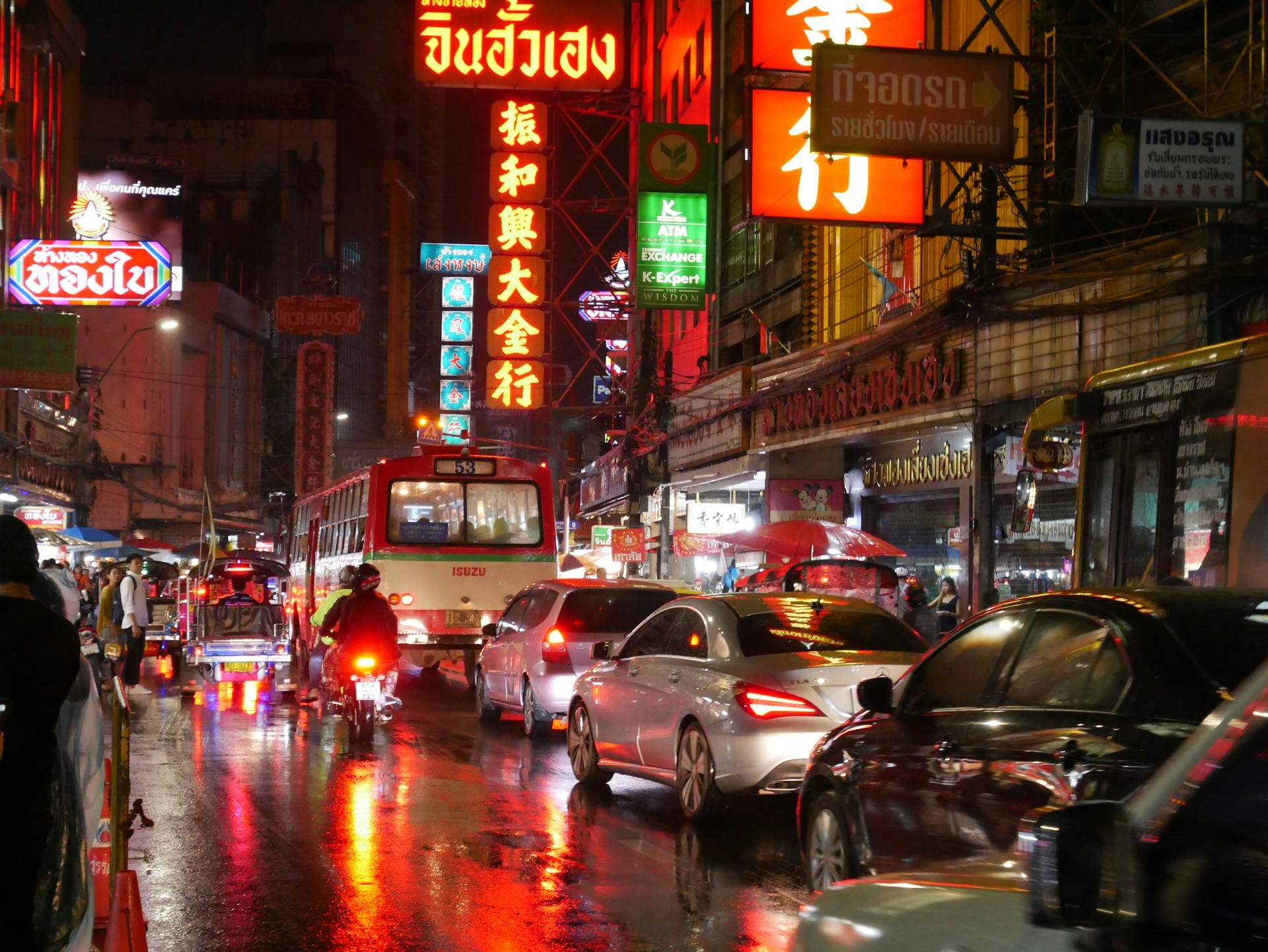
Chinatown (Yaowarat) deserves its own category. One of the largest Chinatowns in the world, it is dense, photogenic, historically layered, and – in the evening, when neon signs stack up above Yaowarat Road and the street food vendors take over – genuinely electric. It sits between the Old City and the modern districts and rewards a long evening rather than a quick walk-through.
The New City radiates out eastward from Lumpini Park, loosely organised around two intersecting elevated rail lines. Siam is the commercial and transport hub – the convergence point of the BTS Skytrain, home to a cluster of enormous malls, and functionally the centre of modern Bangkok. Silom and Sathorn together make up the financial district, with rooftop bars, Lumpini Park, and – on certain sois – the city's most visible nightlife. Sukhumvit Road stretches far to the east, a long artery of hotels, restaurants, malls, and everything else, with Thong Lo and Ekkamai at its more fashionable end and the workaday On Nut area beyond. Ari, a little further north, is where the cafes are good and the tourists are comparatively few.
Getting Around
Bangkok's traffic is not mythological – it is a daily operational reality that will shape your trip if you let it. The city's saving grace is a public transport network that, once understood, makes many of the worst congestion problems irrelevant.
The BTS Skytrain runs two lines above ground and connects most of the tourist-relevant areas of the new city efficiently and cheaply. The MRT metro runs underground, extends further into some areas the BTS doesn't reach, and connects at key interchange stations. Between them, these two systems cover the majority of what most visitors need. The Getting Around Bangkok guide covers the network in detail, including the river ferries (which are faster than any road transport for Chao Phraya crossings), Grab, taxis, and the tuk-tuk question.
The short version: plan your days with the rail lines in mind, use Grab for point-to-point trips that the trains don't serve, and do not attempt to cross the city by taxi during rush hour unless you are in no particular hurry and find traffic philosophically interesting.
The Major Sights
Bangkok's headline attractions are genuinely worth seeing, which is more than can be said for the headline attractions of many cities. A few things to know before you go.
The Grand Palace and Wat Phra Kaew are unavoidable and should not be avoided. The complex is extraordinary in scale and architectural ambition – the Temple of the Emerald Buddha alone rewards close attention. What it is also is extremely crowded, especially during peak season, and entirely unnavigable in the afternoon heat without some preparation. Arrive early, bring water, and dress appropriately: shoulders and knees must be covered, and there are no exceptions. Sarong loaners are available at the entrance but supplies can run out. Admission is 500 THB.
Wat Pho, immediately south of the Grand Palace, houses the Reclining Buddha – 46 metres long, gold-leafed, and genuinely impressive at scale – and is also one of Thailand's oldest centres of traditional medicine and massage. The on-site massage school is the real thing. It is less crowded than the Palace, more navigable, and makes a natural pairing with it on the same morning.
Wat Arun, the Temple of Dawn, stands on the Thonburi bank of the Chao Phraya. The spires are covered in fragments of Chinese porcelain and glass, and the effect in direct sunlight is particular and strange. The view back across the river toward Rattanakosin from the far bank at the end of the day is better than the one from inside, which is worth knowing before you pay to cross.
Chatuchak Weekend Market is the world's largest weekend market by most measures – around 15,000 stalls spread across 27 acres, operating on Saturdays and Sundays. It is vast enough to be genuinely disorienting and sells everything from antiques to live animals (the latter being a section better walked past without stopping). Go early, bring cash, and accept that you will not see all of it.
The Jim Thompson House is Bangkok's most rewarding museum and the exception to the general rule that museums here feel like obligations. Thompson was an American businessman who revived the Thai silk trade after the Second World War, disappeared mysteriously in the Malaysian highlands in 1967, and left behind a compound of traditional Thai houses – moved, reassembled, and filled with exceptional Asian art – that remains as quietly compelling as the man's story. Guided tours run throughout the day.
Food
It would be strange to visit Bangkok and not eat extremely well. The stranger outcome – which happens regularly to people who stick to air-conditioned restaurants in tourist zones – is eating mediocrely in one of the world's great food cities.
The foundational principle is this: busy street stalls and market vendors, particularly those that have been operating the same few dishes for years, are frequently serving better food than restaurants several times the price. A plastic stool, a wok that hasn't cooled since the 1990s, and someone who has made nothing but khao man gai (poached chicken over fragrant rice) for thirty years is a reliable formula. Chinatown in the evening, the lunch market on Silom Soi 20, the Victory Monument boat noodle cluster, the Or Tor Kor fresh market near Chatuchak – these are the kinds of places worth building a day around.
Dishes worth seeking out specifically: pad kra pao (holy basil stir-fry, the working lunch of Bangkok), kuay teow reua (boat noodles, rich and dark and served in small bowls by design – order three), mango sticky rice in season (March to June, when the mangoes are actually good), and khao niao mamuang only from vendors who have bothered with proper nam dok mai mangoes. Pad thai's reputation exceeds what tourist-facing versions typically deliver – not a reason to avoid it, but a reason to find it somewhere that isn't optimised for foreigners.
Bangkok also has a serious restaurant scene at the upper end – multiple Michelin stars, a growing natural wine culture, contemporary Thai cooking that takes the cuisine somewhere interesting – which is not the focus of this guide but worth knowing exists if it matters to you.
Nightlife
Bangkok's nightlife operates across an unusually wide range, from rooftop bars with cinematic views and prices to match, through to neighbourhood bars where locals are the majority and drinks cost almost nothing. The city has the full spectrum and makes no apologies for any of it.
Silom Soi 4 is the centre of Bangkok's LGBTQ+ bar scene, long-established and welcoming. The Patpong area nearby runs a famous night market alongside its red-light district, and the two have existed in approximately this arrangement for fifty years. Sukhumvit has its own entertainment concentrations at Nana and Soi Cowboy. These areas are well-known, not particularly hidden, and self-selecting – you won't stumble into them by accident.
Rooftop bars deserve a mention beyond the Instagram cliché. The view from Vertigo at Banyan Tree, or from several of the better Sathorn and Silom rooftops, is legitimately extraordinary on a clear night – Bangkok at altitude is a different city from Bangkok at street level. Dress codes apply and are enforced.
Thong Lo and Ekkamai are where the city's wealthier young Thais eat, drink, and go out, and the bars and restaurants here have a very different energy from the tourist-facing areas. Worth an evening for the contrast alone.
Shopping
Bangkok is a genuinely excellent shopping city, which sometimes gets overlooked in favour of its other attributes. The malls around Siam are world-class in scale: Siam Paragon, CentralWorld, and MBK (which sits at a more accessible price point and is still one of Asia's great electronics and fashion markets) are all within easy walking distance of each other. IconSiam on the Thonburi riverside is the newest and most architecturally ambitious, and worth a visit on those terms even if you're not planning to buy anything.
For markets: Chatuchak at the weekend, Pak Khlong Talat (the flower market, extraordinary before dawn), and Chinatown for anything you cannot quite name but will recognise when you see it. Talad Neon in Ratchada is the night market the food blogs have been writing about for a few years and which continues to deliver. The floating markets within easy reach of the city – Damnoen Saduak and Amphawa – get their own treatment in our day trips guide, with an honest assessment of which are worth the effort.
Day Trips
Bangkok's position in the centre of the country makes it a practical base for a range of day trips, from the ancient capital of Ayutthaya (under two hours north by train, genuinely unmissable) to the railway market at Maeklong and the floating markets to the west. The full breakdown is in Day Trips from Bangkok, but Ayutthaya is worth flagging here specifically: the scale of the ruins and the relative ease of access make it one of the strongest half-day options in the country, and the train journey from Hua Lamphong is part of the point.
Practical Information
Getting to Bangkok: Suvarnabhumi Airport (BKK) is the main international gateway, 30 kilometres east of the city centre. The Airport Rail Link connects to the BTS at Phaya Thai station in approximately 30 minutes and is the most reliable option during traffic hours. Taxis are metered and available at official counters in the arrivals hall – insist on the meter and budget 250–400 THB plus tolls to central areas. Don Mueang Airport (DMK) handles most low-cost domestic and some regional routes and is further from the centre; there is no direct rail link, and a taxi runs to 300–500 THB depending on traffic and destination.
Currency: Thai Baht (THB). Cash is essential for street food, markets, and most smaller transactions. ATMs are plentiful but charge a flat fee of around 220 THB per withdrawal – withdraw the maximum each time. Always decline the machine's offer to convert to your home currency.
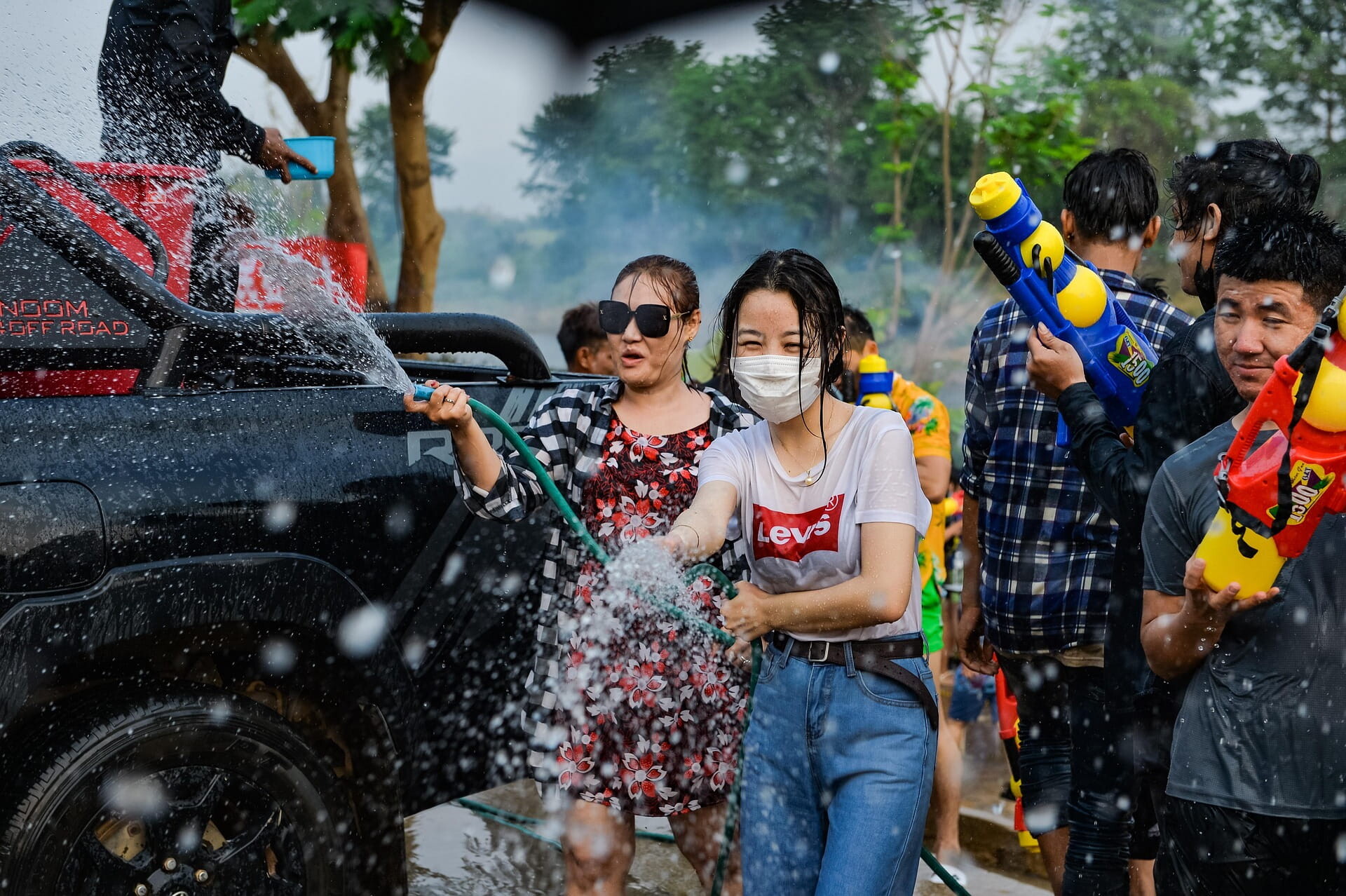
Weather: Bangkok is hot. It is hot in November, it is very hot in February, and it is extraordinary in April. The cool season (November to February) offers the most forgiving temperatures and the clearest skies. The wet season (roughly June to October) brings afternoon downpours that clear quickly and leave the evenings pleasant enough. April is Songkran – see our Songkran guide – which is its own argument for visiting during the hottest month of the year.
Language: Thai. English is functional in tourist areas, hotels, and many restaurants; less so in local markets, smaller neighbourhoods, and anywhere the tourist-to-local ratio inverts. The Google Translate camera function earns its keep in Bangkok more than in most cities.
Connectivity: Tourist SIM cards with generous data packages are available at both airports and in 7-Eleven stores across the city. Take your passport. The city has extensive 4G and 5G coverage and reliable wifi in most hotels and cafes. Grab is the ride-hailing app that actually works here – download it before you arrive.
Health and safety: Bangkok is a safe city by any reasonable measure. The usual urban precautions apply: watch your phone in crowded areas, don't leave valuables visible in tuk-tuks, be sceptical of anyone who approaches you near a major sight with an unsolicited offer. The gem scam and the "temple is closed today, I'll take you somewhere better" tuk-tuk detour have been operating for long enough to have their own Wikipedia entries. Tap water is not drinkable – bottled water is cheap and everywhere. The heat is a genuine physical consideration: hydrate consistently, take shade where it exists, and don't plan to walk long distances between noon and 3pm in high season.
How Long Do You Need?
Three days is the minimum for anything approaching a coherent picture of the city. Four or five days allows you to add a day trip, eat your way through Chinatown properly, and spend an evening somewhere that isn't optimised for tourists. Bangkok is one of the most common cities in Asia to be treated as a one-night stopover en route to the beaches, which is a decision people consistently regret in retrospect. It deserves better.
Where to Go Next
Start with Getting Around Bangkok for the practical architecture of the city's transport. Bangkok Neighbourhoods goes deeper on where to base yourself and what each area actually feels like at street level. For the city's temples in detail, see Bangkok Temples Guide. For eating, Bangkok Street Food covers the ground floor of the city's most important cultural institution. Day trips, rooftop bars, floating markets, and Songkran all have dedicated guides in this cluster.