Syria’s currency is the Syrian pound, known locally as the lira and abbreviated as SYP, SP or LS. Although nominally the pound is subdivided into 100 piastres (qurush), only banknotes are in circulation.
Exchange rate
As of May 2026, you'll get around 13380 SYP for 1 USD, and 15540 for 1 EUR. The best place to check for the most up-to-date exchange rate information is the excellent Syrian Pound Today website.
Cash-only society... for now
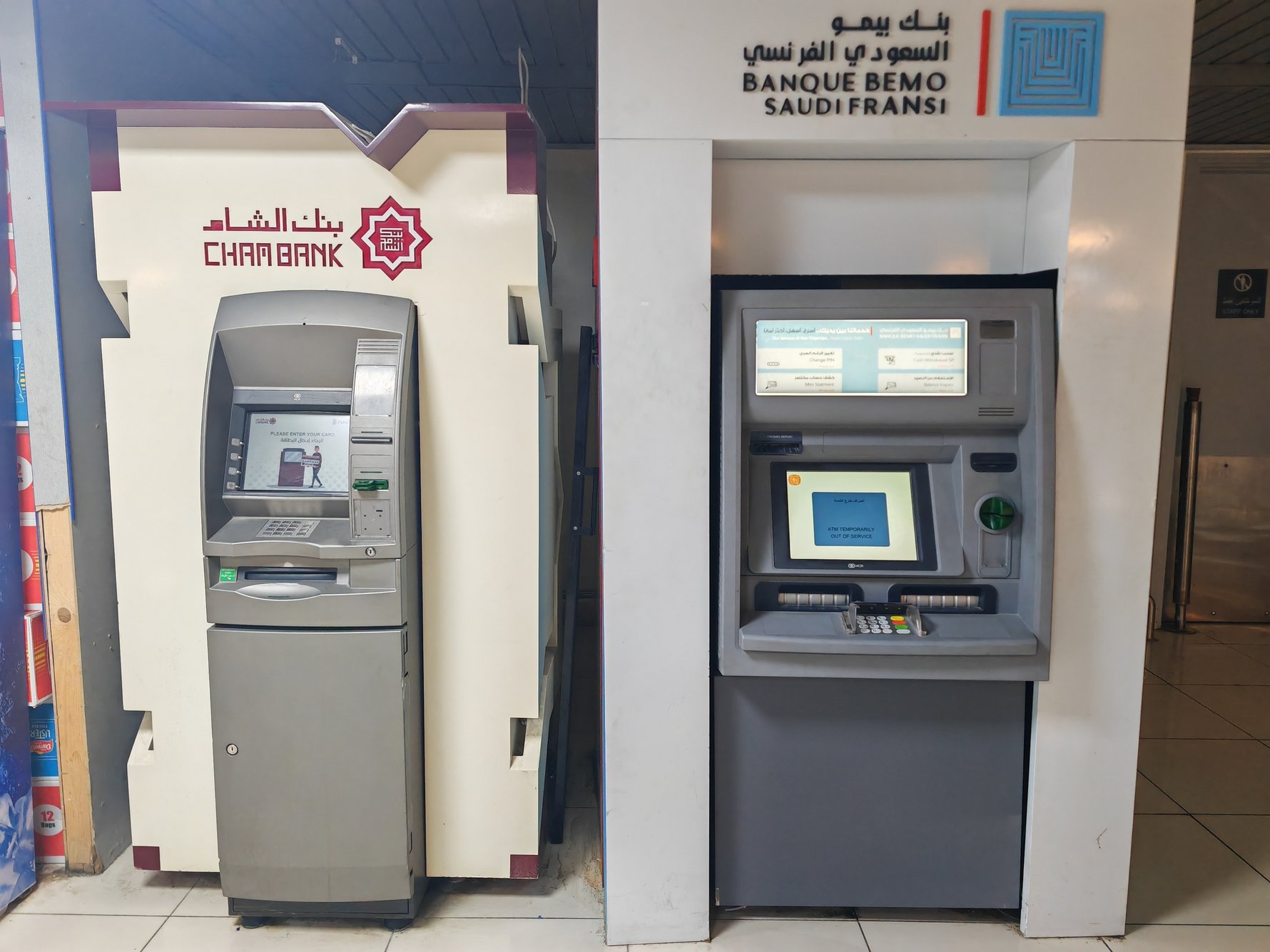
Due to the financial embargo, Syria is a cash-only society, with no options for foreign visitors to use credit cards to pay for services or use the very few ATMs available in the city. This is set to change rapidly now that sanctions are lifted and the Syrian National Bank is working to reconnect to the international payment systems starting in May 2026. We expect to see upmarket hotels, shops and restaurants quickly accept card payments when these options become available. ATMs at Damascus airport – forget about using these
Until that happens, you will need to bring all the money you need in cash and exchange it locally. Dollars, euros, Turkish lira and other major currencies are easily exchanged at the many exchange offices dotted around the city. Rates generally do not vary much between the exchange offices, and we haven’t seen any rip-off practices so far, but it’s a good idea to be aware in advance of what you should get. Europeans do not need to worry about changing to dollars first, as the euro rate is just as good.
Prices in Syria are often quoted in US dollars to make trade easier in difficult times, but payment is usually still expected in Syrian pounds. To avoid having to count bucketfuls of lira, many hotels, shops and restaurants accept payment in dollars or euros, using a fair exchange rate and giving any change in pounds.
The redenomination process
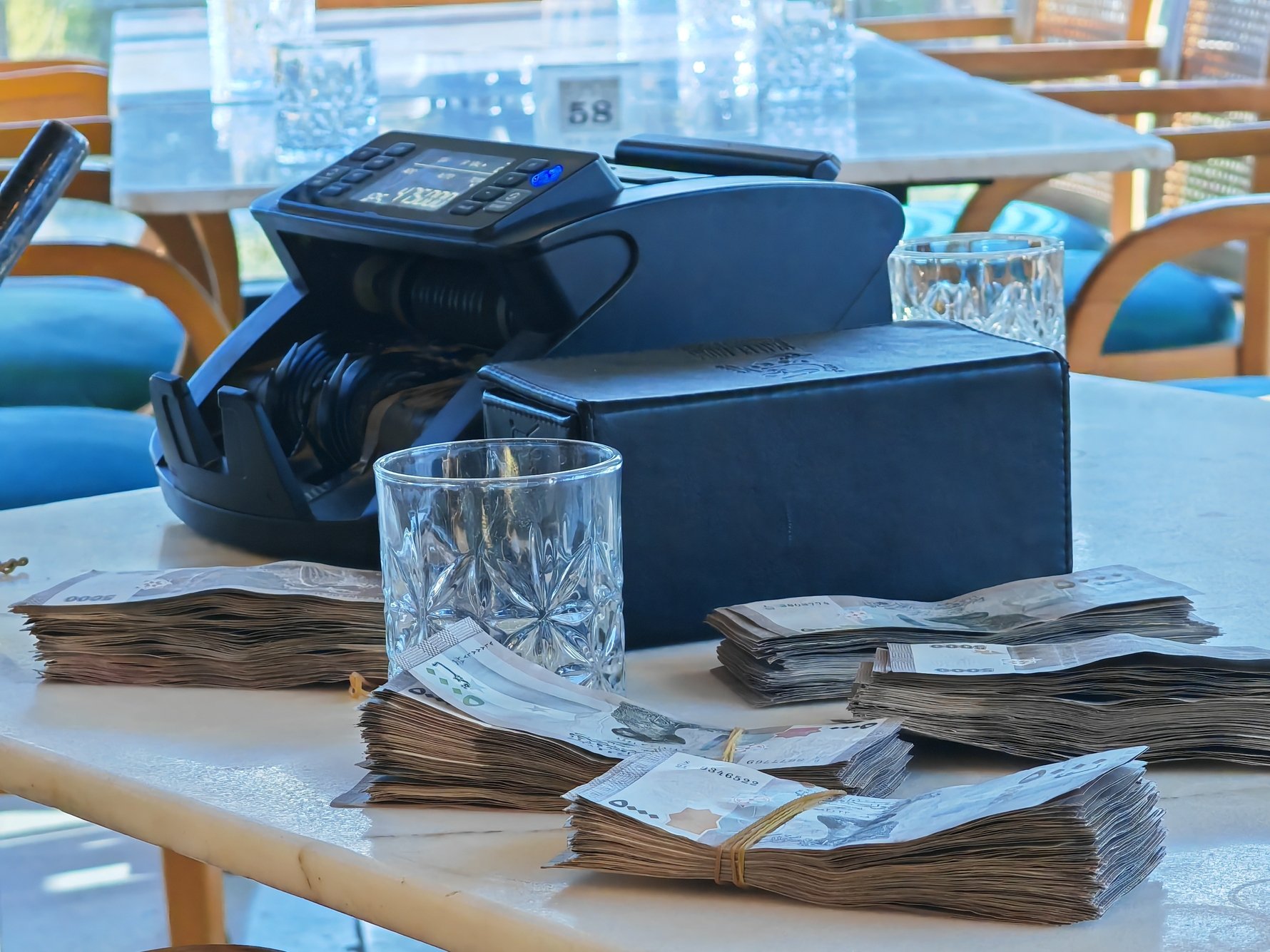
In January 2026, after years of debilitating inflation, Syria started a redenomination process, issuing new banknotes and lobbing two zeroes (and the head of the dictator) off the currency. The old pound notes were difficult to spend; trying to pay for a dinner using only the largest available banknotes (5000 SYP or €0.32, $0.37) involved handing a bag full of banknotes held together with rubber bands to the poor waiters, who then needed to check the amount using counting machines. Paying the bill with old currency
Now, 1000 old pounds are being transformed into 10 new pounds. By 30 June 2026, all old banknotes should have been removed from circulation, replaced by colourful, if somewhat bland, new notes of 10, 25, 50, 100, 200 and 500 SYP – meaning the largest banknote will still only be worth about €3.22 or $3.75. You’ll notice that a few months into the process, with over half the notes exchanged, most prices are still quoted in old pounds, and we expect this practice to linger long after the old notes have gone.
Travel costs
For foreign travellers in Syria, costs are generally modest. Expect to pay around $30-90 for a night in a decent mid-range hotel, $10-20 for budget accommodation and upwards from $100 for a luxury hotel room. Street food is cheap at a few dollars for a snack, while at restaurants you can count on paying anything from $8 to $25 for a meal. State museums charge between $4 and $8. It's good to be aware that while these prices may be reasonable
for those coming from abroad, most locals struggle with the ever-rising cost of living and often can't afford a restaurant meal.