
The visa information on this page was researched in spring 2026, but rules change, so always check with an embassy or a Syrian travel agent before travelling.
Syria offers an easy Visa On Arrival (VOA) procedure for the majority of visitors. Simply show up at an airport or land border and pay the required amount. The cost of the visa, determined by the reciprocity principle, is based on how costly and difficult it is for Syrians to travel to your country, although there are some exceptions.
Currently, Syrian embassies and consulates overseas do not issue tourist visas; they are only available upon arrival. Don't trust any other online offers for Syrian visas.
The official state e-visa website, evisa.sy, is currently inactive – though we hope that some day soon it will come back to life and solve all of the uncertainties and hassles listed below!
Both transit and regular tourist visas can be extended by visiting the Immigration & Passport Administration office, Idaret al-Hijra, in the al-Merjeh district of Damascus (map) where a 15- or 30-day extension for a regular visa or a 7-day extension for a transit visa can be arranged for a few dollars, with the process taking 1-2 hours. The extension period begins right away, so only visit a few days prior to the expiration of your current visa. It is possible to apply from offices elsewhere in Syria, but they might have to wait a few days for permission from Damascus.
Although it is against the law and not recommended, some travellers reported overstaying their visas for up to 10 days and only paying a small fine of about 5,000 SYP per day, or even none at all, on departure. Travellers visiting Syria in spring 2026 report that they managed to extend their tourism visa several times without issues, even up to 3 months in total; officials told one traveller that 90 days would be the maximum time permitted and overstaying beyond that would become problematic, but that exiting and entering Syria was a possiblity.
The issue for tourists in 2026 is that Syrian visa requirements are subject to changes, and as of May 2026, there is no official publication or website that has details on fees and requirements. Syrian travel agents have access to the most recent information, however, and they can help you arrange your visa confirmation documents, but often only in combination with other travel services.
Travellers from a list of restricted countries require advance approval, which may take 3 or 4 weeks to process. This list seems to include Afghanistan, Belarus, China, India, Indonesia, Iraq, Lebanon, Pakistan, The Philippines, Sri Lanka, Thailand, Yemen and all African countries, but we have received reports of some supposed restricted nationals obtaining a VOA. We recommend checking the websites of the visa-smart Syria Scope and Syrian Guides travel agencies and asking for their help if necessary.
Although people with EU, American or other ‘easy’ passports can usually expect a smooth procedure at the Syrian border, some travellers eligible for VOA according to the list below are turned away for no apparent reason by border officials; it is known that just trying again later or the following day with a fresh border official can help.
Some travellers report problems trying to board flights to Syria, with some airline desk staff refusing boarding based on outdated or incorrect visa information. Travellers report that Turkish Airlines, AJet, Royal Jordanian and DanAir all know about the VOA rules and apply them correctly. There have been problems with people flying with Jet Airways and Flydubai. It’s a good idea to check with your airline beforehand that they have the correct information and will let you board. During online check-in you may be asked to fill in a visa number; in that case simply check-in at the airport.
You can check what IATA’s Timatic says for your situation at their Travel Centre website. Many airlines use this to determine visa requirements, but we believe it’s incorrect for UK citizens, as it still states that visas need to be arranged in advance.
Some Syrian travel agents suggest avoiding the potential airline boarding problem altogether by flying to Lebanon or Jordan instead and entering Syria through one of the land borders, where travellers are usually admitted without fuss.
As of spring 2026, these are the standard single-entry Syrian tourist visa fees applied at the airports and land borders.
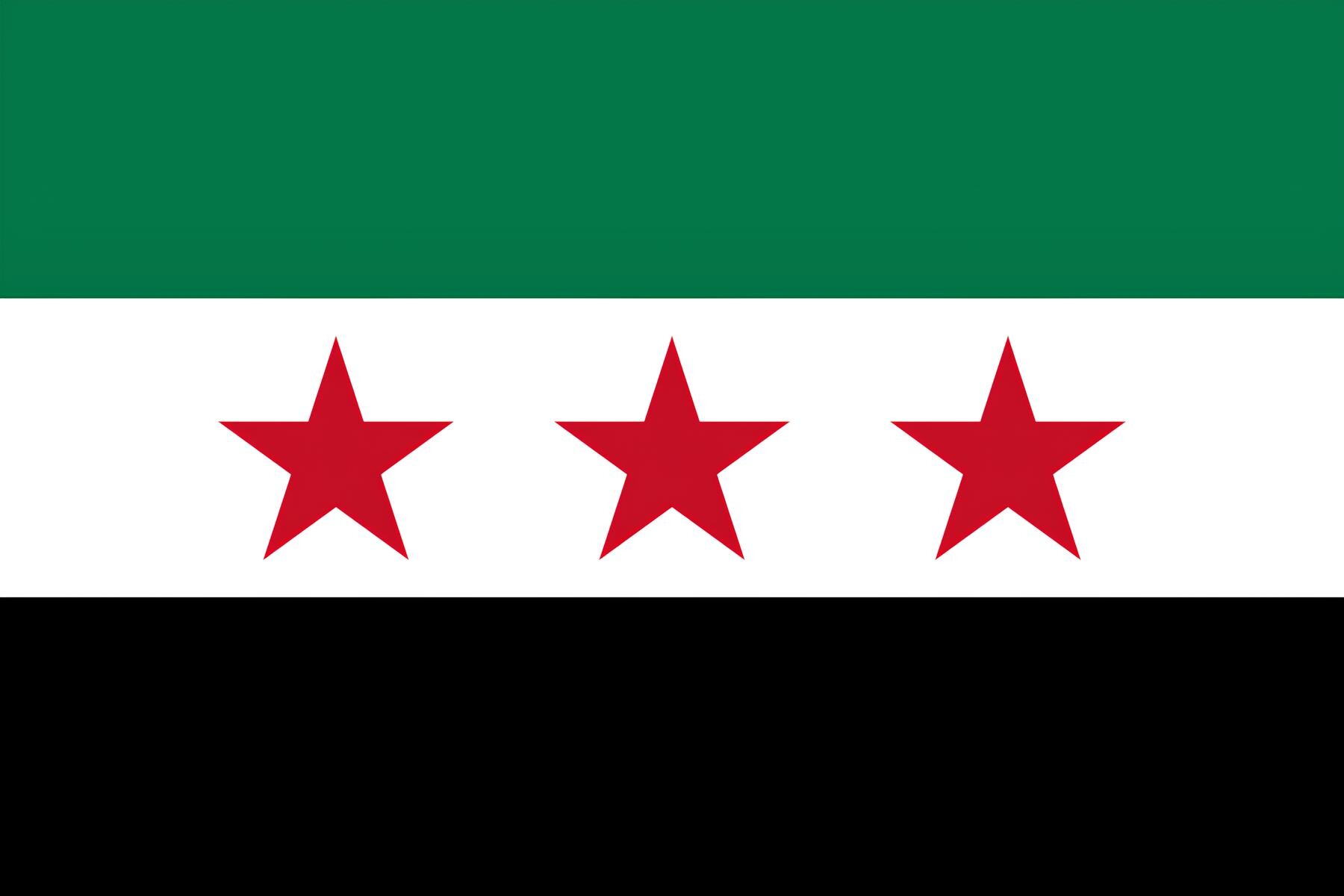
Photo: The new Syrian flag, Wikimedia Commons / CC BY-SA 4.0
Syria offers an easy Visa On Arrival (VOA) procedure for the majority of visitors. Simply show up at an airport or land border and pay the required amount. The cost of the visa, determined by the reciprocity principle, is based on how costly and difficult it is for Syrians to travel to your country, although there are some exceptions.
Currently, Syrian embassies and consulates overseas do not issue tourist visas; they are only available upon arrival. Don't trust any other online offers for Syrian visas.
The official state e-visa website, evisa.sy, is currently inactive – though we hope that some day soon it will come back to life and solve all of the uncertainties and hassles listed below!
Types of tourist visa
- Typically, you will receive a 15- or 30-day single-entry tourist visa when entering Syria. Verify the precise validity with the border officials and by checking the stamp in your passport. Travellers report that you can expect to get 15 days when entering at an airport and either 15 or 30 days when entering at a land border. It's a wise idea to keep all documents and receipts that came with your visa in case there are issues when you depart the country.
- There is also a transit visa, which is about half the price of a regular visa and is typically valid for 3 days, more if you get lucky, and only available if you enter Syria by land from Lebanon or Jordan and depart for another country, either over land or by plane. Recent traveller reports suggest that using a transit visa to return to the same country can result in a $25 fine and a long wait at the border.
- Currently, multiple entry visas or 3-month visas can only be obtained for residential, employment, or educational purposes. People who were born in Syria or who have a Syrian father should not be charged for a visa, regardless of their nationality. This exemption may also apply to people who have a Syrian mother or spouse.
- Adventurous travellers driving into Syria by car or motorbike in 2026 report paying a $100 fee at the border for their vehicle at the Jordanian and Lebanese borders; vehicle access was not possible from Iraq or Turkey at the time of research, although with significant effort some drivers were able to get permissions requested via their embassies in Turkey. The iOverlander app has all the latest updates for driving to and across Syria.
- Nationals of Iran and Israel are not permitted to enter Syria, and any stamps in your passport indicating a visit to Israel will result in rejection.
Visa extensions
Both transit and regular tourist visas can be extended by visiting the Immigration & Passport Administration office, Idaret al-Hijra, in the al-Merjeh district of Damascus (map) where a 15- or 30-day extension for a regular visa or a 7-day extension for a transit visa can be arranged for a few dollars, with the process taking 1-2 hours. The extension period begins right away, so only visit a few days prior to the expiration of your current visa. It is possible to apply from offices elsewhere in Syria, but they might have to wait a few days for permission from Damascus.
Although it is against the law and not recommended, some travellers reported overstaying their visas for up to 10 days and only paying a small fine of about 5,000 SYP per day, or even none at all, on departure. Travellers visiting Syria in spring 2026 report that they managed to extend their tourism visa several times without issues, even up to 3 months in total; officials told one traveller that 90 days would be the maximum time permitted and overstaying beyond that would become problematic, but that exiting and entering Syria was a possiblity.
Problems with Syrian visas
The issue for tourists in 2026 is that Syrian visa requirements are subject to changes, and as of May 2026, there is no official publication or website that has details on fees and requirements. Syrian travel agents have access to the most recent information, however, and they can help you arrange your visa confirmation documents, but often only in combination with other travel services.
Travellers from a list of restricted countries require advance approval, which may take 3 or 4 weeks to process. This list seems to include Afghanistan, Belarus, China, India, Indonesia, Iraq, Lebanon, Pakistan, The Philippines, Sri Lanka, Thailand, Yemen and all African countries, but we have received reports of some supposed restricted nationals obtaining a VOA. We recommend checking the websites of the visa-smart Syria Scope and Syrian Guides travel agencies and asking for their help if necessary.
Although people with EU, American or other ‘easy’ passports can usually expect a smooth procedure at the Syrian border, some travellers eligible for VOA according to the list below are turned away for no apparent reason by border officials; it is known that just trying again later or the following day with a fresh border official can help.
Some travellers report problems trying to board flights to Syria, with some airline desk staff refusing boarding based on outdated or incorrect visa information. Travellers report that Turkish Airlines, AJet, Royal Jordanian and DanAir all know about the VOA rules and apply them correctly. There have been problems with people flying with Jet Airways and Flydubai. It’s a good idea to check with your airline beforehand that they have the correct information and will let you board. During online check-in you may be asked to fill in a visa number; in that case simply check-in at the airport.
You can check what IATA’s Timatic says for your situation at their Travel Centre website. Many airlines use this to determine visa requirements, but we believe it’s incorrect for UK citizens, as it still states that visas need to be arranged in advance.
Some Syrian travel agents suggest avoiding the potential airline boarding problem altogether by flying to Lebanon or Jordan instead and entering Syria through one of the land borders, where travellers are usually admitted without fuss.
Customs rules
Even though there's no clear law about this, travellers have noticed that border authorities have recently started confiscating bottles with alcoholic drinks from people arriving in or departing from Syria.Visa fees
As of spring 2026, these are the standard single-entry Syrian tourist visa fees applied at the airports and land borders.
- Check all visa regulations and prices and possible restricted nationalities with a local travel agent before going.
- The fees can be paid in US dollars, but other major currencies are also accepted.
- If your country is not in the list below, the visa fee is US$50.
| Free visa or no visa necessary | Jordan, Lebanon, Malaysia, Mauritania, Serbia |
| US$25 | Algeria, Angola, Azerbaijan, Bangladesh, Botswana, Cambodia, Chad, China, Cuba, Ecuador, Egypt, Mauritius, Mongolia, Montenegro, Morocco, Namibia, Pakistan, Peru, Seychelles, Sri Lanka, Sudan, Tajikistan, Tanzania, Trinidad and Tobago, Tuvalu, Yemen |
| US$50 | Albania, Armenia, Benin, Bosnia and Herzegovina, Brazil, Burkina Faso, Cabo Verde, Central African Republic, Chile, Colombia, Comoros, Côte d’Ivoire, Croatia, Cyprus, Eswatini, Ethiopia, Georgia, Grenada, Guinea, Guyana, India, Indonesia, Iraq, Ireland, Jamaica, Japan, Kuwait, Laos, Liberia, Libya, Luxembourg, Malawi, Mali, Mexico, Mozambique, Myanmar (Burma), Nepal, Niger, Qatar, Russia, Rwanda, Saudi Arabia, Senegal, Singapore, South Korea, Suriname, Thailand, The Gambia, Timor-Leste, Turkey, Turkmenistan, Ukraine, Uruguay, Vanuatu, Venezuela, Zambia, Zimbabwe |
| US$75 | Austria, Bahrain, Belarus, Belgium, Bulgaria, Czechia, Denmark, Finland, France, Germany, Greece, Guinea-Bissau, Hungary, Iceland, Italy, Kazakhstan, Latvia, Lesotho, Lithuania, Malta, Moldova, North Macedonia, The Netherlands, Norway, Oman, Paraguay, Philippines, Poland, Portugal, Romania, Slovakia, Slovenia, Somalia, South Africa, Spain, Sweden, Switzerland, The Bahamas, Tunisia |
| US$100 | Canada, Djibouti, Sierra Leone, Uganda, United Arab Emirates |
| US$150 | Afghanistan*, Argentina, Australia, Burundi, Cameroon, Dominican Republic, Equatorial Guinea, Fiji, Ghana, Kenya, New Zealand, Nigeria, São Tomé and Príncipe, United Kingdom, Uzbekistan |
| US$200 | Gabon, Kyrgyzstan, United States of America |
| US$300 | Democratic Republic of the Congo, Marshall Islands, North Korea |
Photo: The new Syrian flag, Wikimedia Commons / CC BY-SA 4.0
.svg)