The Damascene hammam, or public bathhouse, is not merely a place for getting clean; it is a thousand-year-old social ritual that has survived as a cornerstone of the city’s identity. Since the Umayyad era, these "palaces of the poor" have served as centres for community news, business deals, and pre-wedding festivities when the groom and his friends meet for a rowdy bathing session on the morning of the wedding. Damascus still has about 20 functioning public bathhouses, some of them exceptionally historical and beautiful.
Hammam Ammouneh
Syrian hammams are strictly single-sex, with some bathhouses exclusively used by men and others alternating morning and evening hours for men and women with young children. A visit typically follows a three-stage progression designed to transition the body from the chaos of the souk into a state of total relaxation. The good news: foreigners are most welcome to join in the experience.
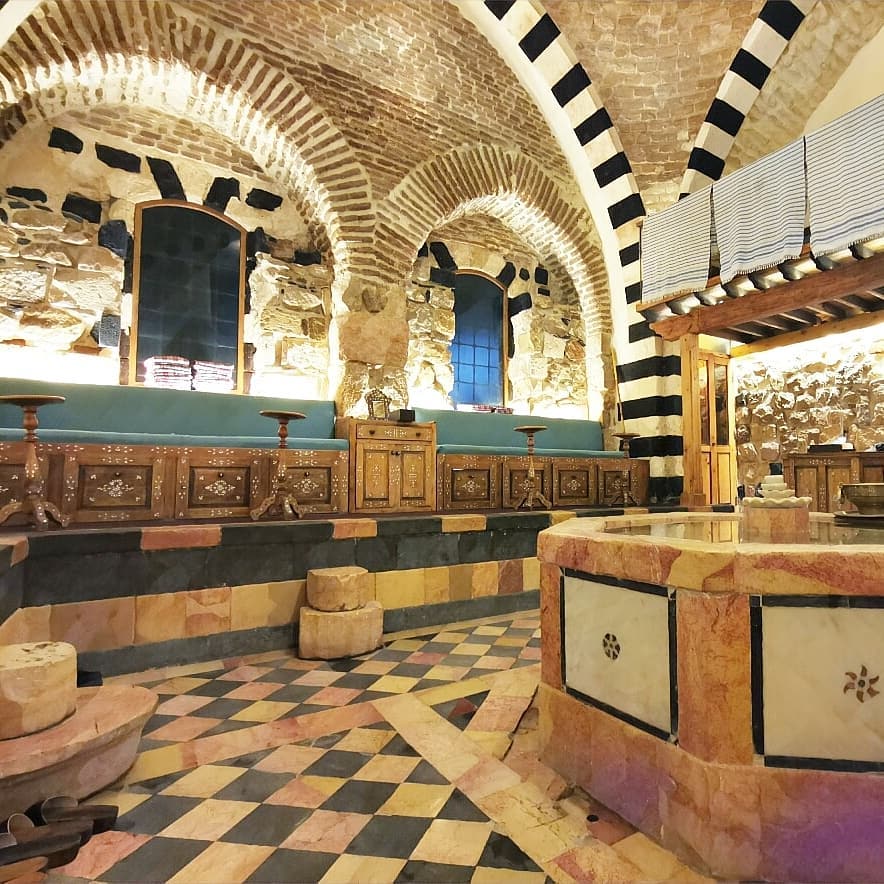
To enjoy the Damascene hammam experience, you do not need to bring anything. At the bathhouse entrance, the maalem, who is the manager, takes the admission fee (usually $10–$15, which covers admission, a scrub, a massage, and tea) and puts your valuables in a locker. Next, you enter the al-barani cold room, a grand, domed hall where you leave your shoes, undress completely, and the nattour attendant discreetly helps you wrap yourself in traditional colourful towels, with your dignity left intact at all times. Your clothes are hung from a wooden peg, covered by a cloth. The ajir attendant then hands you a pair of qabqab, pronounced ib-eb by Damascenes, high wooden clogs named onomatopoeically for the qab-qab clacking sound they make against the wet marble floors. You may also get a bowl with some ghar, the famous Aleppo olive-and-laurel soap, and a lifa, a cord or handful of string made from the loofah plant or palm fibres.
Hammam Al-Malik Al-Zahir
Next is the al-wastani warm room, where your body acclimates to the heat. Use the basins with hot water to rinse yourself thoroughly before heading into the al-jawani hot room, a steam-filled chamber, where you should sweat for ideally about 15 to 20 minutes. This process prepares your skin for the next step, the core of the hammam experience, when you are invited to lie on a warm marble slab while the masabin or mukayis attendant performs a quite vigorous skin exfoliation scrubbing session using a rough kessa glove. When you get a friendly slap, it's time to flip. After washing yourself again, you undergo a sabun massage, leaving you covered in a cloud of olive oil soap that is highly moisturising and antiseptic. Then head back into the hot room for a wash and optional extra sessions in the steam room.
Hammam Al-Bakri
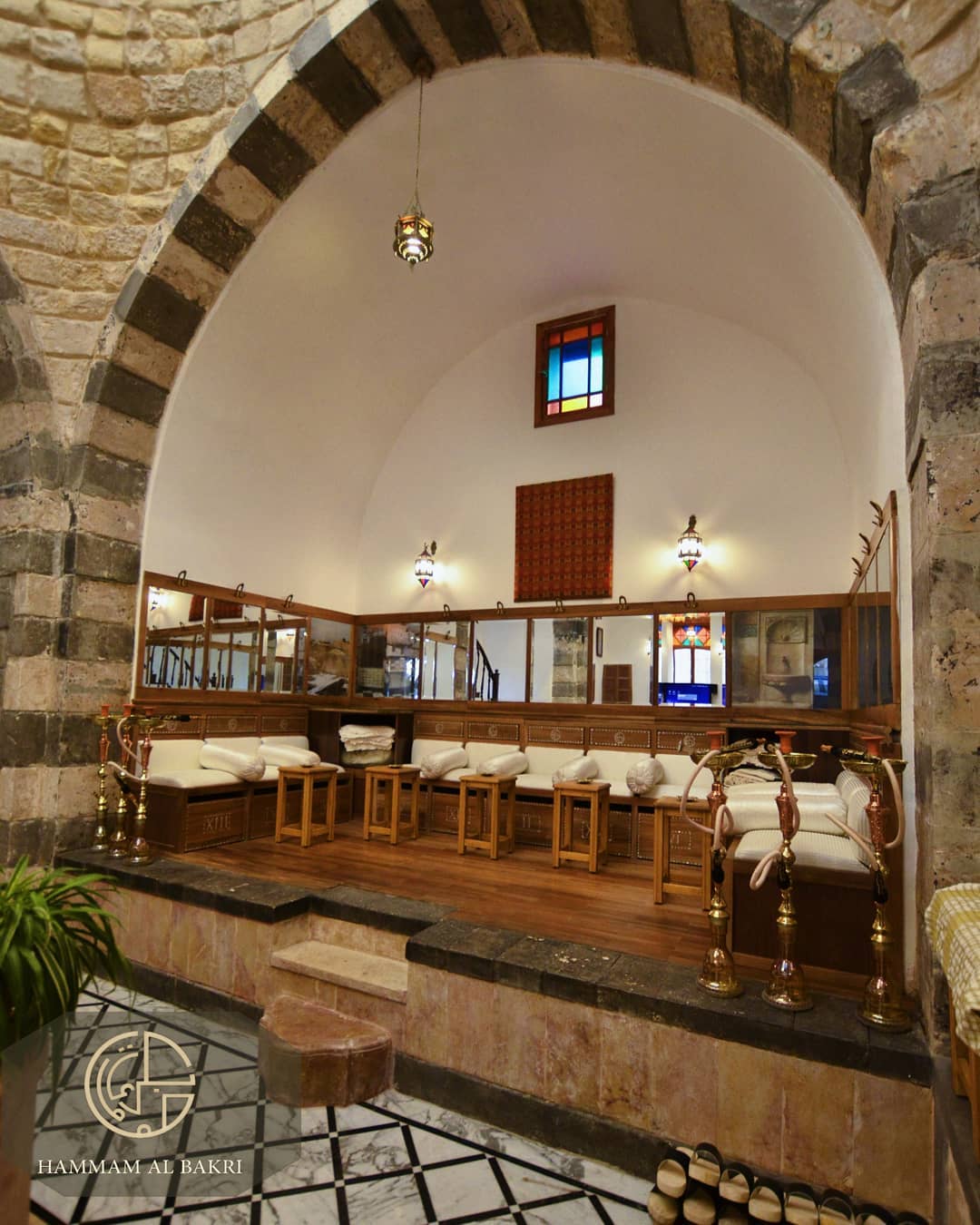
The ritual concludes back in the al-barani, where the attendants may greet you with the fabulous term na'iman, a specific blessing used only after you get a haircut or finish a bath, meaning 'may it be a blessing of paradise'. You could answer 'Allah yuna'em aleik', or 'May God grant you bliss as well'. Now, you sit on cushioned benches to sip tea, smoke narghile, and dry off in the cool air before dressing and heading back into the souk, feeling like a new person. The whole experience takes about an hour, less if you're in a hurry.
This short video shows the procedure at the venerable Hammam Al-Malik Al-Zahir.
Here is our selection of hammam baths in Damascus; click to the review pages below for more details.
Hammam Al-Bakri
This lovely small public bath in the old town may be around 500 years old, it's very much ahead of its time with its golf cart transport service – call ahead to be whisked to your scrub and soak. With its Ottoman design and coloured marble tilework in the domed al-barani hall, it's a popular spot for groom parties and traditional Arada celebrations.
Hammam Al-Malik Al-Zahir
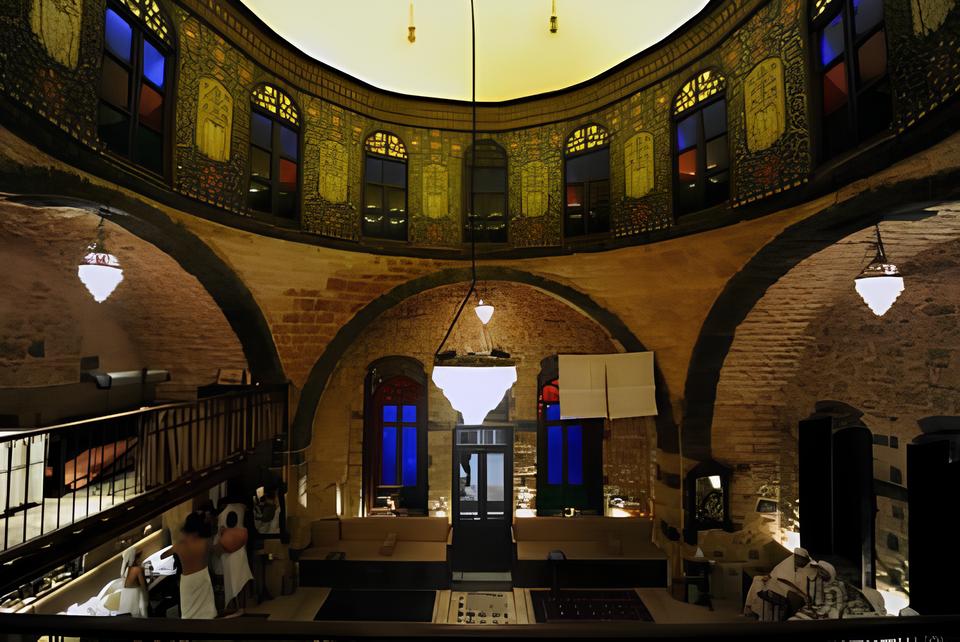
Just north of the Umayyad Mosque, the 'King Al-Zahir' is the most historic and ornate of all bathhouses in Damascus, featuring elegant Ayyubid and Mamluk architecture. Dating back to 985 CE, and managed by the Bassam family for the past 155 years, this is possibly the oldest continuously running bathhouse in the world. You can catch a quick glimpse of the elegant interior as you walk by, or you can simply boldly enter to emerge a little later as a reborn person; here's a short video of what you can expect. During the Syrian conflict, when rebels blocked water supplies to the city, this hammam become of the few places in the city where citizens could come to wash and feel warm again, due to its private water well.
Hammam Al-Selsela
Named after the selsela chain that spanned the street at this point to prevent horse riders from entering the mosque complex, this stunning and ancient bathhouse dates back to the early 1100s. Famed for its thorough scrubbing and massage, optional additional treatments include foot scrubbing, Moroccan baths, and a full wax. Selsela also sells hammam items, like scrubbing gloves.
Hammam Ammouneh
Another elegant public bath, this one dating from the 12th century, located north of the ancient city walls. Back in the day, it required some courage to reach through the fields—hence the nickname "Al-Shoja," or "the brave." Inside, brick arches rise high over bathers in the relaxation area, and it's studied for its classic dome ventilation system.
Hammam Nur al-Din al-Shaheed
A small, ornate doorway in the Al-Bazouriya spices souk leads to these elegant public baths, built during the reign of Nur al-Din Zangi in 1169, now state-owned but still family-run. After decades of use as a warehouse in the last century, it was revived as a bathhouse again in 1979. The beautiful domed relaxation hall features raised, carpeted platforms for relaxation, a marble fountain and a TV showing the news, switched off during calls to prayer. The friendly staff guide you through the bathing procedures in the somewhat shabby but ancient facilities. Men only.