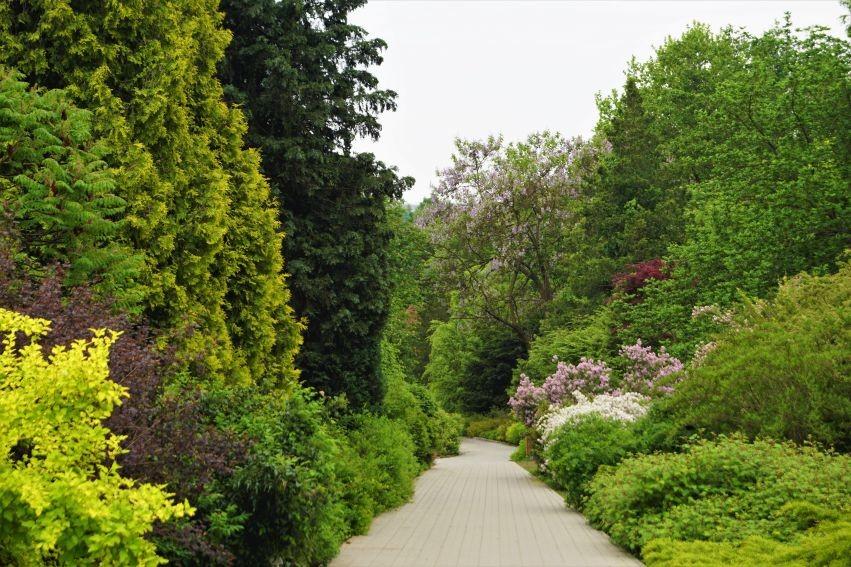


The climate of the Lubelskie Upland is characterised as moderately continental, with long summers, long cool winters and a reasonable amount of rainfall. It's this environment that allows Lublin's botanical garden to thrive in the valley of the Czechówka River.
The locality is Sławinek, and the land on which the grounds have been cultivated also includes a manor house that belonged to the Jan Nepomucen Kościuszko, the uncle of Tadeusz, in the 18th century. The conception of the garden space, however, happened much later on, specifically coinciding with the formation of the city's university in 1945. as the forward-looking department of botany set its sights on expanding the practical area of it's faculty, it finally came into being in 1958, after the university was able to acquire the land - a total of 13ha. As of today, there are about 6,700 species of flora growing here, gathered in several departments, among others, a rosarium, a branch of water plants and an alpine garden.
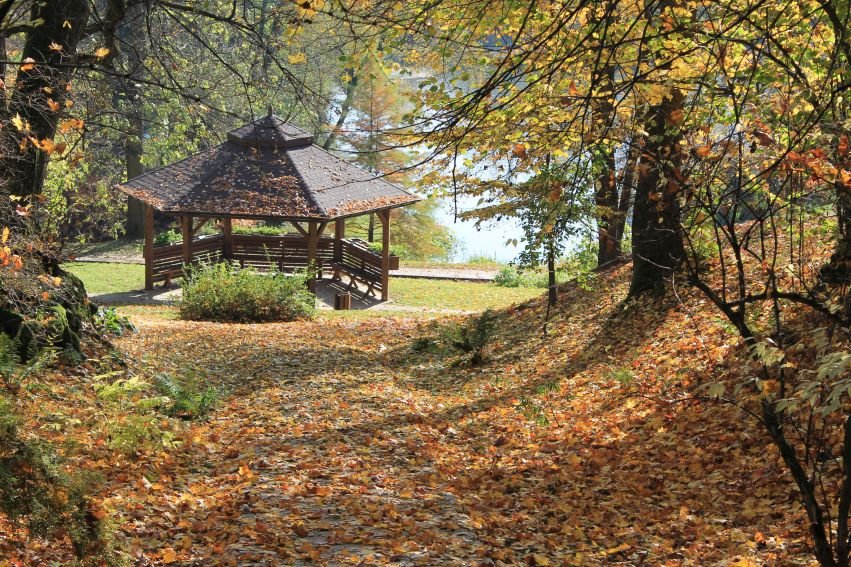
The locality is Sławinek, and the land on which the grounds have been cultivated also includes a manor house that belonged to the Jan Nepomucen Kościuszko, the uncle of Tadeusz, in the 18th century. The conception of the garden space, however, happened much later on, specifically coinciding with the formation of the city's university in 1945. as the forward-looking department of botany set its sights on expanding the practical area of it's faculty, it finally came into being in 1958, after the university was able to acquire the land - a total of 13ha. As of today, there are about 6,700 species of flora growing here, gathered in several departments, among others, a rosarium, a branch of water plants and an alpine garden.