Or: How We Learnt to Stop Worrying and Love the Organised Chaos
So, you've arrived in Kathmandu. Perhaps the flight in gave you a glimpse of the Himalayas, and you thought, "how magnificent, how serene, how spiritual." Then you landed, stepped outside Tribhuvan International Airport, and a man on a motorbike came within four inches of your left elbow. Welcome, friend. You're going to love it here.Kathmandu is one of those cities that resists easy description. It is ancient and chaotic, deeply sacred and delightfully absurd, all at once. The city sprawls across the Bagmati River valley and is divided into distinct districts, each with its own character, its own smells, and its own particular way of making you feel gloriously lost. We've put together this guide to help you make sense of it all – or at least to help you understand why you can't make sense of it.
Thamel: The Backpacker's Labyrinth
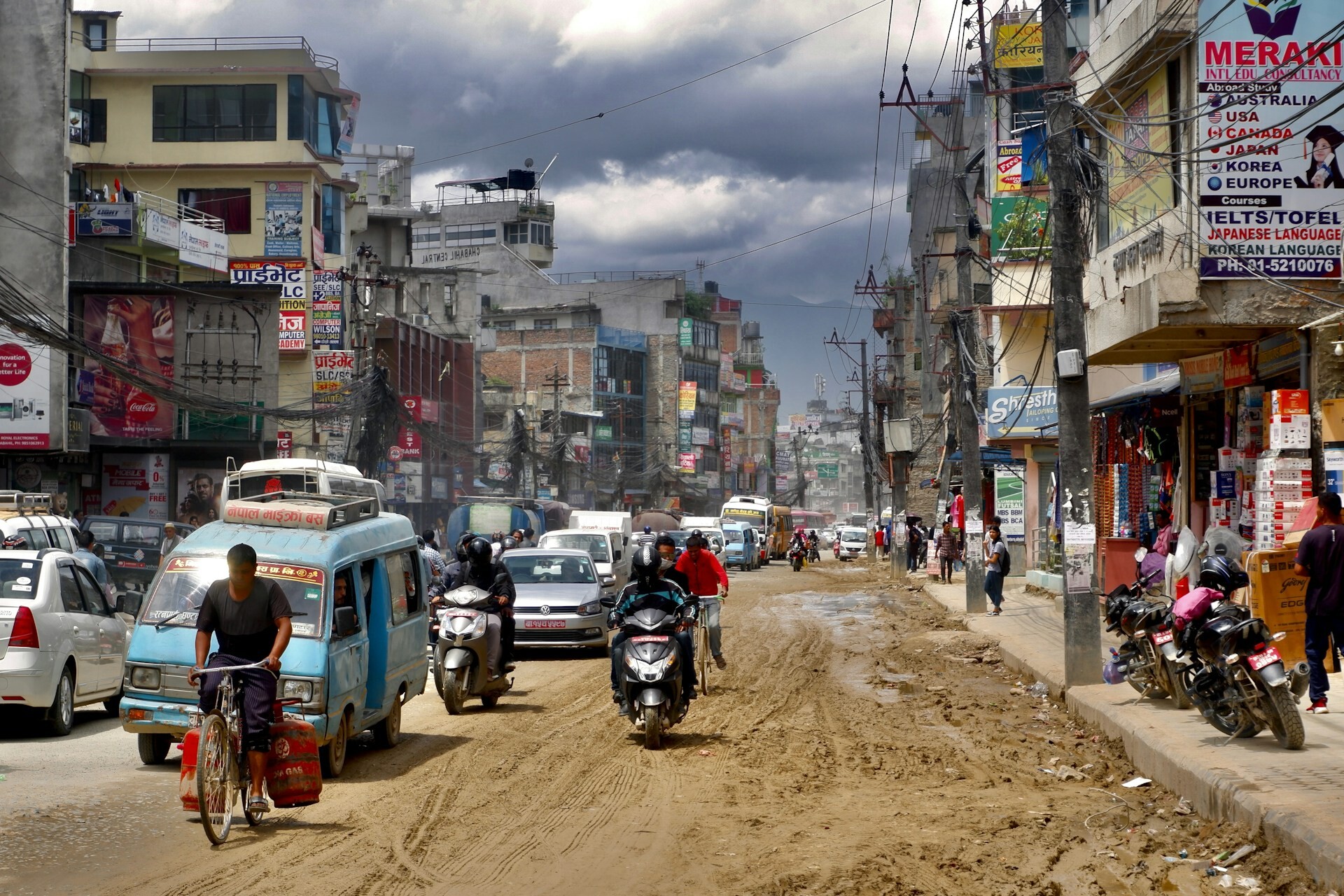
We might as well start here, because this is almost certainly where you'll end up first. Thamel is Kathmandu's legendary tourist district, a dense, tangled warren of narrow lanes packed with trekking gear shops, rooftop restaurants, thangka painting galleries, and approximately one thousand establishments selling essentially the same North Face jacket (the authenticity of which we shall leave as an exercise for the reader).Thamel is loud, colourful, and relentlessly commercial. It is also, against all odds, genuinely charming. Once you've made your peace with the fact that every shopkeeper will invite you in for tea with the enthusiasm of a long-lost relative, you'll find yourself rather fond of the place. The streets are a masterclass in sensory overload – incense mingles with diesel fumes, Tibetan singing bowls ring out alongside honking tuk-tuks, and string lights illuminate the evening like a fairy tale that someone has crumpled slightly and left in their pocket.
Do eat here. Do drink here. Do buy the yak wool socks – they're genuinely excellent. Just perhaps don't make any major geographic decisions after your second glass of raksi.
Durbar Square & the Old City: Where History Refuses to Be Quietly Preserved
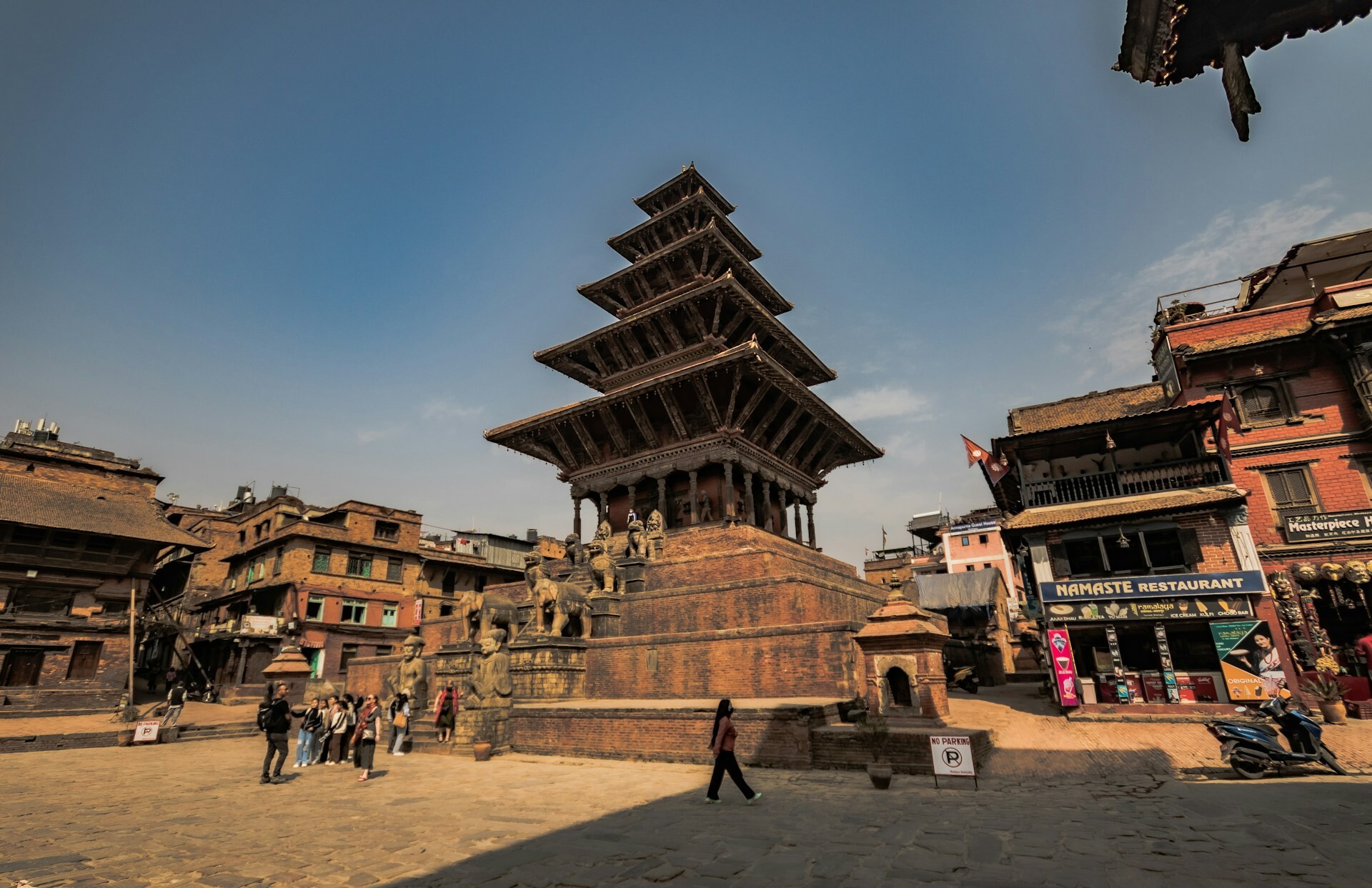
Just south of Thamel lies the beating, crumbling, magnificent heart of old Kathmandu: Basantapur Durbar Square. This UNESCO World Heritage Site is home to a collection of temples, courtyards, and royal palaces that span several centuries of Newar architecture. Some of them are immaculately maintained. Others appear to be held together largely by devotion and optimism, particularly since the 2015 earthquake did considerable structural damage across much of the area.Here you'll find the Kumari Ghar, home to the Living Goddess – a young girl selected through elaborate ritual to embody the deity Taleju. She peers out from a carved window occasionally, and tourists jostle for a glimpse with a kind of reverent excitement. Photography of the goddess herself is strictly forbidden, which roughly forty percent of visitors discover after the fact.
The square teems with pigeons, flower sellers, sadhus in saffron robes who are absolutely delighted to pose for photographs (for a small consideration), and elderly Newar women counting prayer beads with the focused serenity of people who have seen empires come and go and found all of them somewhat overrated.
Wander into the old city lanes and you'll find yourself in a medieval streetscape that has somehow persisted into the present: courtyards hidden behind unassuming doorways, neighbourhood temples strung with marigolds, and the scent of incense drifting from carved wooden windows. This is Kathmandu at its most extraordinary, and we strongly recommend simply getting lost in it.
Patan (Lalitpur): The Cultured Cousin
Across the Bagmati River lies Patan, officially its own city but functionally part of the greater Kathmandu Valley. If Kathmandu is the excitable elder sibling, Patan is the one who studied art history and has strong opinions about handicraft traditions. And rightly so.Patan Durbar Square is arguably more intact and atmospheric than its Kathmandu counterpart, and considerably less overrun with souvenir stalls. The Newar architecture here is extraordinary – pagodas, sunken courtyards (called hiti), and stone temples stacked so close together that the skyline looks like a fever dream designed by a particularly ambitious medieval architect.
Patan is also the centre of Nepal's metal-craft tradition. The workshops around the old city produce extraordinary statues in copper and bronze, crafted using the lost-wax casting technique that has been practised here for over a thousand years. Watching an artisan work is genuinely humbling – and then, naturally, entirely optional to buy something.
The Patan Museum, housed in a restored palace, is one of the finest museums in South Asia and will take you about two hours to get through properly. We mention this only because most people allow themselves twenty minutes and then wonder why they feel vaguely culturally short-changed.
Swayambhunath & the Western Hilltops: Eyes Upon You at All Times
Perched on a hillock to the west of the city is Swayambhunath, better known to tourists as the "Monkey Temple" – a name that is both irreverent and entirely accurate. The stupa at the summit is one of the oldest Buddhist shrines in Nepal, its gilded spire rising above the prayer flags with considerable dignity. The monkeys, meanwhile, operate with no dignity whatsoever and have been known to steal offerings, snacks, sunglasses, and the occasional mobile phone with practised efficiency.The climb to the top involves a steep flight of 365 steps (one for each day of the year, though the symbolism does not make your knees feel any better). At the summit, the great painted eyes of the Buddha gaze out from all four sides of the stupa, surveying the valley below with an expression of supreme compassion that we have come to interpret as, "Yes, we can see you. All of you. Always."
The views of Kathmandu from here are spectacular on a clear day, and a reminder that beneath the urban sprawl, this valley is genuinely, breathtakingly beautiful.
Bodhnath: The Great White Stupa and its Excellent Cafés
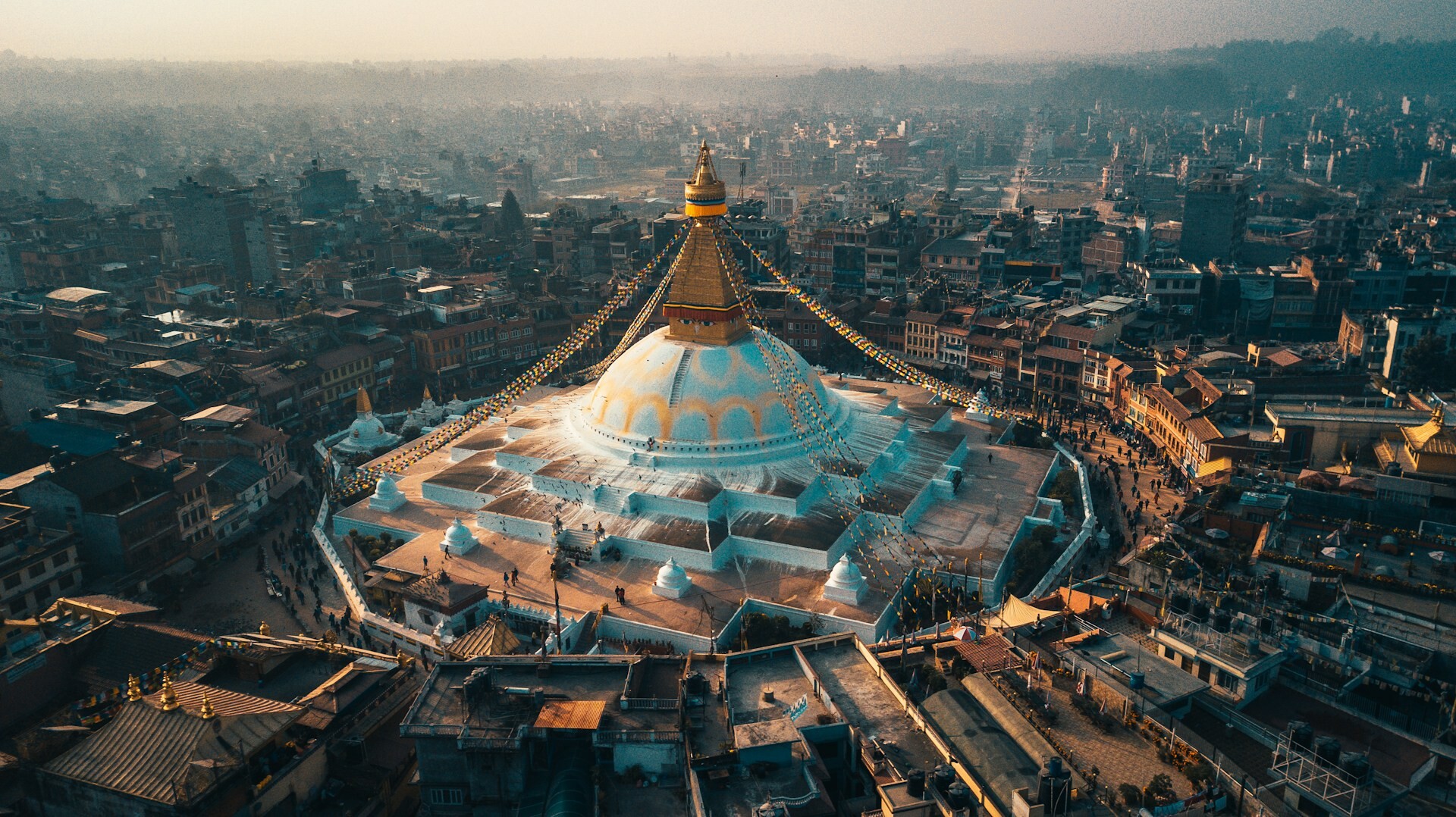
On the eastern edge of the city sits Bodhnath, and it is not subtle. The stupa here is the largest in Nepal and among the largest in the world – an immense white dome topped by the watchful eyes of the Buddha, encircled by a mandala of prayer wheels and crimson-robed monks. It is, by any measure, magnificent.The neighbourhood around Bodhnath is heavily Tibetan in character, a community that grew considerably after the Chinese occupation of Tibet in 1950 brought waves of refugees to Nepal. The result is a neighbourhood of monasteries, Tibetan restaurants, incense shops, and bakeries producing butter tea and momos in quantities that suggest the proprietors take breakfast very seriously indeed.
We recommend arriving early in the morning to walk the kora – the circumambulatory path around the stupa – alongside the pilgrims. It is one of the most quietly moving experiences Kathmandu has to offer. We also recommend the cafés on the upper floors of the buildings overlooking the stupa, where you can drink a very decent cappuccino while watching monks, tourists, pigeons, and the occasional confused dog all sharing the same circular world with surprising harmony.
Pashupatinath: Where Philosophy Becomes Unavoidable
A short walk from Bodhnath brings you to Pashupatinath, the holiest Hindu temple in Nepal and one of the most sacred Shiva shrines in all of Asia. Non-Hindus are not permitted inside the main temple, which is fine, because what happens on the ghats outside is rather more instructive.The banks of the Bagmati River here are lined with cremation platforms – the ghats – where funeral pyres burn throughout the day. Death, in Kathmandu, is not hidden away. It happens in public, attended by family, accompanied by ritual, and observed with the matter-of-fact acceptance that comes from a culture that has thought quite carefully about mortality and decided to look it squarely in the face.
First-time visitors often find this confronting. That's entirely understandable. But it is also one of the most philosophically bracing experiences the city offers, and a reminder that Kathmandu is a place where the sacred, the human, and the profound are not kept in separate rooms. They all share the same riverbank.
Boudha to Chabahil: The In-Between Bits
Between the great landmark districts are the ordinary neighbourhoods that most first-time visitors sail through in taxis without stopping – Chabahil, Gyaneshwar, Dilli Bazaar – and this is entirely their loss. These are the parts of Kathmandu where people actually live: where the vegetable markets spill into the street each morning, where neighbourhood temples are wreathed in marigolds and incense for morning puja, where children in school uniforms navigate the same potholes that have allegedly been awaiting repair since 1987.These neighbourhoods won't make your highlight reel. They will, however, give you an honest sense of how the city actually functions on an ordinary Tuesday, and we'd argue that's worth at least an afternoon of aimless wandering.
A Few Final Words of Orientation
Kathmandu does not reveal itself immediately. It is a city that rewards patience, a willingness to be confused, and a genuine curiosity about the lives of the people who have called this valley home for thousands of years. It will smell strange and sound overwhelming and move at a pace that seems to operate according to rules no one has written down.You will get lost. You will be invited into shops you had no intention of entering. You will eat a momo that will rearrange your feelings about dumplings permanently. You will find a temple tucked into a street corner and wonder how something so ancient can coexist so comfortably with a mobile phone repair shop on one side and a fried chicken stall on the other.
The answer, we think, is that Kathmandu has never had much patience for the idea that the sacred and the everyday should be kept apart. It is all one thing here – all of it, all at once.
We hope you enjoy every bewildering, magnificent moment of it.
Namaste.