Why Do So Many People Move to Australia and Never Come Back?
6 minutes
Every year, hundreds of thousands of people move to Australia. Some are chasing jobs, some are following partners, some have simply run out of reasons not to go. A significant number arrive telling themselves it’s temporary – a year or two, an adventure, something to do before real life resumes. And then, somewhere between the first winter they don’t have to endure and the morning they realise they’ve started saying “arvo” without irony, something shifts. The return ticket gets pushed back. Then pushed back again. Then quietly cancelled.
Australia has one of the highest proportions of foreign-born residents of any country on earth – around 30% of the population was born overseas. This is not an accident. It is the cumulative result of a great many people who came for a fixed period and discovered, to their own mild surprise, that they had no particular desire to leave. The reasons are not mysterious, but they are worth examining, because they add up to something more than the sum of their parts.
This sounds trivial. It is not trivial. People who move to Australia from northern Europe or Canada or anywhere that experiences a genuine winter consistently underestimate the psychological effect of reliable sunshine. Not the occasional nice day, but the structural assumption that tomorrow will probably also be fine, that you can make outdoor plans without a backup plan, that the weekend will not be cancelled by the sky.
It works on you slowly. After a year or two, going back to visit family in February and standing at a bus stop in horizontal rain starts to feel not just unpleasant but faintly absurd – an unnecessary imposition that you no longer have to accept. Returning to a grey climate after several Australian summers is one of the more reliable triggers for booking a flight back. The weather is not the whole story. But it is, without question, part of the foundation everything else is built on.
The Lifestyle Recalibrates Your Expectations
Australia has ranked among the top ten countries globally for work-life balance for years running. The standard full-time working week is 38 hours. Annual leave entitlements are generous. The culture around actually taking that leave – rather than treating it as a theoretical right to be apologised for using – is genuinely different from many other countries. Nobody is going to look at you strangely for leaving on time.
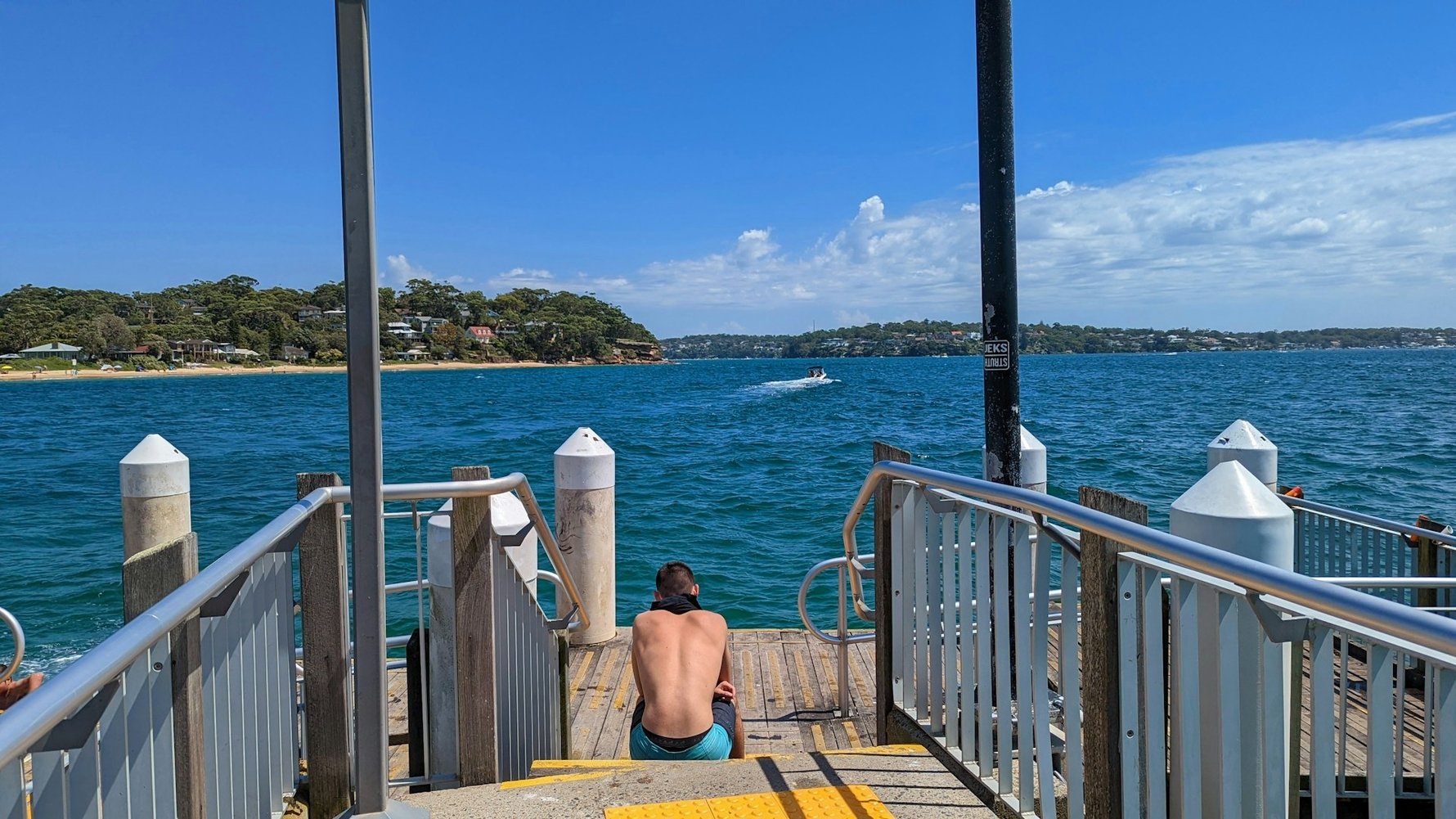
Beyond the formal arrangements, there is something harder to quantify about the pace of Australian urban life. The proximity to the outdoors in every major city means that the transition from desk to beach, trail or water is measured in minutes rather than hours. People surf before work in Sydney. People hike at weekends in Perth. People cycle to cafes in Melbourne on Tuesday mornings for no particular reason. The outdoor life is not a weekend treat bolted onto a working week – it is threaded through it.
Once you have lived like this for long enough, the idea of returning to a life where the outdoors is optional, or seasonal, or requires a significant journey to access, stops being neutral. It starts to feel like a subtraction.
There is a piece of informal wisdom that circulates among long-term immigrants to Australia, passed from one generation of arrivals to the next: if you stay for more than seven years, you probably won’t go back. Not because leaving becomes impossible, but because belonging starts to shift. The friendships have deepened past the point of easy replacement. The rhythms of the country have become your rhythms. And crucially, when you go back to visit the place you came from, you begin to notice – with a slight shock – that you feel like a guest there too.
A Canadian who emigrated to Australia in the 1960s put it plainly in an online forum, the way people sometimes do when they’re not trying to be eloquent: “When you have lived in Australia for more than seven years, you can’t go back to the country you came from to live. Sure you can go for a visit. But family and friends will find you both familiar, and a stranger. You don’t belong there anymore. And the proof of this comes at the end of your visit, when you get on the plane bringing you back to Australia, and you can’t wait to get back.”
The exact number of years is beside the point. The underlying observation is not.
The Practical Anchors Accumulate
Superannuation, Australia’s compulsory retirement savings system, deserves a mention here because it operates as an inadvertent anchor. Your employer has been putting 12% of your wages into a retirement fund since you started working. Leaving Australia means leaving that pot behind until retirement age, which is a meaningful financial consideration that doesn’t exist in countries with less robust pension arrangements. It is not the reason people stay, but it is one of the reasons the maths of leaving gets complicated.
Property is the bigger anchor. Those who buy into the Australian market – and despite the eye-watering prices, many do – find themselves substantially committed. Selling, repatriating funds, and starting again somewhere with higher property prices and no local credit history is a significant undertaking. The homeowner who arrived for two years and bought a flat in Brisbane in year three is, statistically, not going anywhere soon.
The Distance That Cuts Both Ways
Australia’s remoteness – the tyranny of distance, as the historians call it – is one of the hardest things about living there, and also, paradoxically, one of the things that makes leaving harder. The 24-hour flight back to Europe or North America means that going home for Christmas is a serious logistical and financial commitment rather than a routine. Families see each other less. The connection to the old life attenuates gradually, not through any intention, but through the simple friction of distance.
The result, over years, is that Australia stops being the far-away place you moved to and becomes the place where your life is. The family back home remains loved and missed, but they are the ones who feel far away now. The direction of the longing reverses, and most people don’t notice it happening until it already has.
The Country That Is Hard to Argue With
None of this is to say that Australia is perfect, or that everyone who moves there stays, or that the experience is uncomplicated. The cost of living is brutal. The housing market is a recurring national crisis. Making deep friendships as an adult in a new country is genuinely hard work, and Australia’s tight social networks – the flip side of a friendly, community-oriented culture – can be slow to absorb newcomers. People leave. People go home. People wish they had done one or the other sooner.
But the ones who stay do so, when you strip it back, because Australia makes a case for itself that most countries cannot match: a wealthy, stable, safe, sun-drenched country with a functioning healthcare system, a culture that doesn’t punish you for enjoying your life, and the distinct impression that the trade-offs are, on balance, worth it. It’s not a perfect country. It’s just a very hard one to leave.