Why Australians Are Obsessed with Coffee (and Why They’re Right)
6 minutes
There is a moment that happens to almost every visitor to Australia, usually on the second or third morning. You wander into a café, order a coffee, and receive something so noticeably better than what you were expecting that you pause mid-sip, stare at the cup, and do a quiet internal recalculation of everything you thought you knew about coffee. It’s not that the rest of the world doesn’t have good coffee. It’s that Australia has made good coffee the baseline, the unremarkable standard from which everything else is measured, and anything that falls short is regarded with the sort of polite but unmistakable pity usually reserved for people who order well-done steak.
This is not an accident. It is the product of a long and surprisingly interesting history, and understanding it goes some way towards explaining why Australians treat their daily flat white with a reverence that visitors sometimes find faintly baffling.
It Started with Immigrants, as Most Good Things Do
Australia arrived late to coffee. The British colonists who pitched up in 1788 were firm tea drinkers, and for the best part of a century the country followed suit. By the early 1880s, Australians were among the largest per-capita tea consumers in the world. Coffee existed, but it was a fringe concern.
What changed everything was the wave of Italian and Greek immigrants who arrived in the years following World War II. They brought with them espresso machines, a deeply held understanding of what coffee was supposed to taste like, and the conviction that a café was not merely a place to consume caffeine but a place to live – to sit, to talk, to be a person in public. By the 1950s and 60s, Melbourne and Sydney had thriving espresso bars rooted in these communities, and the rest of the country gradually caught up.
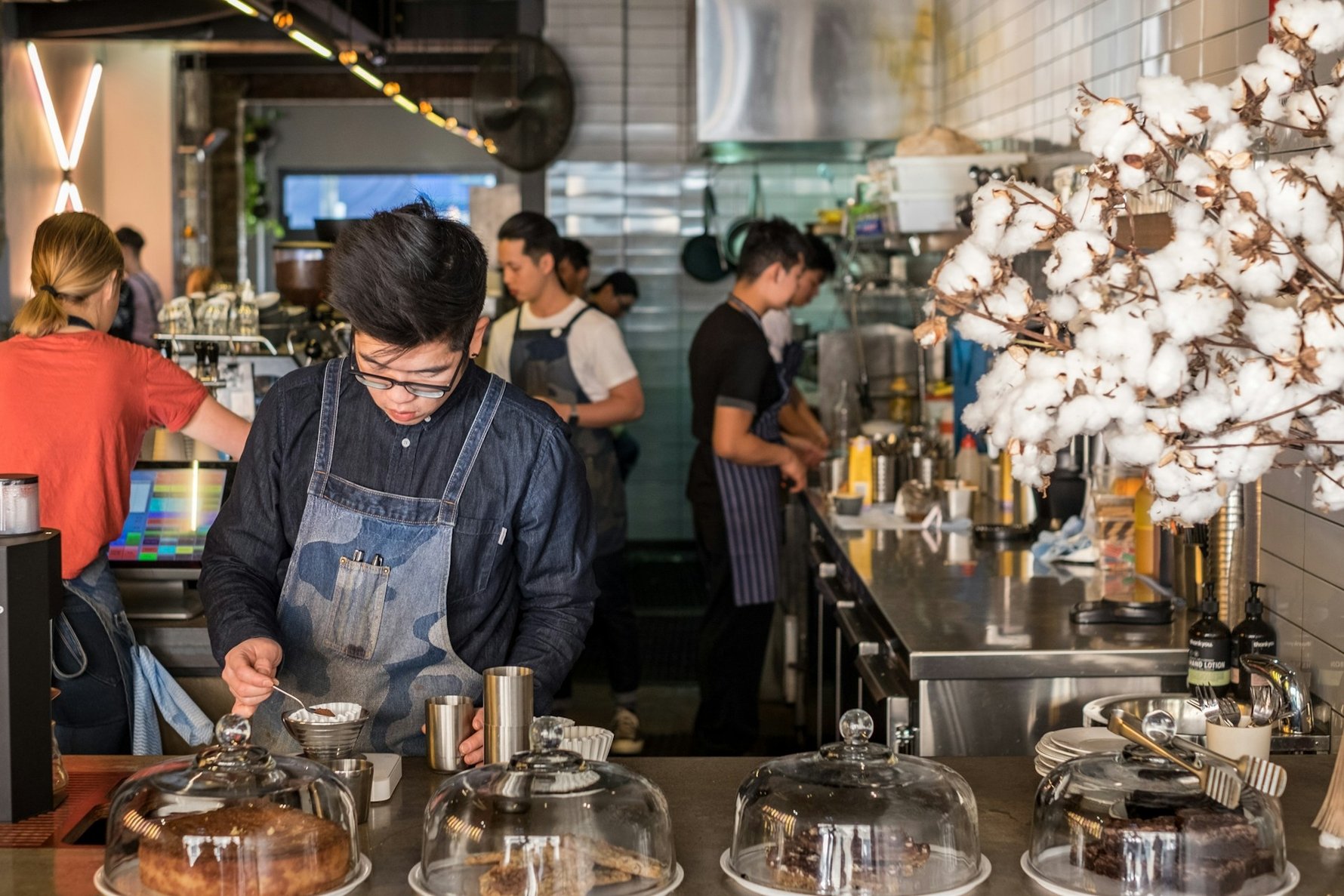
Melbourne, in particular, absorbed this influence completely. Lygon Street in Carlton became the epicentre of Italian-Australian culture, and the coffee culture that grew from it never really stopped growing. Today, roughly 95% of Australian cafés are independently owned, a figure that tells you more about the country’s coffee values than any number of quality rankings.
The Flat White Question
No discussion of Australian coffee gets far without running into the flat white, and no discussion of the flat white gets far without running into the question of who actually invented it. Australia and New Zealand have been arguing about this for decades with an enthusiasm that neither side shows any sign of abandoning.
The most documented claim comes from Alan Preston, a Sydney café owner who put the words “flat white” on the menu at Moors Espresso Bar in 1985, and has the photographs to prove it. Preston traces the drink back further still, to Italian sugar farmers in regional Queensland, whose espresso-with-steamed-milk became the template for what eventually got named and formalised in Sydney. New Zealand disputes this version of events with considerable vigour.
What’s not in dispute is the drink itself: espresso with steamed milk and a thin layer of microfoam, a higher coffee-to-milk ratio than a latte, smoother and more focused than a cappuccino. It spread from Australasian cafés to the rest of the world gradually, then very quickly – Starbucks added it to its global menu in 2015, which Australians received with the particular mix of pride and mild contempt that tends to accompany international adoption of something you’ve been doing quietly for thirty years.
Melbourne, never one to simply do what everyone else does, has its own variation. The Magic – a double ristretto with steamed milk, served in a 150ml tulip cup – is stronger, smaller, and more concentrated than a flat white, and is understood by every Melburnian and almost nobody else. Perth does a “long mac topped up.” The regional vocabulary of Australian coffee is extensive and not entirely forgiving of the uninitiated.
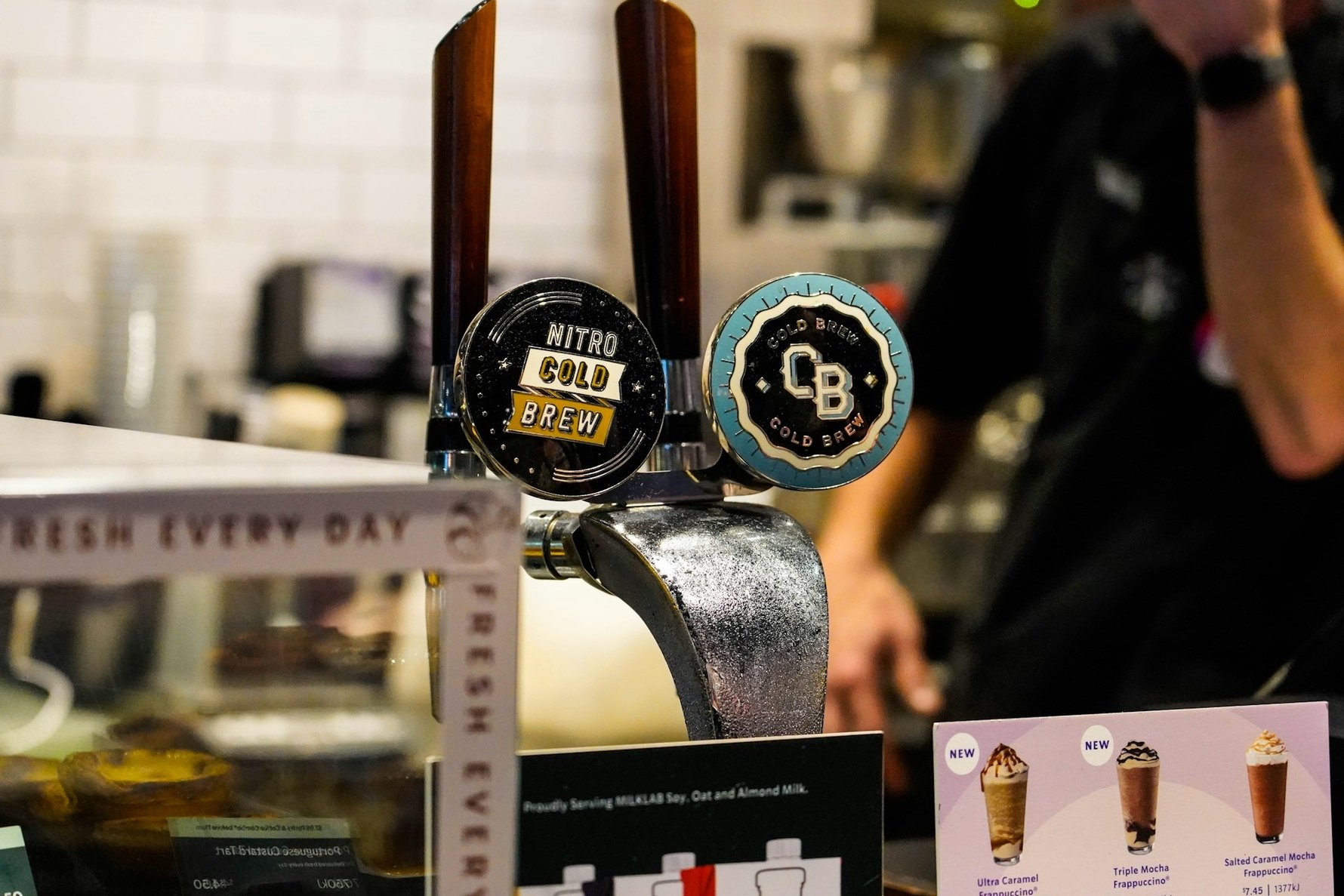
The clearest proof that Australian coffee culture is a genuinely distinct thing, and not just marketing, is what happened when Starbucks arrived. The chain opened its first Australian store in Sydney in 2000, expanded to 84 locations over eight years, accumulated AU$143 million in losses, and in 2008 closed 61 stores in a retreat that became something of a business school case study.
The reasons are instructive. Australians weren’t interested in large, sweet, milky drinks at premium prices when their local independent café was serving superior espresso for less, made by a barista they knew by name. Starbucks had assumed, not unreasonably given its global track record, that coffee was coffee and scale was its own reward. Australia disagreed. The remaining Starbucks locations now cater largely to tourists – an outcome the Australians find entirely fitting.
Quality as a Given, Not a Selling Point
What distinguishes Australian coffee culture from most others is that quality has been normalised rather than marketed. In many countries, a “specialty coffee shop” announces itself as such, charges accordingly, and attracts a particular kind of customer. In Australian cities, it is simply a café. The expectation of properly sourced beans, correctly calibrated espresso, and competently textured milk is not a premium aspiration – it is the minimum acceptable standard at the place around the corner from the office.
Barista training is taken seriously. Latte art is not a gimmick but an indicator of milk technique. Single-origin beans appear on menus with the same specificity that wine lists apply to vineyards. The language is precise: a long black (espresso over hot water, never the reverse), a piccolo (single shot, small amount of steamed milk), a ristretto (shorter, more concentrated extraction). Ordering the wrong thing confidently is possible; ordering something genuinely bad is almost not.
Coffee as a Social Institution
Perhaps the most important thing to understand about Australian coffee culture is that it is not primarily about coffee. The drink is excellent, but it is also a vehicle for the café as a social space – the morning ritual, the meeting that isn’t quite a meeting, the reason to leave the house on a Saturday, the daily interaction with a human being who knows your order. Australians do not, as a rule, grab a coffee and go. They sit with it. They have another one. The café is a room they share with their neighbourhood, and the coffee is the admission price.
This is the Italian inheritance in full expression, transplanted to the other side of the world and adapted over seventy-odd years into something distinctly Australian. Not flashier than the original, not louder, but embedded in daily life so thoroughly that the prospect of a bad cup has become genuinely distressing – a small but meaningful failure that the day should not have to absorb.
We think that’s right, actually. A good coffee in the morning is not a luxury. It is, as the Australians correctly understand, the reasonable minimum.