Las Vegas for Non-Gamblers: What to Do, See and Eat Without Setting Foot in a Casino
9 minutes
The standard assumption about Las Vegas – that it is essentially a casino with some hotel rooms attached, and that visitors who do not gamble are in the wrong place – is understandable and wrong. The casino operators have spent 80 years cultivating it, because a city that exists solely to extract money from a specific activity has a strong interest in the idea that the activity is the point. It is not the only point. Las Vegas has world-class museums, one of the most interesting pieces of American urban history in Fremont Street, a performing arts scene that runs from Cirque du Soleil to the Las Vegas Philharmonic, day trips to four national parks and several state parks, and a food culture that has evolved well beyond the all-you-can-eat buffet, though those still exist too.
The honest caveat is that the casino is hard to avoid architecturally. Most of the large hotels have gaming floors between the entrance and everything else, including the lifts, the restaurants and the pool. You will walk through them. This is fine. Walking through a casino without gambling is not difficult; it requires only the willingness to keep walking. The more interesting caveat is that downtown Las Vegas – the Fremont Street area, the Arts District, the Mob Museum – has significantly less of this problem than the Strip, and is where most of what makes this city genuinely interesting is concentrated anyway.
Las Vegas has three museums that would hold their own in any major city, and all three are within walking distance of each other in the downtown area.
The Mob Museum (officially the National Museum of Organized Crime and Law Enforcement) occupies the 1933 federal courthouse where the Kefauver Committee investigated organised crime in 1950. It is a serious institution with a serious collection: the actual electric chair from the Nevada State Prison, authentic mob artefacts, and a four-floor permanent exhibition that covers the rise of the American mob, its relationship with Las Vegas specifically, and the law enforcement efforts that eventually dismantled the major families. The building itself is part of the exhibit. In the basement, the museum operates a working speakeasy and distillery, which is either a pleasant irony or a completely logical extension of the theme. Admission is around $30–35 for adults; allow at least two hours.
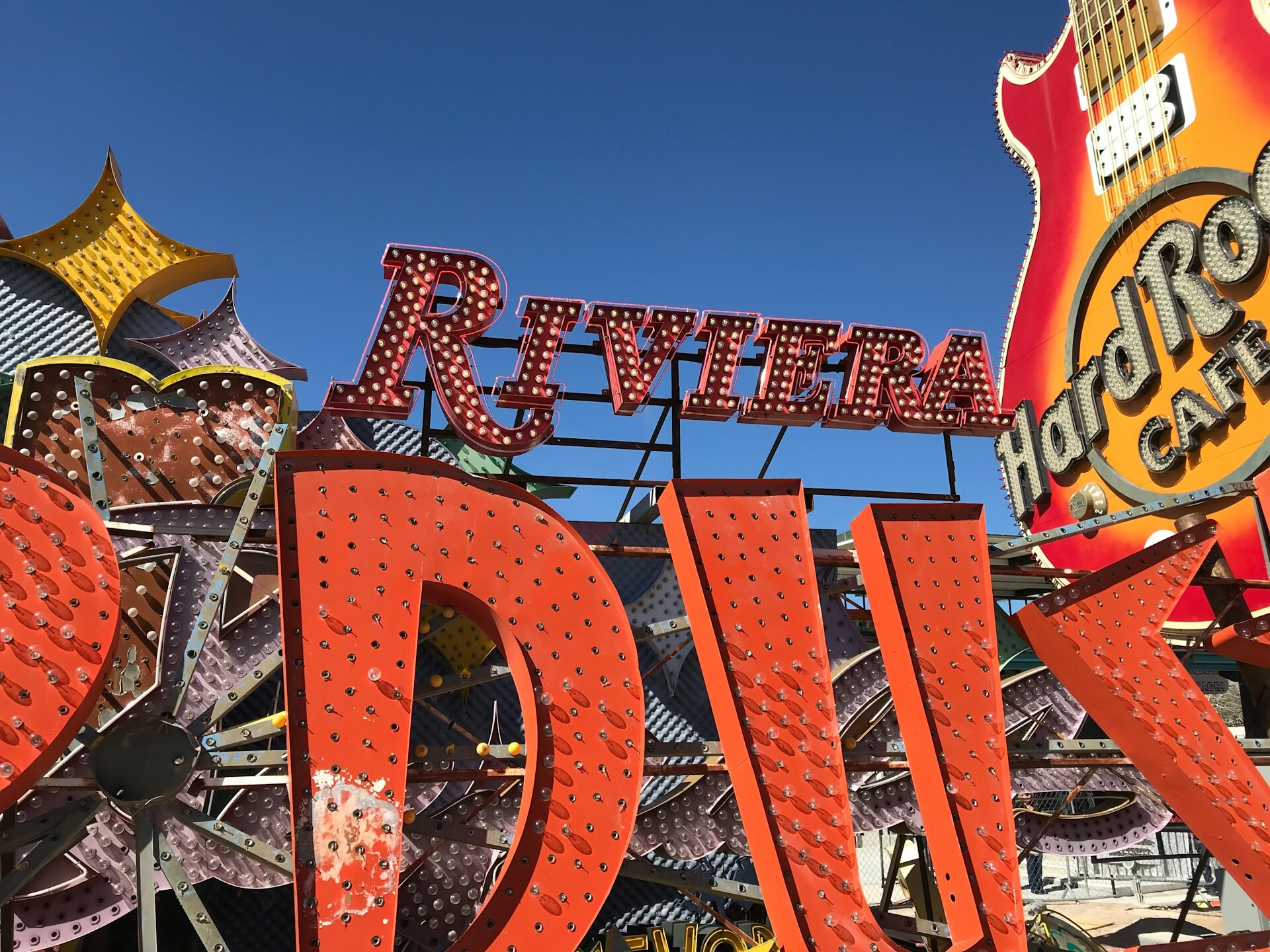
The Neon Museum preserves the historic signs of Las Vegas: the neon pulled from demolished or rebranded casinos, arranged in an outdoor boneyard north of downtown. More than 200 signs, from the Stardust to the Sahara, sit in various states of weathered glory alongside 27 fully restored signs that light up at night. The visitor centre is the rescued lobby of the La Concha Motel, a 1961 shell-shaped building designed by Paul Revere Williams, one of the most significant architects in Las Vegas history. Daytime admission from around $20; evening guided tours sell out and should be booked in advance at neonmuseum.org.
The National Atomic Testing Museum, on East Flamingo Road near the University of Nevada campus, is a Smithsonian-affiliated institution covering the Nevada Test Site and the nuclear weapons programme. Las Vegas was 100 kilometres downwind of the test site during the above-ground testing years, 1951 to 1963, and the relationship between the city and the bombs – the “atomic tourism” of the era, the mushroom cloud viewing parties, the casino cocktails named after nuclear tests – is genuinely fascinating. The Ground Zero Theatre simulates the experience of observing a test from the Nevada desert, which is one of the stranger museum experiences available in the United States. Admission around $22 for adults.
Live Shows and Performing Arts
Las Vegas has the most concentrated live entertainment offer of any city in North America, and most of it has nothing to do with gambling. The challenge is navigating it, because the city makes no particular effort to distinguish between the genuinely excellent and the merely expensive.
The Cirque du Soleil productions are the most consistent benchmark. The company has operated in Las Vegas since 1993 and currently runs multiple shows across different casino venues; “O” at the Bellagio, a water-based production performed in and above a 1.5 million-litre pool, is the one most likely to justify the ticket price for a sceptic. Tickets vary considerably by seat and night; booking directly through the Cirque du Soleil website rather than through third-party resellers avoids the worst of the markup.
The residency system – major music acts committing to extended runs at the large casino auditoriums – means the live music calendar is rarely thin. The MGM Grand Garden Arena, Dolby Live at Park MGM, and T-Mobile Arena host the major acts; what’s on depends entirely on timing. Check the schedule for your dates before dismissing Las Vegas as a music destination, because the programming is frequently serious.
The Smith Center for the Performing Arts, in the downtown cultural campus adjacent to the Mob Museum, is a different proposition entirely: a genuinely distinguished concert hall in an Art Deco-influenced building, hosting the Las Vegas Philharmonic, touring Broadway productions and visiting orchestras. It is the kind of institution that Las Vegas’s reputation makes easy to overlook and its programme makes worth seeking out. Check thesmithcenter.com for what’s on during your visit.
Food and Drink
The Las Vegas food scene has evolved considerably from its buffet-and-steakhouse origins. The city now has a serious restaurant culture, partly because the casino resort model attracts significant investment in hospitality and partly because a metropolitan area of two million people generates real demand. The caveat is that the Strip restaurant scene is dominated by celebrity chef outposts that trade on names and charge accordingly; the better value and often better food is in the downtown area and the neighbourhoods beyond the resort corridor.
The Grand Central Market at the Fremont Street Experience end of downtown is the most accessible concentration of independent food options in the city. The 18b Arts District, centred on Charleston Boulevard and Casino Center Drive south of Fremont, has the best cluster of independent restaurants in the city: the kind of neighbourhood food that exists for people who live there rather than people passing through, at prices that reflect it. The First Friday event on the first Friday of each month adds food trucks and street vendors to an already reasonable offer.
Atomic Liquors at 917 Fremont Street is the oldest freestanding bar in Las Vegas, opened in 1952, named for the nuclear tests whose mushroom clouds patrons watched from the roof. It has been restored to its original configuration and operates with the seriousness of an institution that knows exactly what it is. It is also simply a good bar, which is worth stating plainly. The speakeasy in the basement of the Mob Museum, the Underground, requires museum admission or a separate ticket and serves Prohibition-era cocktails in a restored 1920s-style bar; the gimmick is earned.
The Outdoors
Las Vegas is surrounded by some of the most dramatic desert landscape in North America, and the contrast between the casino corridor and what lies 30 minutes outside it is one of the more genuinely startling experiences the city offers.
Red Rock Canyon, 30 kilometres west of the Strip on State Route 159, is 46,000 acres of red Aztec Sandstone with a 13-mile scenic drive, hiking trails for all levels, and views that have nothing to do with anything else Las Vegas offers. The Valley of Fire State Park, about an hour northeast, is arguably more spectacular and considerably less visited. Both are day trips in their own right and are covered in more detail in our day trips guide. For something closer and more accessible, the Springs Preserve – 180 acres of desert garden, museum and trails on the site of the original springs that made the city possible – is ten minutes from the Strip and offers a complete change of register without requiring a car full of supplies.
The Marjorie Barrick Museum of Art at the University of Nevada campus doubles as a gateway to the broader university neighbourhood, which has the coffee shops, bookshops and ordinary urban texture that the Strip conspicuously lacks. It is a 15-minute drive from the casino corridor and a completely different city.
Architecture and Walking
Las Vegas is not a walkable city in the conventional sense, but the Strip itself is navigable on foot if the heat is manageable, and the sheer density of architectural ambition along its 6.5 kilometres is worth engaging with directly rather than from a car. The Venetian’s interior – the painted sky, the fake canals, the gondoliers – is free to enter and represents a commitment to architectural derangement that rewards serious attention. The Bellagio Fountains are free, run every 15 to 30 minutes from early afternoon, and are better than they have any right to be. The Bellagio Conservatory and Botanical Garden, inside the hotel near the main entrance, changes its installation seasonally and is also free.
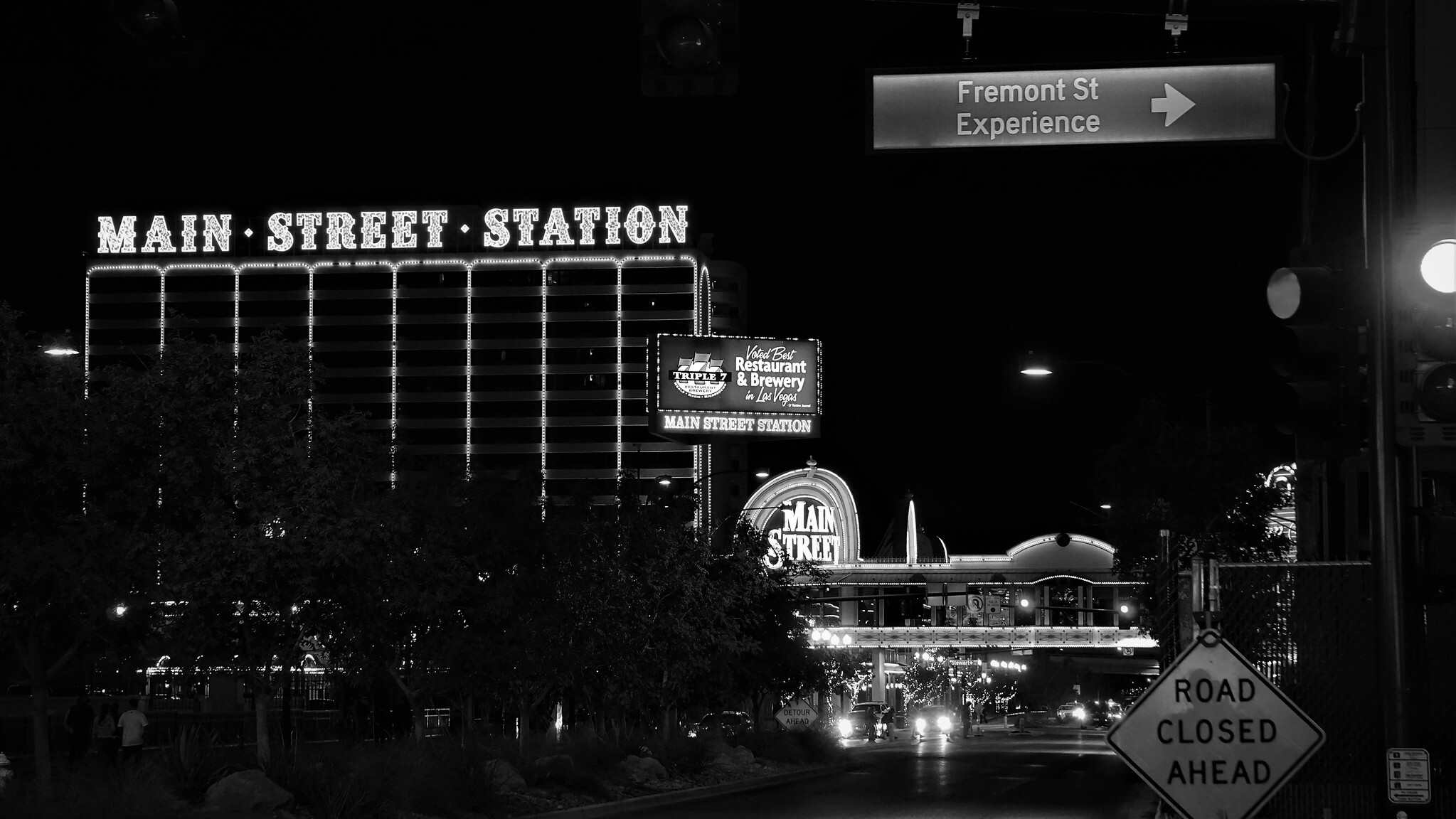
Downtown, the Fremont Street Experience canopy and the historic casino facades are best after dark; the El Cortez, operating continuously since 1941 and briefly owned by Bugsy Siegel and Meyer Lansky, is on the National Register of Historic Places and is the kind of building that becomes more interesting the more you know about it. The Arts District is best on foot, particularly on First Friday evenings, when the galleries open, the murals are at their best in the low light, and the neighbourhood functions as it was designed to: as a place for people who live in Las Vegas rather than people visiting it.
Practical Notes
A non-gambling visit to Las Vegas does not require staying on the Strip. Downtown hotels, including the El Cortez itself, offer considerably better value and put you within walking distance of the Mob Museum, the Neon Museum, Fremont Street and Atomic Liquors. The Arts District is a short drive or longer walk south. The Strip is accessible by the Las Vegas Monorail (which runs along the east side of the resort corridor) or by the free tram services that connect some of the northern and southern casino clusters, or by rideshare, which is inexpensive and abundant.
The best practical advice for non-gamblers in Las Vegas is the same as it always is: spend less time on the Strip and more time downtown. The Strip is a spectacle worth seeing; it is not where the interesting city is. The interesting city is on Fremont Street, in the Arts District, in the Mob Museum, in the geology of Red Rock Canyon and the neon of the Boneyard. The casinos will still be there if you want to walk through one. They are not hard to find.