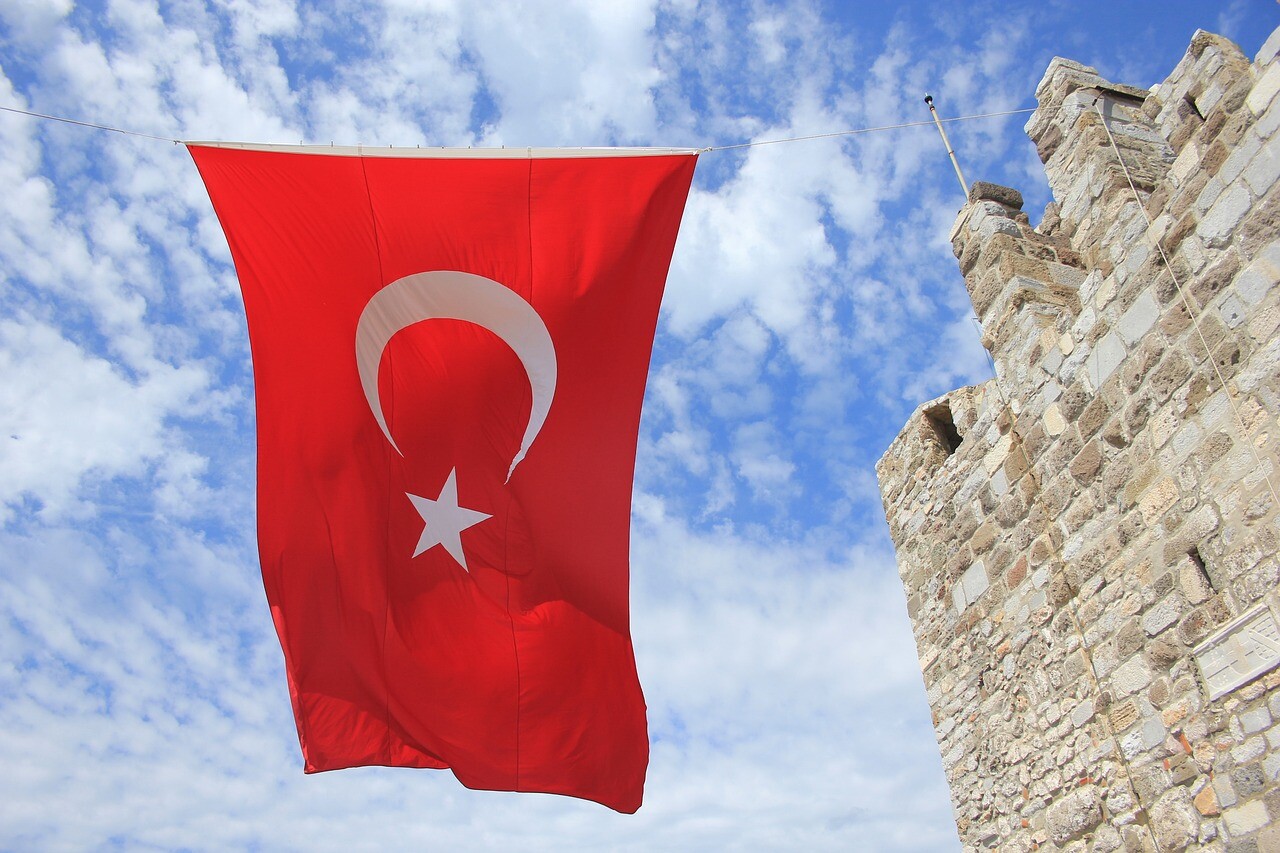
Few cities carry the weight of history as visibly as Istanbul. The only metropolis in the world that sits on two continents, it has served as the capital of the Roman, Byzantine and Ottoman empires in turn, accumulating monuments the way other cities accumulate coffee shops. The result is a place where a sixth-century Byzantine cistern sits beneath a busy street, where the greatest mosque of the Ottoman Empire faces the greatest church of the Byzantine Empire across a square, and where a medieval Genoese watchtower peers out over a strait that has been strategically contested for roughly three thousand years. It is, in short, a lot. Prices listed here were accurate at time of writing, though Istanbul’s attractions have a way of adjusting their fees – checking official websites before you visit is not excessive caution.
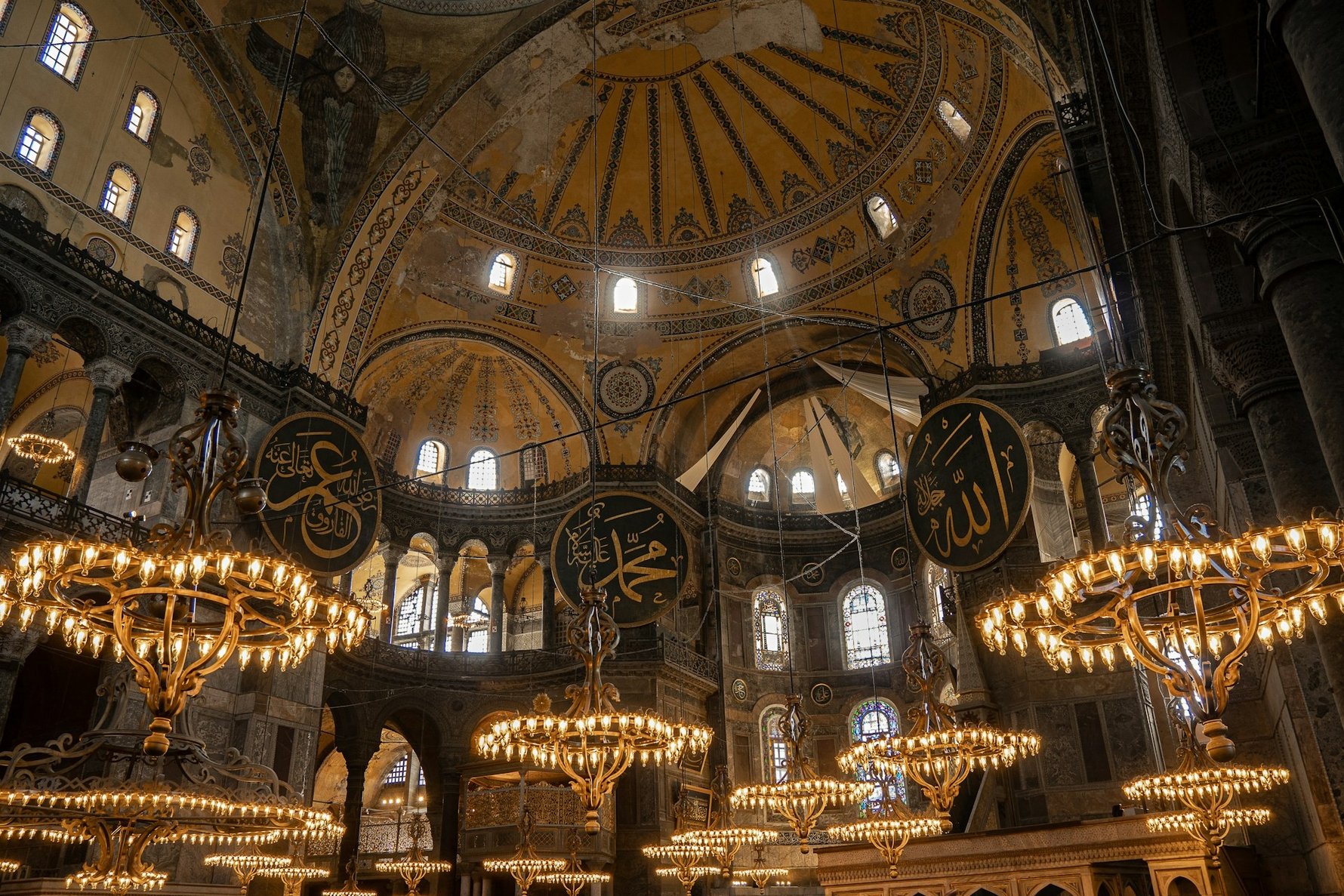
If Istanbul had to offer only one building to justify the journey, it would be this one. The Hagia Sophia was built between 532 and 537 under the Byzantine Emperor Justinian I, who reportedly surveyed the completed dome and announced that he had surpassed Solomon. The dome is 55 metres high and, for nearly a thousand years, the building was the largest cathedral in the Christian world. When Mehmed the Conqueror rode into Constantinople in 1453, he had the building converted to a mosque with an efficiency that spoke to both his practicality and his appreciation of what he had just won. It remained a mosque until Atatürk secularised it in 1935, then functioned as a museum until 2020, when it became a working mosque again – a decision that generated rather more international commentary than most architectural reclassifications tend to.
The building’s interior is a layered record of every identity it has held: Byzantine mosaics, Ottoman calligraphy roundels, four minarets added at various points by various sultans, and curtains now deployed to shield the Christian imagery during prayer times. The result is a space that no single faith or era quite owns, which is both its historical interest and, for some, its political complexity. Come first thing in the morning, wear modest clothing, and allow longer than you think you will need.
Location: Sultan Ahmet Mahallesi, Ayasofya Meydanı No. 1, 34122 Fatih/Îstanbul
Best time to visit: Arrive at opening time to avoid the worst of the crowds. The mosque is closed to non-worshippers during the five daily prayer times.
Ticket prices: Around €25 for non-Muslim visitors; free for Muslim visitors attending prayer. Book tickets online in advance at muze.gov.tr or the official Hagia Sophia site.
Good to know: Modest dress is required; women must cover their hair and shoulders, and shoes must be removed. The Istanbul Museum Pass does not cover Hagia Sophia.
2. Topkapı Palace
For nearly four centuries, the Topkapı Palace was the nerve centre of an empire that stretched across three continents. Construction began in 1459 under Mehmed the Conqueror, built on the promontory of the old Byzantine acropolis where the views alone would have been argument enough for the location. At its peak the complex housed up to four thousand people, including the Sultan, his harem, his court and a small city’s worth of administrative, educational and religious infrastructure. Thirty sultans ruled from here before AbdAbdülmeciduuml;lmecid I, having grown tired of what was, by the mid-19th century, a rather medieval arrangement, relocated to the rather more European-feeling Dolmabahçe Palace in 1856.
The palace is now a museum of exceptional range. The Imperial Treasury contains objects of the sort that tend to prompt extended silences: the Topkapı Dagger, the Spoonmaker’s Diamond, a throne encrusted with approximately eight thousand pieces of enamel. The Harem – a separate ticket – comprises over three hundred rooms governed by a hierarchy so elaborate it required its own administrative language. The kitchen wing holds a collection of Chinese celadon porcelain, prized by the Ottomans in part because of the belief that it would change colour if the food within it was poisoned. It did not, as a general rule, but it was a reasonable precaution given the occupational hazards of being a sultan.
Location: Cankurtaran Mahallesi, 34122 Fatih/Îstanbul (adjacent to Hagia Sophia)
Best time to visit: Arrive early and plan on a minimum of half a day. The Harem requires a separate ticket and its own queue.
Ticket prices: Around €30 for the main palace; additional fee for the Harem. Check muze.gov.tr for current prices and to book in advance. Closed Tuesdays.
Good to know: The fourth courtyard offers arguably the finest views in the city: the Bosphorus, the Golden Horn and the Sea of Marmara all visible simultaneously. Worth the walk even if the exhibitions have worn you down.
3. The Blue Mosque
The Sultan Ahmed Mosque, known universally as the Blue Mosque, is technically the underdog in its immediate neighbourhood. It stands directly opposite Hagia Sophia, which was not an accident: Sultan Ahmed I, who commissioned the building in 1609, was 19 years old, had not yet won a meaningful military victory, and was rather keen to leave a legacy. The result is the only imperial mosque in Istanbul with six minarets, a decision that caused considerable theological controversy, since six minarets had previously been the exclusive prerogative of the mosque in Mecca. According to a story that may or may not be true, the architect misheard the Sultan’s instruction for “altın minare” (golden minarets) as “altı minare” (six minarets). Either way, the Sultan resolved the issue by funding a seventh minaret at Mecca, which suggests the whole thing was embarrassing enough to require resolution.
The interior justifies the queues. More than 20,000 handmade Îznik tiles in over fifty tulip-based designs line the lower walls, and 260 stained-glass windows (the originals were a gift from Venice) let in enough light to make the blue seem to glow from within. The mosque remains an active place of worship, which means access for tourists is paused during the five daily prayers. It is also free to enter, which goes some way towards explaining why it is very busy.
Location: Sultan Ahmet Mah., Atmeydani Cd. No. 7, 34122 Fatih/Îstanbul
Best time to visit: Early morning, before the tour groups arrive. Check prayer times before you go; closures last about 90 minutes around each prayer.
Ticket prices: Free. Donations are welcome.
Good to know: Modest dress is required; headscarves and shoe bags are available at the entrance. A heavy iron chain hangs at the western entrance: even the Sultan had to bow his head when entering on horseback, as a reminder of humility before God. Aim for the entrance on the south side to avoid the worst of the tourist queues.
4. Basilica Cistern
Justinian I built the Basilica Cistern in 532 – the same year he began the Hagia Sophia – as a water reservoir for the Great Palace of Constantinople. Seven thousand workers produced a subterranean chamber 143 metres long and 65 metres wide, supported by 336 marble columns arranged in twelve rows, many of them cannibalised from older structures across the empire. The whole thing held 80,000 cubic metres of water and, in the manner of Justinian’s more ambitious projects, was essentially overengineered to the point of magnificence.
The cistern fell out of use after the Ottoman conquest and was essentially forgotten by the wider world until a Dutch traveller named Petrus Gyllius discovered it in the 16th century by noticing that local residents were lowering buckets through holes in their floors and occasionally pulling up fish. It has since appeared in a James Bond film, a Dan Brown novel and countless photographs, largely on the strength of two Medusa heads at the far end, one upside-down and one sideways, repurposed as column bases by builders who appear to have had no strong feelings about orientation. Nobody knows why they were placed that way. Several theories exist. None of them is definitively convincing, which suits the atmosphere rather well.
Location: Alemdar Mah., Yerebatan Cd. 1/3, 34110 Fatih/Îstanbul (a short walk from Hagia Sophia)
Best time to visit: Early morning or late afternoon, when the atmospheric lighting is best appreciated and the crowds thinner.
Ticket prices: Around €20–25. Book online to skip the often considerable queue at the entrance.
Good to know: The cistern currently holds a shallow amount of water and is populated by carp, descendants of fish introduced during the Ottoman period. The platform walkways mean the entire space is accessible at a gentle pace, which makes it one of the more manageable major attractions in the city.
5. Grand Bazaar
The Grand Bazaar (Kapaliçarši) has been in continuous operation since 1461, which makes it the oldest covered market in the world and, with over 4,000 shops spread across 61 streets, one of the largest. It was commissioned by Mehmed the Conqueror shortly after the conquest of Constantinople, originally to generate revenue for the newly converted Hagia Sophia mosque, and has been expanding, catching fire, rebuilding and expanding again ever since. By the 1890s there were over 4,000 active shops, two caravanserais, a mosque, a hammam and nineteen fountains. The fountains are largely gone. The shops are very much still there.
It is, by any reasonable measure, a tourist attraction. It is also a genuine market, employing around 26,000 people and receiving somewhere between 250,000 and 400,000 visitors on a busy day. The key to an enjoyable visit is arriving with low expectations of quiet and high expectations of spectacle. The jewellery street is excellent. The carpet vendors are persistent. The leather shops smell good. The prices at the first shop you walk into are almost certainly not the final prices. Wandering without a fixed objective is the correct strategy; getting lost is inevitable, briefly disorientating, and ultimately fine.
Location: Beyazit, 34126 Fatih/Îstanbul. Nearest tram stop: Beyazit-Kapalıçarši on the T1 line.
Best time to visit: Weekday mornings. Avoid Sundays, when it is closed.
Ticket prices: Free to enter. What you spend inside is a separate question entirely.
Good to know: The Îç Bedesten, the original inner market in the heart of the bazaar, is the place for antiques, old coins, and jewellery of the more serious kind. A coffee at the Šark Kahvesi, which has been operating since 1958, is a reasonable midpoint rest.
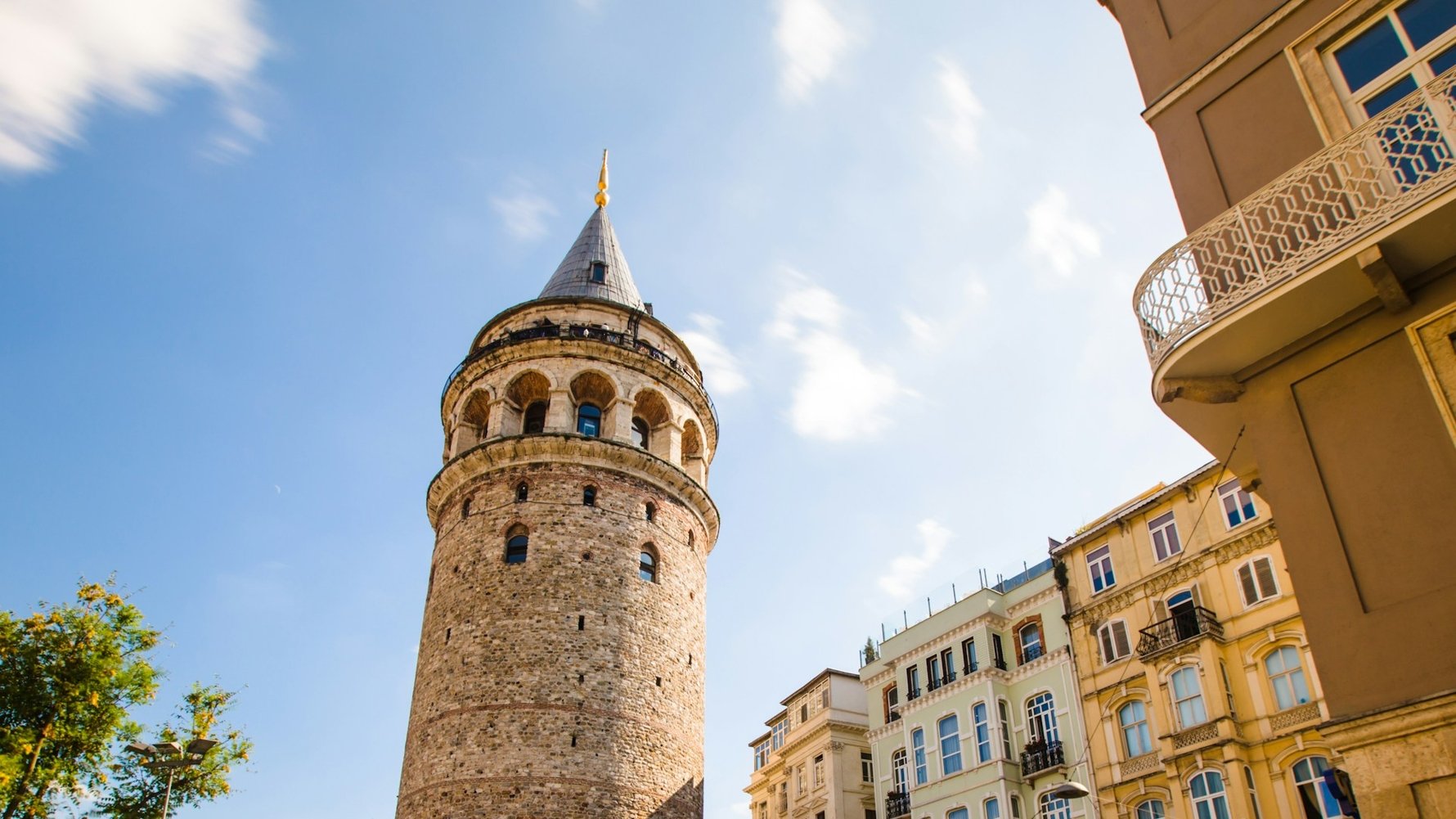
The Galata Tower was built in 1348 by the Genoese colony that occupied the Galata district across the Golden Horn from Constantinople – a commercial relationship of such mutual benefit and mutual suspicion that both sides simultaneously needed each other and prepared for conflict. The Genoese named their watchtower the Christea Turris (Tower of Christ) and, at 67 metres, it was the tallest building in the city. After the Ottoman conquest in 1453 the colony was dissolved, and the tower was repurposed as a prison, then a fire lookout, and then – according to a story recounted by the Ottoman travel writer Evliya Çelebi – the launch pad for history’s first intercontinental flight. In 1638, a man named Hezarfen Ahmed Çelebi allegedly strapped artificial wings to his body, leapt from the tower and glided across the Bosphorus to the Asian shore of Üsküdar, a distance of several kilometres. Evliya Çelebi is not always the most reliable narrator, but the story has survived for four centuries and there is no particular reason to spoil it now.
The tower was restored and opened to the public in the 1960s, at which point the conical roof was reconstructed (it had been gone since a storm in 1875). A further restoration was completed in 2024 following a two-year closure. It now operates as a museum with an observation deck that provides a 360-degree panorama of the city. It is, by general agreement, the finest view in Istanbul, which is not a city short of competition.
Best time to visit: Arrive early to beat queues. Evening visits offer the city lit up against the sky, though the entry cap of 100 visitors per hour means advance booking is advisable at any time.
Ticket prices: Around €30. The Istanbul Museum Pass covers entry.
Good to know: The surrounding Galata neighbourhood, long gentrified, is pleasant to walk. The streets between the tower and the Galata Bridge offer good cafés, bookshops and an excellent downhill view of the Golden Horn.
7. Dolmabahçe Palace
By the 1840s, the Ottoman sultans had spent nearly four centuries at Topkapı, and Sultan Abdülmecid I had decided that enough was enough. The Dolmabahçe Palace was built between 1843 and 1856 on a site reclaimed from the Bosphorus – the name means “filled garden” – at a cost of five million Ottoman gold lira, the rough equivalent of 35 tons of gold. The empire could not afford it. The empire built it anyway. The result is a 285-room, 44-hall monument to the proposition that European Baroque and Ottoman decoration are not, in fact, incompatible, and that if you have to go bankrupt, you might as well have something spectacular to show for it.
The four-ton Bohemian crystal chandelier in the throne room, long believed to have been a gift from Queen Victoria, remains the centrepiece of any visit. The Crystal Staircase, constructed from Baccarat crystal, mahogany and brass, is a close second. Mustafa Kemal Atatürk, founder of the Turkish Republic and a man with a rather different set of priorities from the sultans who built this place, used Dolmabahçe as a presidential residence in his later years, and died here on the 10th of November 1938. All the clocks in the palace are stopped at 09:05, the moment of his death, a detail that adds a certain quality to the otherwise unrelenting opulence.
Best time to visit: Weekday mornings. The palace operates guided tours only, which depart at regular intervals.
Ticket prices: Separate tickets for the Selamlık (state rooms) and the Harem sections; a combined ticket covers both. Prices are around €20–30 per section. Closed Mondays and Thursdays.
Good to know: The Bosphorus-facing façade stretches nearly 600 metres. Walking it from the outside, before or after the tour, gives a better sense of the building’s scale than any interior room.
8. The Bosphorus
Istanbul is the only city in the world that sits on two continents, and the Bosphorus is the 31-kilometre strait that makes this technically true. It connects the Black Sea to the Sea of Marmara, narrows in places to under a kilometre, and has been the strategic pivot of more military campaigns, commercial empires and geopolitical crises than any comparable body of water on earth. Crossing it costs the price of a ferry ticket and takes about twenty minutes, which is an extraordinary return on the investment. The standard public ferry from Eminönü to Kadıköy on the Asian side is the correct choice: it is cheap, runs frequently, provides a view of the Hagia Sophia and Topkapı Palace from the water that no land-based vantage point can match, and is used primarily by commuters who are entirely unbothered by the romance of crossing continents on a Tuesday morning.
Longer Bosphorus cruises – typically two to three hours – run both shores of the strait from Eminönü and pass the Dolmabahçe Palace, the Ottoman fortresses of Rumelihisarı and Anadoluhisarı, and the wooden waterfront mansions known as yali, some of which are owned by people who could afford any waterfront on earth and have chosen this one. The organised cruise version is perfectly adequate. The public ferry is better.
Location: Public ferries depart from Eminönü and Karaköy piers on the European side. The Šehir Hatları ferry line operates the main crossings.
Best time to visit: Late afternoon, when the light catches the minarets and the light turns a shade of gold that photographers have been attempting to capture adequately for decades.
Ticket prices: A standard Istanbul public transit fare. Longer sightseeing cruises vary by operator and duration; the official Šehir Hatları cruise is reliable and reasonably priced.
Good to know: The Istanbul Marathon, held annually in November, is the only marathon in the world that crosses two continents. If this information changes your travel plans, the registration deadline is usually in summer.
9. Spice Bazaar
The Spice Bazaar (Mısır Çaršısı, or Egyptian Bazaar) was built in the 1660s as part of the New Mosque complex in Eminönü, its rental income intended to fund the mosque’s upkeep. The “Egyptian” in the name refers to the taxes levied on goods imported from Egypt, which financed the construction. At its commercial peak it was the final stop for camel caravans arriving from the Silk Road – the last warehouse before the goods dispersed into Europe – and the concentration of spices, herbs, medicines and dyes on offer would have been sensory information of some intensity. It is still a sensory experience, though the range of goods now includes a considerable volume of tea, Turkish delight and souvenirs of variable authenticity.
The Spice Bazaar makes a better afternoon than the Grand Bazaar for anyone with limited time or patience. It is smaller, less labyrinthine, and slightly less aggressively marketed, while still giving a genuine impression of what a functioning Ottoman market felt like. The 85 or so shops are arranged in an L-shaped hall of painted domes and vaulted ceilings. The quality of produce at the outdoor stalls on the western side – cheeses, dried fruits, fresh herbs, nuts – is consistently good and purchased mostly by locals rather than tourists.
Location: Rüstem Paša Mah., Mısır Çaršısı No. 1, 34116 Fatih/Îstanbul. Adjacent to the New Mosque at Eminönü.
Best time to visit: Morning, before the afternoon crowds. Closed Sundays.
Ticket prices: Free to enter.
Good to know: Kurukahveci Mehmet Efendi, Istanbul’s oldest coffee roaster (since 1871), operates just outside the bazaar’s main entrance. The queue is long and moves slowly and is entirely worth it. Pandeli, a restaurant above the bazaar entrance, has lovely tiled rooms; Lonely Planet’s verdict that the food is “average at best” has not noticeably deterred the bookings.
10. Süleymaniye Mosque
If the Blue Mosque is where the tourists go, the Süleymaniye Mosque is where you go when you want to understand what an Ottoman imperial mosque actually feels like without fighting for sight lines. Built between 1550 and 1557 by the architect Mimar Sinan for Sultan Süleyman the Magnificent, it is the largest Ottoman-era mosque in Istanbul, the crowning monument of the Third Hill, and – in the opinion of most architectural historians – the finest work of Sinan’s middle period, the Selimiye Mosque in Edirne being the work of his old age that he considered his masterpiece. The distinction matters only to those who rank masterpieces, which is to say everyone, in the end.
The mosque complex (külliye) included madrasas, a hospital, a soup kitchen, a hamam, a caravanserai and a medical school: a small city of public service wrapped around a place of worship, which was standard practice for an Ottoman imperial foundation and rather admirable for it. Sinan himself is buried in the grounds, in a modest tomb in the northeast corner, beneath a building considerably smaller than anything else he designed. Süleyman the Magnificent and his wife Hürrem Sultan are buried in the attached cemetery. The view of the Golden Horn from the northern terrace is one of the few in Istanbul that asks nothing of you in return.
Location: Professor Siddik Sami Onar Caddesi No. 1, 34116 Fatih/Îstanbul. A ten-minute walk from the Grand Bazaar.
Best time to visit: Midday on a weekday, when the Blue Mosque is packed and this one is not. Open daily; accessible outside prayer times.
Ticket prices: Free.
Good to know: The four minarets encode a message: Süleyman was the fourth sultan after the conquest of Istanbul, and the ten balconies across them record his position as the tenth sultan of the Ottoman Empire overall. It is possible that nobody has looked at a minaret and thought “tenth” without being told this, but it is a good thing to know regardless.
What else can you see in Istanbul?
It was, of course, called Constantinople until 1930 – and before that Byzantium, and before that a Greek colony, and before that the thing that the They Might Be Giants song is about – and the layers of that history are not confined to the ten attractions above. The Hippodrome of Constantinople, now Sultanahmet Square, was the civic heart of the Byzantine Empire for over a thousand years; the Egyptian Obelisk, the Serpent Column from Delphi, and the Column of Constantine still stand there with a nonchalance that belies their age. The Istanbul Archaeological Museum, just below Topkapı, holds one of the finest collections of Hellenistic and Roman sculpture in existence, anchored by the Alexander Sarcophagus, which is not actually Alexander’s sarcophagus but is spectacular regardless. The Museum of Turkish and Islamic Arts, in a 16th-century palace on the Hippodrome, has one of the world’s great collections of Islamic calligraphy, carpets and ceramics, and is consistently less crowded than it deserves to be.
Istanbul’s neighbourhoods reward the kind of walking that has no particular objective. Balat and Fener on the Golden Horn are the former Jewish and Greek Orthodox quarters respectively, still containing the 11th-century Church of St Mary of the Mongols (the only Byzantine church in the city never to have been converted to a mosque), the Greek Orthodox Patriarchate and streets of painted timber houses that have survived more or less everything. Kadıköy on the Asian side, reached by a twenty-minute ferry from Eminönü, is the neighbourhood Istanbul uses when it is not performing for visitors: a fish market, a produce bazaar, good bars, better food, and a population of young Istanbulites who have decided that Europe can manage without them for the evening.
For day trips, Bursa is two hours south and contains the Gök Dere and Ulu mosques, one of the finest bazaar complexes outside Istanbul, and access to the slopes of Uludag, which is a skiing mountain in winter and a walking mountain in summer. The Princes’ Islands (Adalar) in the Sea of Marmara – particularly the largest, Büyükada – are reachable by ferry in an hour and offer an afternoon of horse-drawn carriages, pine trees and the excellent pleasure of being somewhere without cars, a luxury that Istanbul proper does not often extend.