
Seville has a habit of exceeding expectations, which is an impressive trick for a city that arrives with considerable advance publicity. The capital of Andalusia sits on the Guadalquivir River in the flat southern heat and contains, within a very walkable area, a concentration of architectural ambition that few cities in Europe can match. The Moors were here for five centuries, the Christians built the world’s largest Gothic cathedral on top of the mosque, and then the Americas happened and Seville became the wealthiest city in the Spanish Empire. All of that history left things behind, most of them very large and very impressive.
The city rewards visitors who slow down. The major sights are genuinely major, the tapas culture is serious, and the streets of the old quarters are the kind you get lost in without minding. Prices below were correct at time of writing, which may or may not have been recently enough to matter – Seville’s attraction prices have a reputation for shifting, so checking official websites before you visit is worth the two minutes it takes.
The Patio de las Doncellas, with its reflecting pool and colonnaded galleries, is the set piece most people have seen in photographs. In person it is rather better. The gardens, which extend behind the palace in a series of walled enclosures with fountains, orange trees and the kind of shade that becomes genuinely precious in high summer, can absorb an hour on their own. The Alcázar is deservedly the most visited attraction in the city; book tickets well in advance, particularly between March and October, when capacity limits mean same-day entry is not a reasonable ambition.
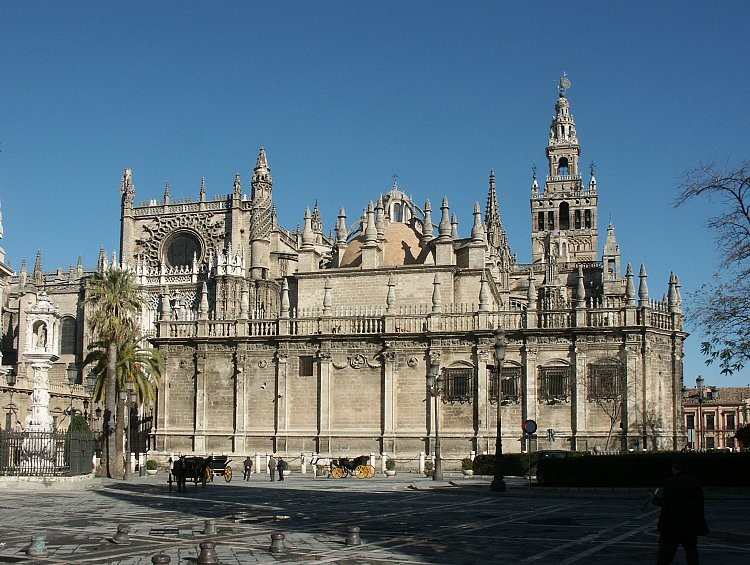
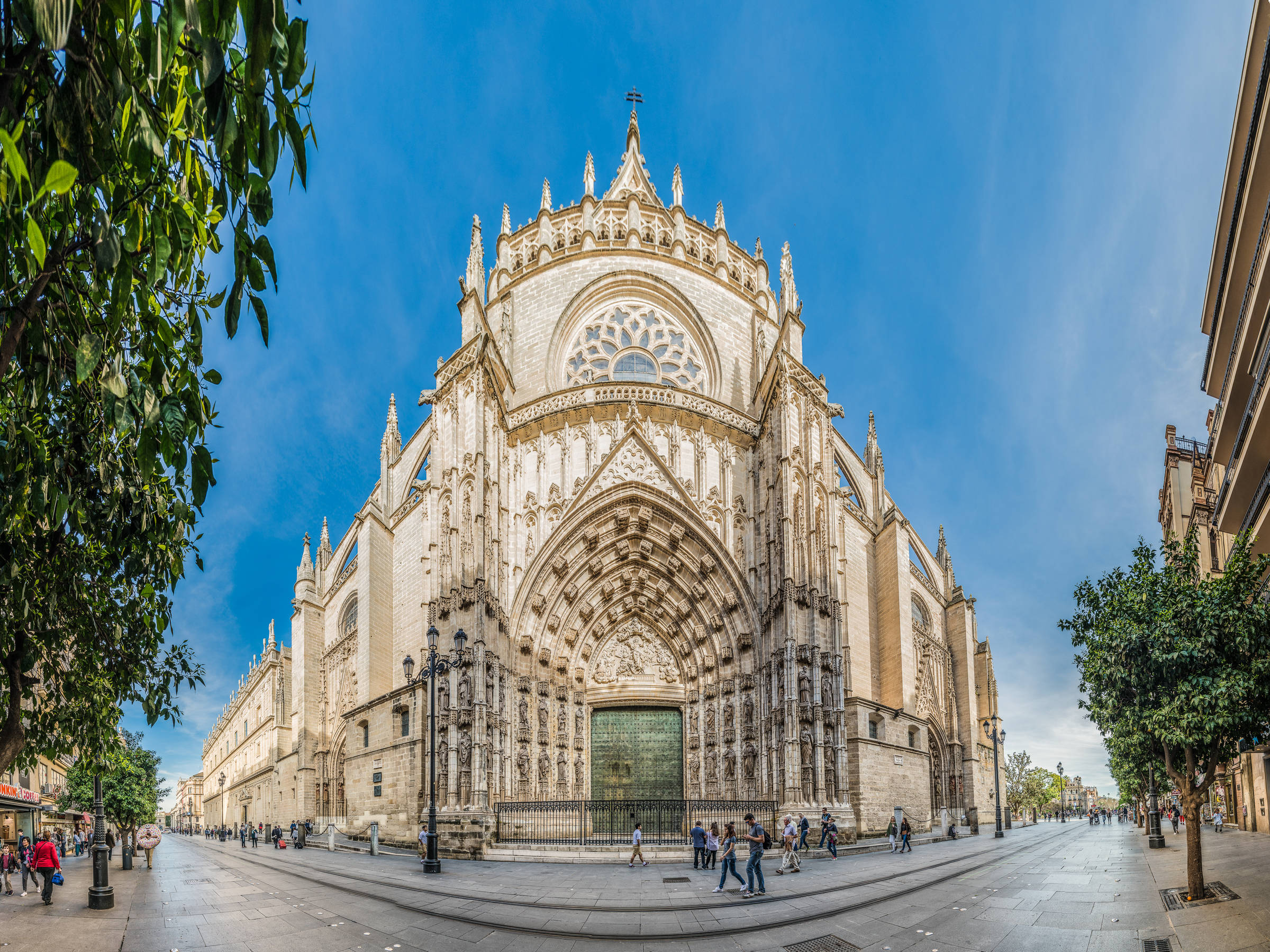
The Giralda tower, attached to the cathedral but predating it by two centuries, was built as the minaret of the mosque that occupied this site before the Christians arrived. Rather than demolishing it, they added a Renaissance belfry on top in 1568 and kept the rest. The interior ramp, designed so that guards could reach the top on horseback, makes the climb considerably less punishing than most bell towers, and the view from the top is the best in the city.
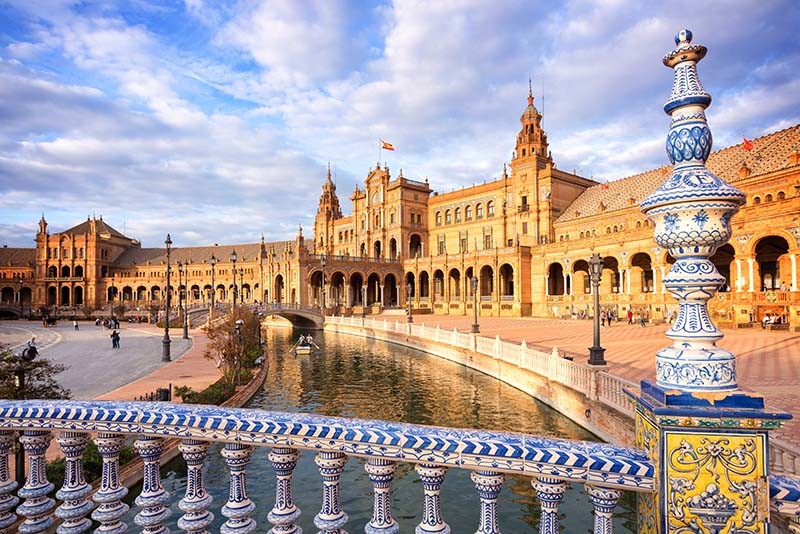
The plaza sits at the northern edge of the María Luisa Park, which extends behind it and provides shade, fountains and a welcome drop in temperature. The whole ensemble is free, open to all and popular enough that early morning visits are considerably more enjoyable than midday ones. It has appeared in Lawrence of Arabia, Star Wars Episode II and various other productions requiring a backdrop of operatic grandeur.
The neighbourhood was substantially rebuilt in the early 20th century with a rather romanticised version of its own history in mind, which explains why it is somewhat too picturesque to be entirely plausible. This has not made it any less pleasant to walk through. The Plaza de Santa Cruz, the Plaza de Doña Elvira and the various hidden courtyards between them are genuine discoveries, and the tapas bars along Calle Mateos Gago are as good an introduction to Seville’s food culture as any.
The underground archaeological site beneath the structure, which preserves Roman and Moorish remains discovered during construction, is the most substantive part of the complex. The rooftop walkway is popular and the views are good; the LED light show in the evenings draws a crowd. Whether the building itself will eventually be considered a masterpiece or an interesting mistake is a question that has another fifty years to run.
The museum inside covers Seville’s maritime history with exhibits on the city’s role as Spain’s gateway to the Americas, including replica models of period ships that are better than they sound. The name, incidentally, may refer to the golden tiles that once covered the tower, or to the gold that passed through it from the New World; historians have not reached a consensus and both explanations are plausible given Seville’s history.
The building itself, a former Franciscan convent with three cloisters and a domed church, is worth seeing regardless of the collection. The church, now Gallery V, retains its original proportions and provides one of the more unusual settings for paintings of the 17th-century Seville school.
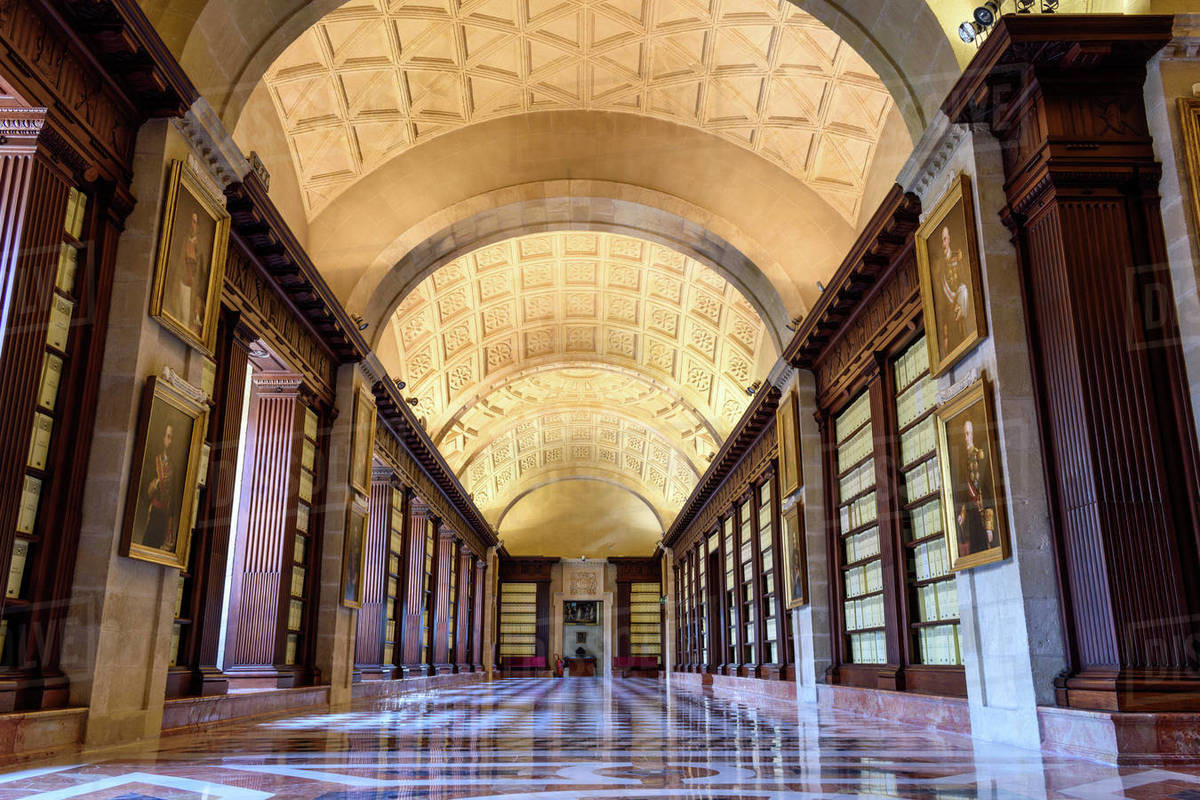
The archive is a working research institution as well as a tourist attraction, and the permanent exhibition gives a clear sense of the scale and significance of what is held here. It is not the most viscerally exciting museum in Seville, but it is one of the most important, and the building alone is worth the visit.
The ceramic heritage survives in the Centro Cerámica Triana, a museum built in a former tile factory on the riverbank that documents the neighbourhood’s 2,000-year history of pottery production. The market, the Mercado de Triana, is a good one. The tapas bars on Calle San Jacinto and the surrounding streets are less touristic than their equivalents in Santa Cruz and more interesting for it. Flamenco venues in Triana tend toward the authentic end of the spectrum; La Carbonería, a short walk across the river in the old town, is worth knowing about for free performances.
The ground floor, which includes the main courtyard, the gardens and a series of salons with exceptional tilework, is the more accessible and more visited section. The first floor, reached by a separate ticket, contains the family’s art collection and private apartments and is quieter and, for some visitors, more rewarding. The main courtyard, with its marble columns, azulejo panels and Roman statuary, is the set piece of the whole building; it is better than almost anything in the Alcázar for sheer quiet elegance.
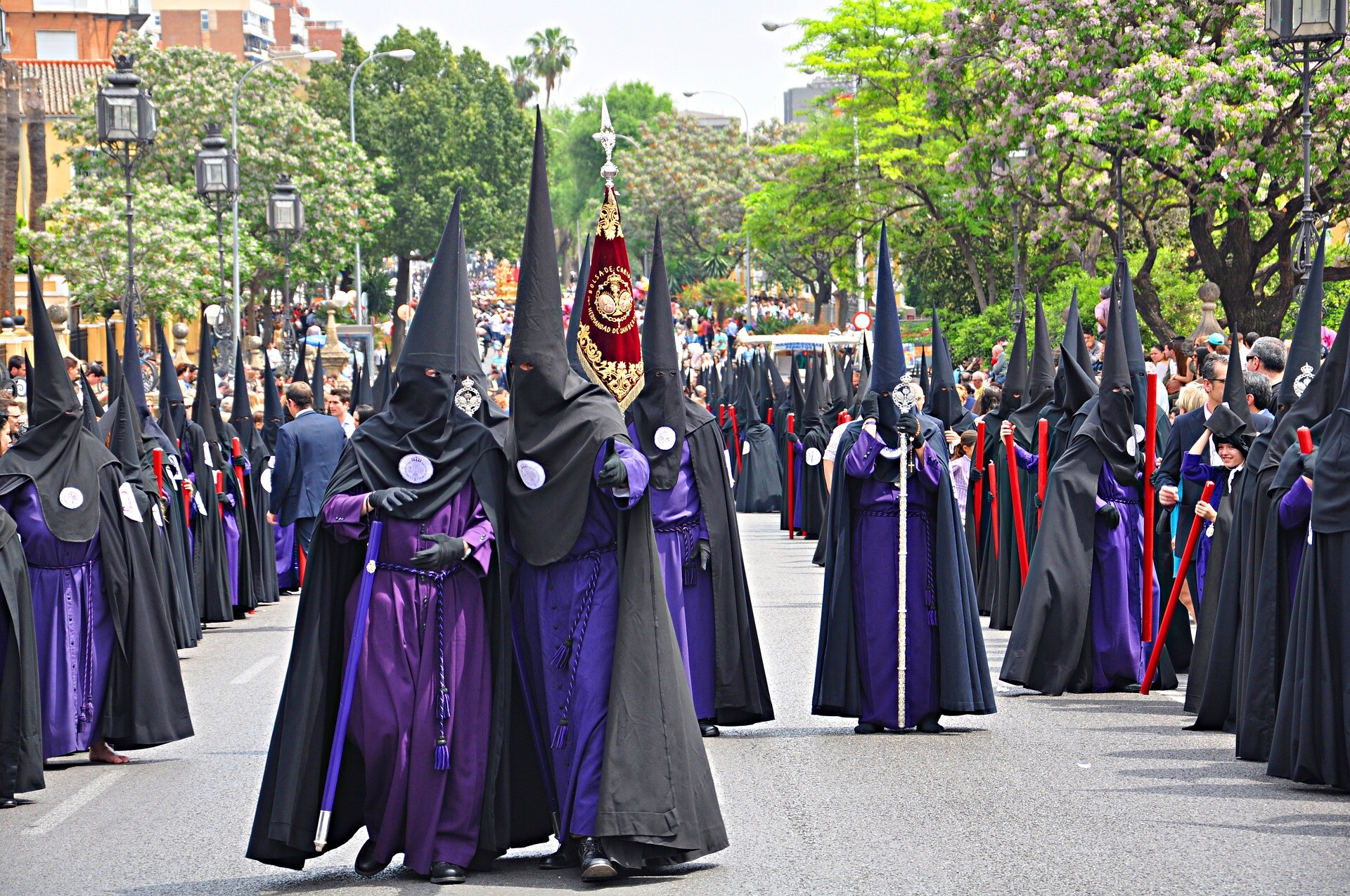
Seville’s flamenco culture is the real thing rather than a tourist recreation, and the city has the venues to prove it. La Carbonería in the Santa Cruz area offers free performances in an informal setting. For something more polished and ticketed, Casa de la Memoria and La Casa del Flamenco both have strong reputations. Semana Santa, the Holy Week processions held in the week before Easter, transforms the city entirely: the pasos (floats) carrying religious sculpture through the streets, accompanied by brass bands and the smell of incense, constitute one of the great public spectacles in Europe. Feria de Abril, two weeks later, is the other great Seville festival: a week of flamenco, horses, fino sherry and casetas, the private tents that spring up in the fairground across the river.
For day trips, Cádiz is 90 minutes by train and makes an excellent contrast. The Roman ruins of Itálica, birthplace of emperors Trajan and Hadrian, are 9 kilometres north of the city and accessible by local bus. Jerez de la Frontera, 60 kilometres south, has the bodegas, the horses and the flamenco that the name promises.
The city rewards visitors who slow down. The major sights are genuinely major, the tapas culture is serious, and the streets of the old quarters are the kind you get lost in without minding. Prices below were correct at time of writing, which may or may not have been recently enough to matter – Seville’s attraction prices have a reputation for shifting, so checking official websites before you visit is worth the two minutes it takes.
1. Real Alcázar
The Real Alcázar is the finest thing in Seville, and given the competition that is a significant statement. Originally a Moorish fortress built in the 10th century, it was substantially rebuilt and expanded by the Christian King Pedro I in the 14th century in the Mudéjar style, which means that Islamic craftsmen built a palace for a Christian king using Islamic architectural traditions, producing something that sits comfortably outside any simple category. The result is a complex of interlocking palaces, courtyards, tilework and gardens that has been continuously occupied by Spanish royalty since the Reconquista, making it the oldest royal palace still in use in Europe.The Patio de las Doncellas, with its reflecting pool and colonnaded galleries, is the set piece most people have seen in photographs. In person it is rather better. The gardens, which extend behind the palace in a series of walled enclosures with fountains, orange trees and the kind of shade that becomes genuinely precious in high summer, can absorb an hour on their own. The Alcázar is deservedly the most visited attraction in the city; book tickets well in advance, particularly between March and October, when capacity limits mean same-day entry is not a reasonable ambition.
- Location: Patio de Banderas, s/n, 41004 Sevilla
- Best time to visit: First thing in the morning, when the palace is at its least crowded. Avoid midday in summer.
- Ticket prices: Around €10 general, €5 reduced; free on certain Monday afternoons. Book online in advance, the official website is alcazarsevilla.org.
- Good to know: The Alcázar featured as the Water Gardens of Dorne in Game of Thrones, a fact that the palace’s marketing department has not overlooked. Allow at least two hours; three is more realistic if you intend to do the gardens properly.
2. Seville Cathedral and La Giralda
In 1401, the chapter of Seville decided to build a cathedral so large that future generations would think them mad. They were not wrong about the ambition: the Cathedral of Seville is the largest Gothic cathedral in the world and the third-largest church of any kind, a fact its interior confirms without hesitation. Construction took over a century, and the building accumulated 80 chapels, the longest central nave of any church in Spain, and the tomb of Christopher Columbus, whose remains arrived here in 1899 after an itinerary that had previously included Valladolid, Santo Domingo and Havana.The Giralda tower, attached to the cathedral but predating it by two centuries, was built as the minaret of the mosque that occupied this site before the Christians arrived. Rather than demolishing it, they added a Renaissance belfry on top in 1568 and kept the rest. The interior ramp, designed so that guards could reach the top on horseback, makes the climb considerably less punishing than most bell towers, and the view from the top is the best in the city.
- Location: Avenida de la Constitución, s/n, 41004 Sevilla
- Best time to visit: Weekday mornings. Sunday afternoons offer free entry for a limited window – check the official website for current times.
- Ticket prices: Around €13 online, slightly more at the door. The ticket covers both the cathedral and the Giralda. A combination ticket with the Iglesia del Salvador is also available. Book online; same-day tickets are frequently unavailable.
- Good to know: Shoulders and knees must be covered. The cathedral is immediately adjacent to the Alcázar, making the two a natural full-day pairing. The Patio de los Naranjos, the former ablutions courtyard of the mosque, can be entered for free and is worth five minutes.
3. Plaza de España
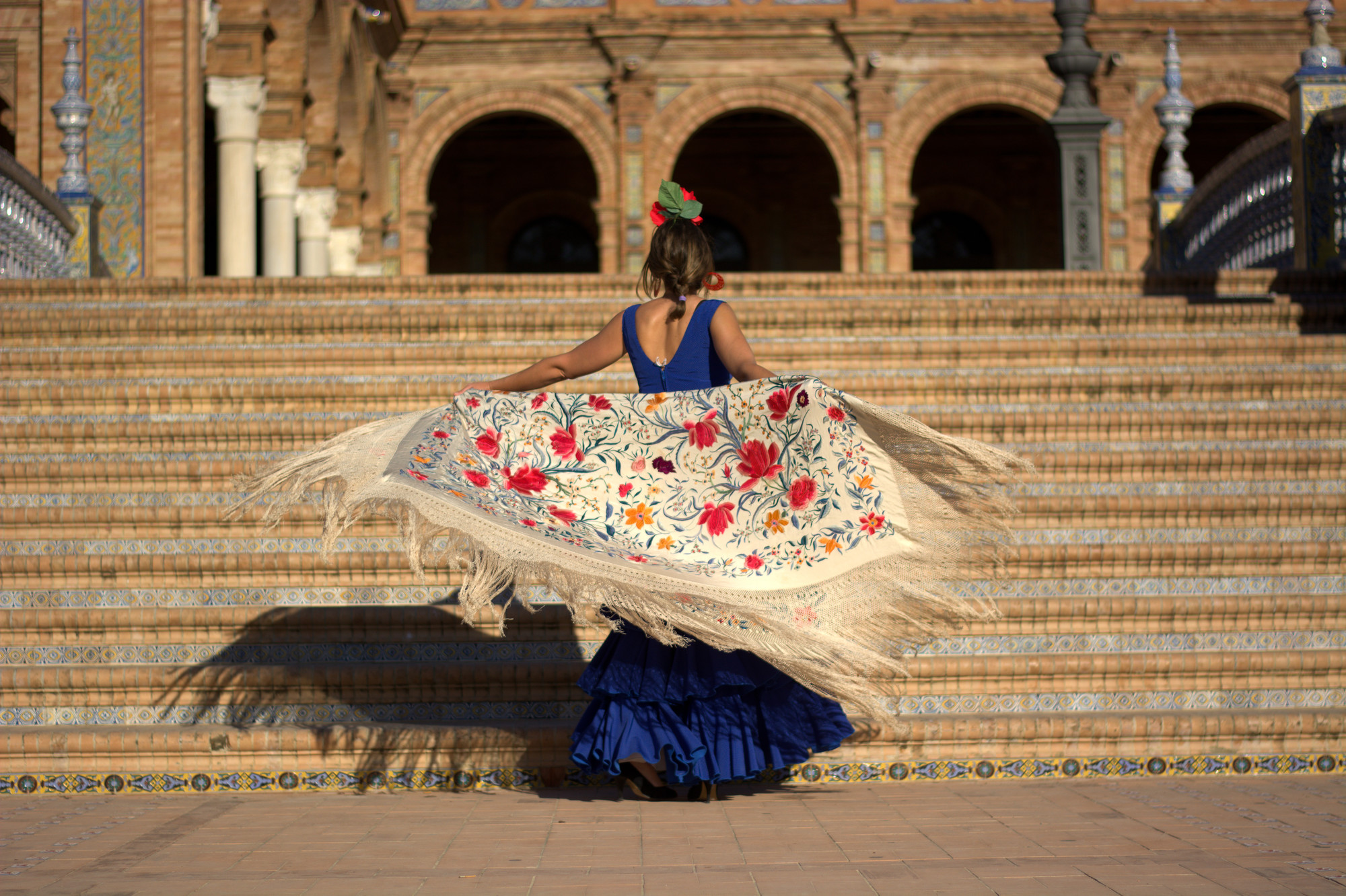
The Plaza de España was built for the Ibero-American Exposition of 1929, which is to say it was built to impress, and it has not stopped doing so since. The semicircular complex spans 50,000 square metres and combines Neo-Mudéjar, Renaissance and Art Deco elements in a way that should be absurd and is instead genuinely magnificent. The curved façade is lined with 48 tiled alcoves, one for each province of Spain, each with a map and a painted scene from the province’s history. A canal runs along the building’s base, crossed by four bridges representing the ancient kingdoms of Spain; rowing boats are available for hire.The plaza sits at the northern edge of the María Luisa Park, which extends behind it and provides shade, fountains and a welcome drop in temperature. The whole ensemble is free, open to all and popular enough that early morning visits are considerably more enjoyable than midday ones. It has appeared in Lawrence of Arabia, Star Wars Episode II and various other productions requiring a backdrop of operatic grandeur.
- Location: Avenida de Isabel la Católica, 41004 Sevilla
- Best time to visit: Early morning, before 9:00, when the light is good and the crowds have not arrived. The evening is also pleasant.
- Ticket prices: Free. Rowing boats on the canal charge a small hourly fee.
- Good to know: The María Luisa Park behind the plaza is a large, well-maintained public park with the Archaeological Museum at its far end. Both are free and provide a natural extension of any visit to the plaza.
4. Barrio Santa Cruz
Barrio Santa Cruz is Seville’s former Jewish quarter, a dense warren of whitewashed lanes, geranium-draped balconies, small squares and the kind of shaded passages that exist specifically to make the afternoon heat bearable. It occupies the area immediately east of the cathedral and Alcázar, which means most visitors pass through it regardless of intention, which is a reasonable outcome since it rewards aimless wandering more thoroughly than almost anywhere in Andalusia.The neighbourhood was substantially rebuilt in the early 20th century with a rather romanticised version of its own history in mind, which explains why it is somewhat too picturesque to be entirely plausible. This has not made it any less pleasant to walk through. The Plaza de Santa Cruz, the Plaza de Doña Elvira and the various hidden courtyards between them are genuine discoveries, and the tapas bars along Calle Mateos Gago are as good an introduction to Seville’s food culture as any.
- Location: Immediately east of the Cathedral. Enter from the Patio de Banderas or the Jardines de Murillo.
- Best time to visit: Early morning for empty lanes and good light; early evening when the bars open properly.
- Ticket prices: Free. It is a neighbourhood, not a museum.
- Good to know: The Hospital de los Venerables Sacerdotes, a 17th-century baroque hospital on the Plaza de los Venerables, contains an outstanding collection of works by Velázquez and Murillo and is worth the small entry fee if you have an hour to spare.
5. Metropol Parasol
The Metropol Parasol, which opened in 2011 on the Plaza de la Encarnación and claims to be the world’s largest wooden structure, is either a bold stroke of architectural confidence or a large mushroom-shaped thing in the middle of the old town, depending on your point of view. Designed by Jürgen Mayer H., the undulating timber canopy rises 26 metres above the square and covers a market, a restaurant, a Roman archaeological museum and a rooftop walkway with panoramic views of the city. The contrast with the surrounding historic fabric is approximately as dramatic as it sounds.The underground archaeological site beneath the structure, which preserves Roman and Moorish remains discovered during construction, is the most substantive part of the complex. The rooftop walkway is popular and the views are good; the LED light show in the evenings draws a crowd. Whether the building itself will eventually be considered a masterpiece or an interesting mistake is a question that has another fifty years to run.
- Location: Plaza de la Encarnación, s/n, 41003 Sevilla
- Best time to visit: Early evening to catch both the daylight views and the light show. The archaeological museum beneath is best visited on a separate morning.
- Ticket prices: The rooftop walkway charges around €15; prices have increased significantly since opening and sources vary, so check the official website. The archaeological museum below has its own, more modest entry fee.
- Good to know: The square around the base is free to enjoy, and the market and bars at ground level require no ticket. The views from the top are genuinely the best flat-city panorama available in Seville, which is saying something for a city without hills.
6. Torre del Oro
The Torre del Oro – the Tower of Gold – has stood on the bank of the Guadalquivir since 1221, when the Almohad rulers of Seville built it as part of the city’s river defences. A chain ran from the tower to another on the opposite bank, closing the river to hostile shipping. The tower survived the Christian conquest, several earthquakes and the gradual obsolescence of chain-based naval defence, and is now a small maritime museum with a rooftop terrace and views over the river that justify the modest entry fee on their own.The museum inside covers Seville’s maritime history with exhibits on the city’s role as Spain’s gateway to the Americas, including replica models of period ships that are better than they sound. The name, incidentally, may refer to the golden tiles that once covered the tower, or to the gold that passed through it from the New World; historians have not reached a consensus and both explanations are plausible given Seville’s history.
- Location: Paseo de Cristóbal Colón, s/n, 41001 Sevilla
- Best time to visit: Late afternoon, when the light on the river is at its best. Monday for free entry.
- Ticket prices: Around €3 general, €1.50 reduced. Free on Mondays.
- Good to know: The tower sits on the riverside promenade, which is worth walking in either direction. The Plaza de Toros de la Real Maestranza is a five-minute walk north; the Triana bridge is a similar distance to the south.
7. Museo de Bellas Artes
The Museo de Bellas Artes de Sevilla is the second most important art museum in Spain after the Prado, which is either an impressive fact or a sobering indication of how good the Prado is, depending on how you approach league tables. Housed in a 17th-century former convent on the Plaza del Museo, it contains the largest collection of works by Bartolomé Esteban Murillo anywhere in the world, alongside significant paintings by Zurbarán, Velázquez and El Greco. Murillo spent most of his life in Seville and painted it with a warmth and specificity that rewards the attention; seeing his work here, in the city where it was made, is a different experience from encountering it in a general European collection.The building itself, a former Franciscan convent with three cloisters and a domed church, is worth seeing regardless of the collection. The church, now Gallery V, retains its original proportions and provides one of the more unusual settings for paintings of the 17th-century Seville school.
- Location: Plaza del Museo, 9, 41001 Sevilla
- Best time to visit: Weekday mornings. The museum is rarely overcrowded.
- Ticket prices: Free for EU citizens; around €1.50 for non-EU visitors. One of the better-value museums in Spain.
- Good to know: Closed Mondays. The Plaza del Museo outside has a pleasant garden and is a reasonable place to sit afterwards and consider what you have just seen.
8. Archivo General de Indias
The Archivo General de Indias occupies the former Casa Lonja de Mercaderes, a Renaissance building completed in 1646 by Juan de Herrera, the architect of El Escorial. Founded in 1785 by Carlos III to centralise the documentation of the Spanish colonial empire, it holds approximately 80 million pages of records covering the administration of Spain’s American and Pacific territories from 1492 onwards: letters from Columbus, documents signed by Cortés, the entire bureaucratic record of an empire. It is a UNESCO World Heritage Site, as is the building that contains it, as is the Alcázar next door – this particular corner of Seville has rather a lot of designations.The archive is a working research institution as well as a tourist attraction, and the permanent exhibition gives a clear sense of the scale and significance of what is held here. It is not the most viscerally exciting museum in Seville, but it is one of the most important, and the building alone is worth the visit.
- Location: Avenida de la Constitución, 3, 41004 Sevilla (between the Cathedral and the Alcázar)
- Best time to visit: Midday, when the Cathedral and Alcázar queues make those attractions temporarily inadvisable.
- Ticket prices: Free.
- Good to know: Opening hours are more limited than the surrounding attractions; check the official website before visiting. The exterior courtyard is accessible even when the exhibition rooms are closed.
9. Triana
Triana sits on the west bank of the Guadalquivir, separated from the historic centre by the river and, in the minds of its residents, by considerably more than that. The neighbourhood has its own identity, its own festival calendar and its own opinion of the tourists who cross the Puente de Isabel II to visit it, which is broadly welcoming provided you behave yourself. It was historically the working-class quarter of the city: home to sailors, bullfighters, potters and the Roma community that shaped Seville’s flamenco tradition.The ceramic heritage survives in the Centro Cerámica Triana, a museum built in a former tile factory on the riverbank that documents the neighbourhood’s 2,000-year history of pottery production. The market, the Mercado de Triana, is a good one. The tapas bars on Calle San Jacinto and the surrounding streets are less touristic than their equivalents in Santa Cruz and more interesting for it. Flamenco venues in Triana tend toward the authentic end of the spectrum; La Carbonería, a short walk across the river in the old town, is worth knowing about for free performances.
- Location: Cross the Puente de Isabel II (Puente de Triana) from the Paseo de Cristóbal Colón.
- Best time to visit: Evening, when the bars and restaurants are operating properly. The market is best on weekday mornings.
- Ticket prices: Free. The Centro Cerámica Triana charges a small entry fee; free for Sevillanos, which seems fair enough.
- Good to know: The walk along the Triana riverbank, looking back across the Guadalquivir at the Torre del Oro and the cathedral tower, is one of the better views in Seville and costs nothing.
10. Casa de Pilatos
The Casa de Pilatos is the finest private palace in Seville and one of the most beautiful buildings in Andalusia, which puts it in distinguished company. Built in the early 16th century by the Marquis of Tarifa and expanded over subsequent decades, it combines Mudéjar, Gothic, Renaissance and Baroque elements in a way that reflects both the architectural fashions of several generations and the considerable resources of a single aristocratic family. The Dukes of Medinaceli still own it and still occupy part of it, which adds a faint air of domestic reality to an otherwise very grand building.The ground floor, which includes the main courtyard, the gardens and a series of salons with exceptional tilework, is the more accessible and more visited section. The first floor, reached by a separate ticket, contains the family’s art collection and private apartments and is quieter and, for some visitors, more rewarding. The main courtyard, with its marble columns, azulejo panels and Roman statuary, is the set piece of the whole building; it is better than almost anything in the Alcázar for sheer quiet elegance.
- Location: Plaza de Pilatos, 1, 41003 Sevilla
- Best time to visit: Weekday mornings, when it is considerably less crowded than the Alcázar.
- Ticket prices: Ground floor around €6; both floors around €10–12. Free on Mondays. Prices have varied across sources; verify on the official website before visiting.
- Good to know: The Casa de Pilatos sits in the San Bartolomé neighbourhood, slightly east of the main tourist circuit, which keeps the crowds manageable. It is about ten minutes’ walk from the Cathedral.
What else can you see in Seville?
The Iglesia del Salvador, the city’s second-largest church and formerly its main mosque, is a short walk from the Cathedral and covered by a combination ticket. The Iglesia de San Luis de los Franceses is a Baroque church of extraordinary opulence with human bones incorporated into its altarpieces, which is the kind of detail that tends to stick in the memory. The Hospital de la Caridad, a 17th-century charitable institution on the riverbank, contains paintings by Murillo and Valdés Leal that represent some of the most viscerally confrontational religious art in Spain.Seville’s flamenco culture is the real thing rather than a tourist recreation, and the city has the venues to prove it. La Carbonería in the Santa Cruz area offers free performances in an informal setting. For something more polished and ticketed, Casa de la Memoria and La Casa del Flamenco both have strong reputations. Semana Santa, the Holy Week processions held in the week before Easter, transforms the city entirely: the pasos (floats) carrying religious sculpture through the streets, accompanied by brass bands and the smell of incense, constitute one of the great public spectacles in Europe. Feria de Abril, two weeks later, is the other great Seville festival: a week of flamenco, horses, fino sherry and casetas, the private tents that spring up in the fairground across the river.
For day trips, Cádiz is 90 minutes by train and makes an excellent contrast. The Roman ruins of Itálica, birthplace of emperors Trajan and Hadrian, are 9 kilometres north of the city and accessible by local bus. Jerez de la Frontera, 60 kilometres south, has the bodegas, the horses and the flamenco that the name promises.