Barcelona is a city that does not lack for confidence, and nor does it have any particular reason to. The capital of Catalonia has Antoni Gaudí and Lluís Domènech i Montaner, two kilometres of Mediterranean beach, a Gothic quarter that predates Columbus, and a food scene that takes its obligations seriously. It also has, depending on the time of year, an almost aggressive number of tourists, which is the price you pay for being this comprehensively excellent.
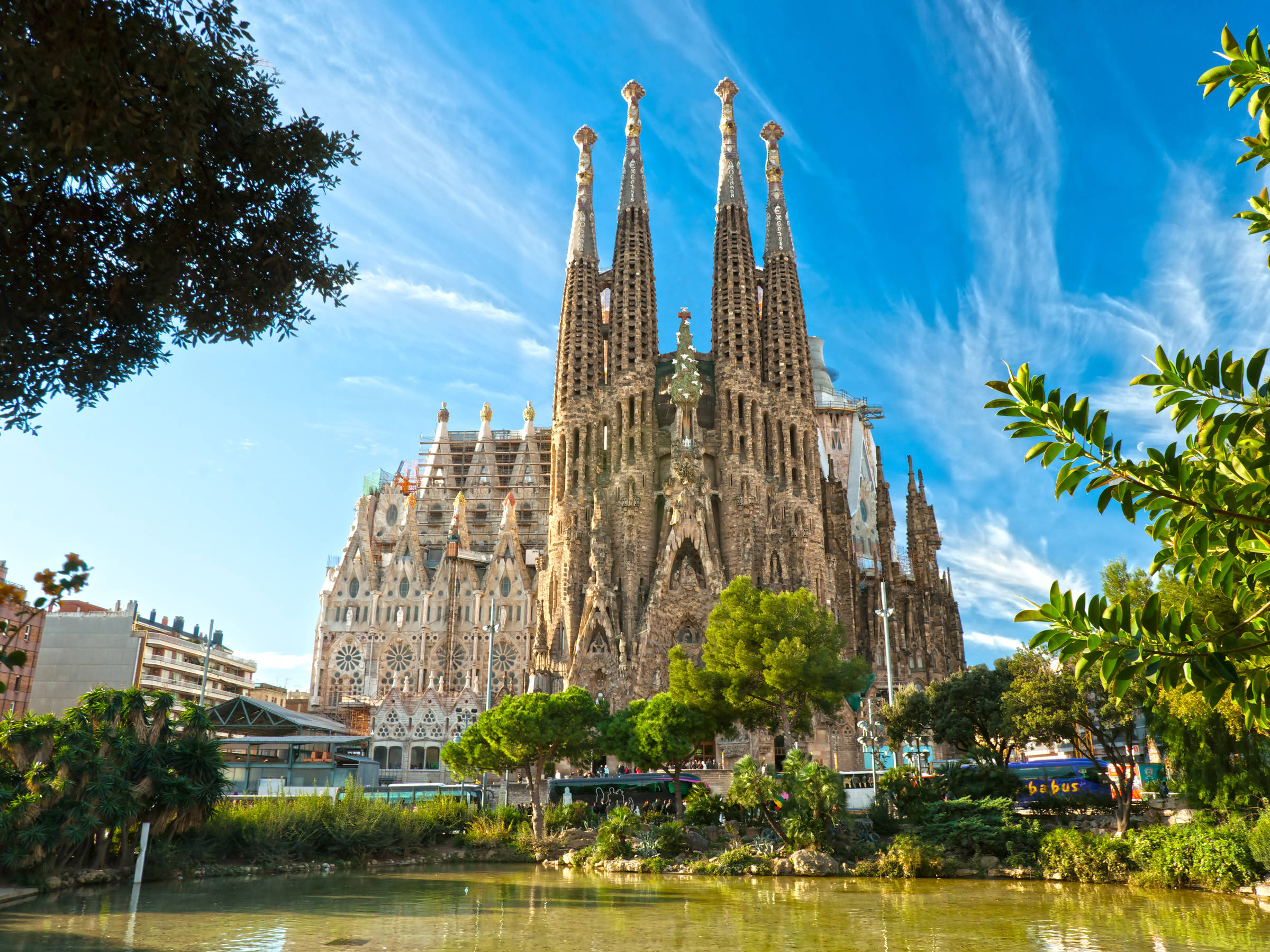
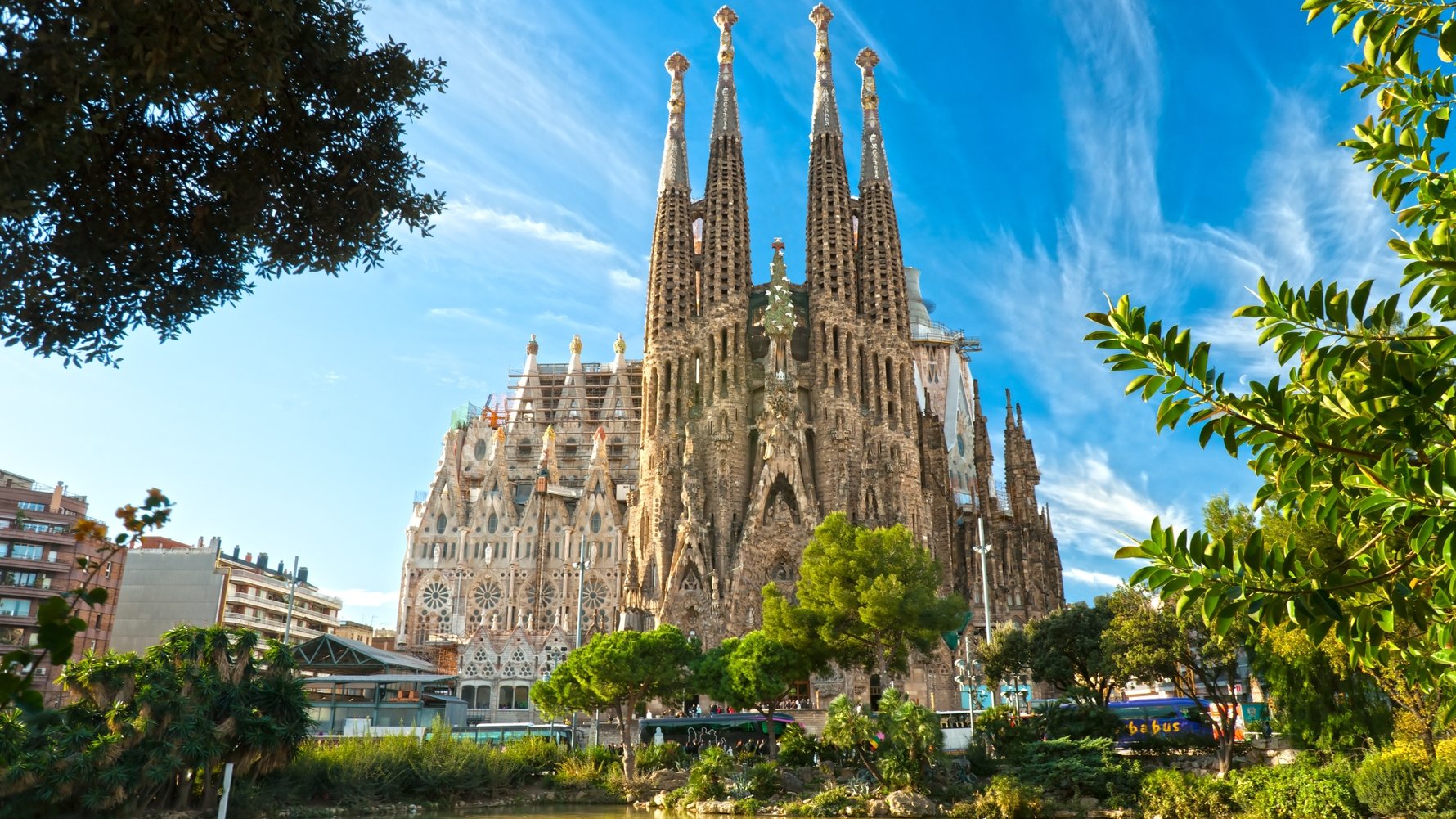
Construction on Antoni Gaudí’s Sagrada Família began in 1882 and has not yet finished, making it the most protracted building project in living memory and quite a few deceased memories too. Gaudí took over as chief architect in 1883, devoted the last 43 years of his life to it, and was buried in the crypt when a tram killed him in 1926. The current anticipated completion date is 2026, the centenary of his death, which would be a tidy ending if it happens.
The building exists in a category of its own. The Nativity façade, which Gaudí himself oversaw, is encrusted with sculptural detail of extraordinary intricacy; the Passion façade on the opposite side, completed later from Gaudí’s drawings, is more angular and deliberately stark. The interior is the revelation: a forest of branching stone columns rising to a canopy ceiling, the nave flooded with coloured light from floor-to-ceiling stained glass windows that shift from cool blues and greens on the east side to warm reds and ambers on the west as the sun moves through the day. It is unlike anything else in the world, which is a phrase that gets overused and here happens to be accurate.
Location: Carrer de Mallorca, 401, 08013 Barcelona. Metro: Sagrada Família (Lines 2 and 5).
Best time to visit: First entry slot of the day, when the light through the east windows is at its best. Afternoon light works the west windows.
Ticket prices: Basic entry starts at around €26; tower access adds to this. Book on the official website (sagradafamilia.org) in advance, same-day tickets are rarely available in any season.
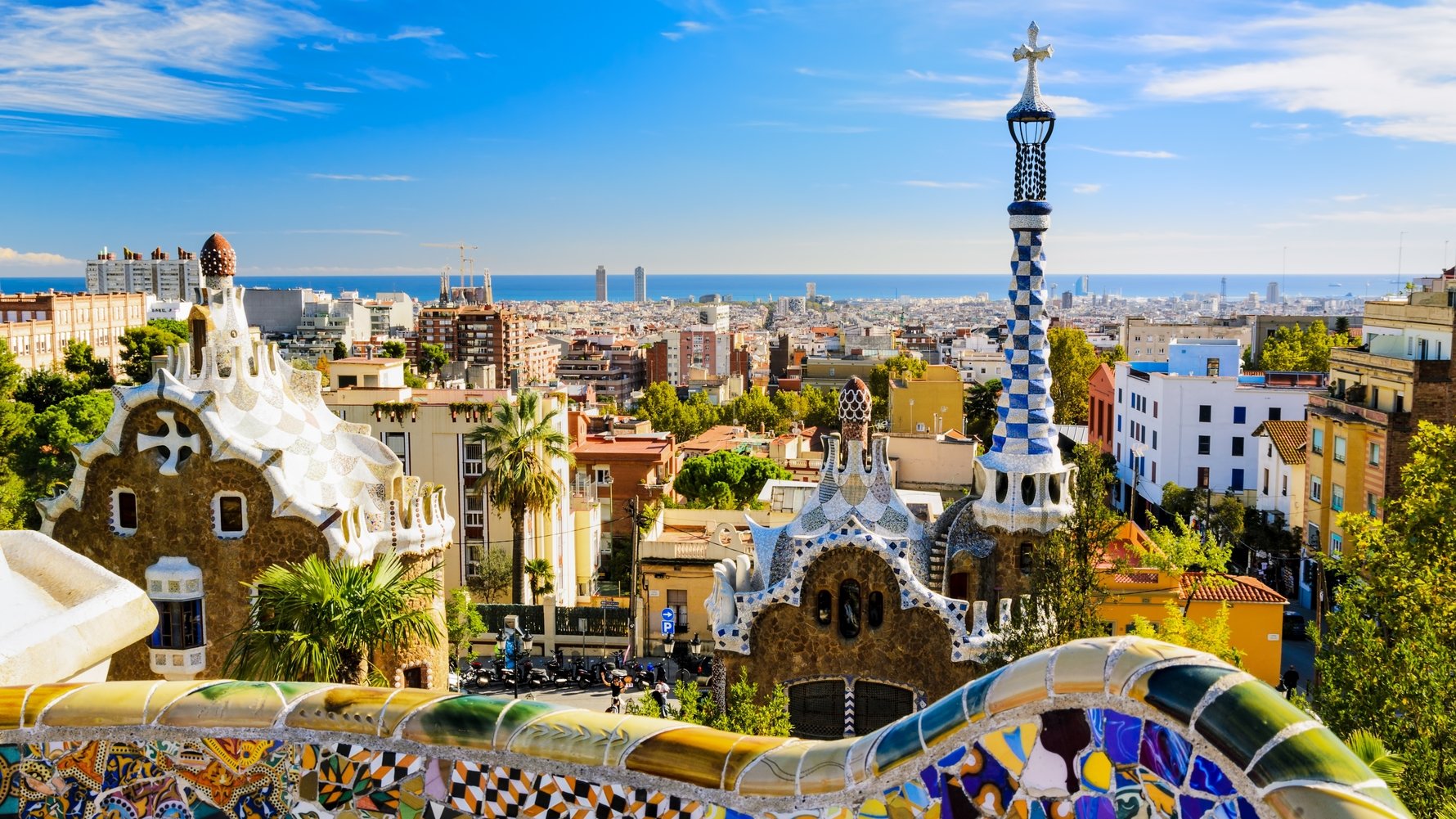
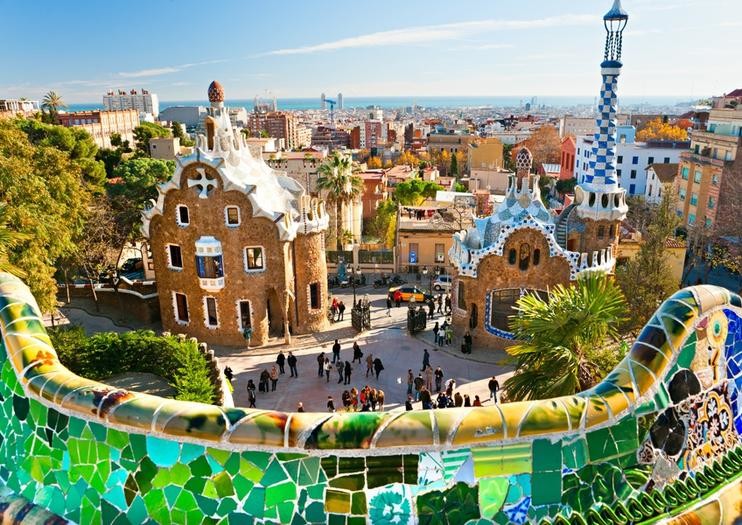
Park Güell was originally commissioned in 1900 by Gaudí’s patron Eusebi Güell as a garden city development: 60 houses set in landscaped grounds on a hill above Barcelona. Only two houses were ever built, the scheme collapsed commercially, and Güell donated the land to the city in 1918. The result, a UNESCO World Heritage Site since 1984, is one of the stranger and more beguiling parks in Europe: a terraced hillside of Doric colonnades, mosaic-covered benches, a gingerbread gatehouse and a central terrace with panoramic views over the city and sea.
The famous sinuous bench that edges the main terrace, covered in Gaudí’s characteristic trencadís mosaic of broken ceramic pieces, is the set piece most people come for. The colonnaded hall beneath it, designed as the park’s main market, uses hollow Doric columns as rainwater collectors feeding an underground cistern, a piece of engineering hidden inside what looks like pure decoration. The upper parts of the park, beyond the ticketed zone, are free to walk and offer the best views.
Location: Carrer d’Olot, 08024 Barcelona. Metro: Lesseps or Vallcarca, then a steep uphill walk; the Gaudí bus also stops here.
Best time to visit: Early morning for the ticketed Monumental Zone, before the groups arrive. The free upper sections of the park are best in late afternoon.
Ticket prices: The Monumental Zone (the main terrace, colonnaded hall and surrounding area) costs around €10; book in advance online. The rest of the park is free.
Good to know: Gaudí himself lived in the park from 1906 until 1926 in one of the two completed houses, which is now the Casa Museu Gaudí. Entry is separate from the park ticket and covers the architect’s personal furniture and belongings.
3. Casa Batlló
Casa Batlló on the Passeig de Gràcia was remodelled by Gaudí between 1904 and 1906 for the industrialist Josep Batlló and represents Modernisme at its most deliberately strange. The façade combines an undulating stone structure with a mosaic skin of blues, greens and turquoise ceramic fragments and balconies shaped, depending on your interpretation, like skulls, carnival masks or the bones of dragons’ victims. The roof, covered in iridescent scale-like tiles and rising to a ridge that resembles a dragon’s back, supports a cross that Gaudí positioned to catch the first light of dawn on the feast of Sant Jordi, patron saint of Catalonia, who killed a dragon. The iconography is consistent.
Inside, the central staircase well is lined with tiles that graduate from deep blue at the bottom to white at the top, creating an effect of looking up through water toward the surface. The main floor and rooftop are included in standard tickets; various upgrade options add a terrace, digital experiences and other embellishments. The basic visit is already comprehensive.
Location: Passeig de Gràcia, 43, 08007 Barcelona. Metro: Passeig de Gràcia.
Best time to visit: Morning for the best light on the façade. Book in advance; same-day entry is possible but not guaranteed.
Ticket prices: Standard tickets from around €35; “Gold” tickets with additional access higher. The official website (casabatllo.es) has the best price. Free for children under 12.
Good to know: Casa Batlló, La Pedrera and Palau del Baró de Quadras are all on the Passeig de Gràcia within a few minutes’ walk of each other, making the boulevard an efficient and extremely photogenic route between them. The block is known as the Manzana de la Discordia (Block of Discord) for the concentration of Modernista buildings by rival architects.
4. La Pedrera (Casa Milà)
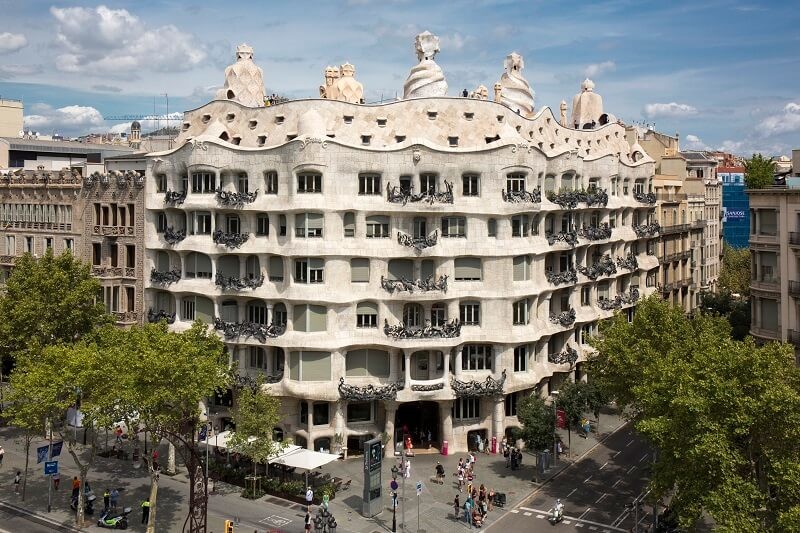
La Pedrera, built between 1906 and 1912 and formally named Casa Milà after its commissioner, earned its nickname (“the quarry”) from Barcelonans who considered the undulating stone façade and wrought iron balconies an affront to architectural convention. They were not wrong about its unconventionality; the verdict on the affront has since been revised. The building is now a UNESCO World Heritage Site and one of the most visited in Spain.
The rooftop is the draw: a terrace populated by chimney stacks and ventilation towers that Gaudí sculpted into warrior figures, twisted crosses and helical forms, creating something that reads as a surrealist installation and functions as a working building. The apartment on the fourth floor has been restored to its 1911 appearance and provides a rare glimpse of Gaudí’s domestic architecture from the inside. The attic, with its 270 parabolic arches forming the building’s structural skeleton, houses a permanent exhibition on Gaudí’s architectural methods.
Location: Carrer de Provença, 261–265, 08008 Barcelona. Metro: Diagonal.
Best time to visit: Morning for the rooftop; La Pedrera also runs evening visits with musical entertainment, which are popular and require booking separately.
Ticket prices: Standard entry around €25–28; reduced rates for students and over-65s. Book at lapedrera.com. Free for under-13s.
Good to know: If choosing between Casa Batlló and La Pedrera, the interiors are different enough in character to warrant both if time allows. The rooftop of La Pedrera is more architecturally extraordinary; the interior of Casa Batlló is more immersive as an experience. Both is the correct answer.
5. Barri Gòtic
The Barri Gòtic, Barcelona’s Gothic Quarter, is built on and around the Roman settlement of Barcino, founded in the 1st century BC, and the medieval city that grew up on its foundations over the following fifteen centuries. The result is a dense, irregular grid of narrow lanes, interior courtyards, Roman walls, Gothic churches and plaques commemorating things that happened here in centuries when the history of Europe was being arranged in this part of the world.
The Barcelona Cathedral, begun in 1298 and completed in its essentials by 1450, anchors the northern end of the quarter, its Gothic cloister containing a flock of thirteen geese that have been maintained there since at least the 15th century for reasons that are either symbolic or deeply practical depending on the source. The Plaça Reial, a neoclassical square from 1848 with lampposts designed by a young Gaudí, is the social centre of the area. The Pont del Bisbe, a neo-Gothic bridge crossing Carrer del Bisbe, is one of the more photographed details in the city.
Location: Bounded by Las Ramblas to the west, the Via Laietana to the east, and the old port to the south. Metro: Liceu or Jaume I.
Best time to visit: Early morning for empty lanes; evening for the bars and restaurants. The Cathedral is best visited on a Sunday morning when a sardana folk dance takes place in the square outside.
Ticket prices: Free to walk. The Cathedral charges a small entry fee for the rooftop and museum; the cloister is free. The Temple d’August, containing four Roman columns from the 1st century AD, is free and hidden inside a medieval courtyard on Carrer del Paradís.
Good to know: The Temple d’August is one of the more extraordinary free things in Barcelona: four 2,000-year-old Roman Corinthian columns standing in a medieval courtyard in the middle of a Gothic city. The entrance is easy to miss.
6. La Boqueria and Las Ramblas
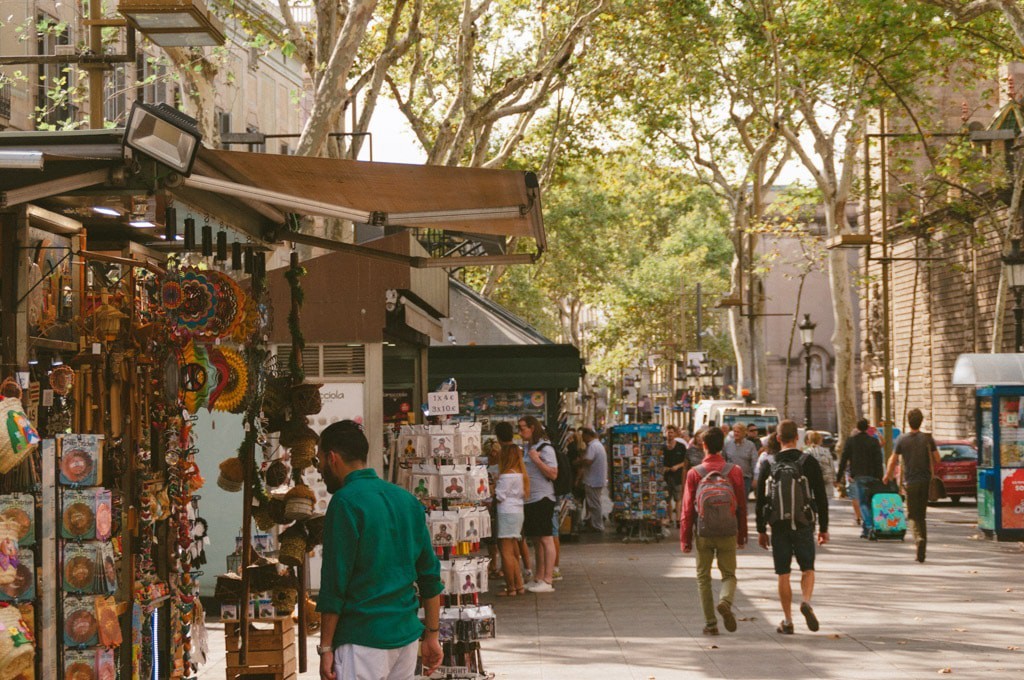
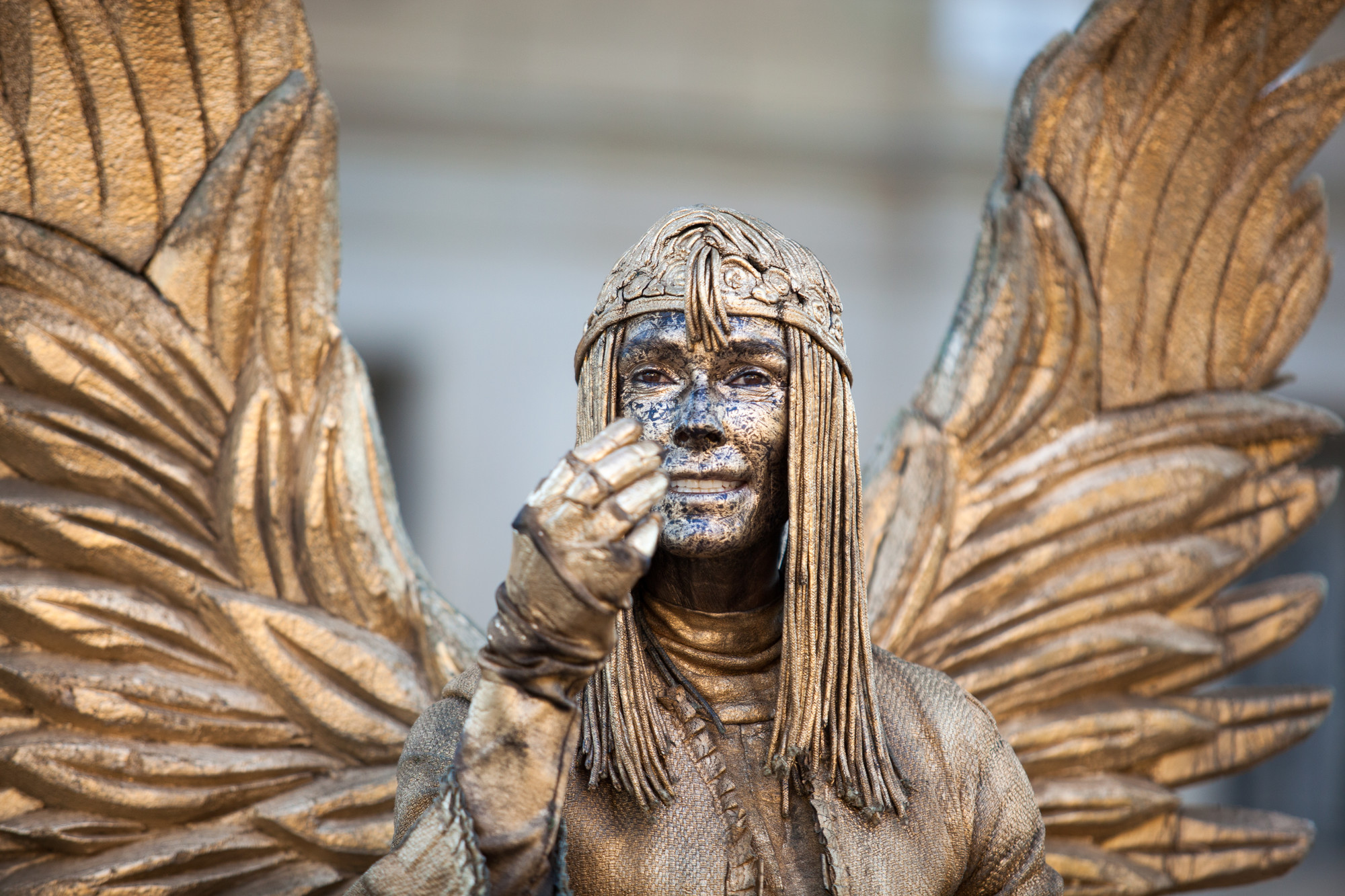
Las Ramblas is Barcelona’s most famous street, a 1.3-kilometre tree-lined promenade running from Plaça de Catalunya to the old port, and an honest account of it requires noting that it is simultaneously one of the most atmospheric streets in Europe and one of the most pickpocket-friendly. The tourist infrastructure is considerable, the overpriced café terraces are many, and the famous human statues have expanded from a novelty to a crowd-management challenge. None of this has diminished the fundamental appeal of the street, which is to walk its length from the bustle of the centre to the sudden opening onto the sea.
Mercat de la Boqueria, the covered market opening off Las Ramblas, is one of Europe’s great food markets and has been on this site in some form since the 13th century. The current iron structure dates from 1914. The tourist pressure has pushed the better fish and produce stalls toward the back and sides; the front section, with its photogenic pyramids of fruit and expensive smoothies, is largely theatrical. Go deeper, find the stalls where actual cooking is happening, and eat standing up at one of the market bars.
Location: Las Ramblas runs from Plaça de Catalunya to the port. La Boqueria is at La Rambla, 91, 08001 Barcelona. Metro: Liceu.
Best time to visit: Las Ramblas at any time; La Boqueria on a weekday morning before noon. Sunday afternoons the market is largely closed.
Ticket prices: Both free to enter. Watch your pockets on Las Ramblas; this is not a superstition.
Good to know: The Miró mosaic set into the pavement of Las Ramblas at the Boqueria entrance is easy to walk over without noticing. It is there. The Columbus monument at the southern end of the Ramblas marks the approximate point where Columbus returned from the Americas in 1493 and reported to Ferdinand and Isabella. The finger points toward Libya.
7. Palau de la Música Catalana
The Palau de la Música Catalana was designed by Lluís Domènech i Montaner and completed in 1908, and it is the finest concert hall in Spain and arguably in Europe. The exterior, a riot of Modernista tilework, ceramic flowers, sculpted figures and stained glass, is extraordinary enough; the interior, with its central skylight of stained glass illuminating the auditorium from above and the sculptural explosion covering every surface, is in a different category entirely. The whole building is a UNESCO World Heritage Site, one of only two Modernista buildings to receive the designation alongside the works of Gaudí.
The best way to experience it is to attend a concert, and the programme covers everything from chamber music to jazz to choral performances. The building is also open for guided tours during the day, which cover the main hall, the Lluís Millet Room with its stained glass and sculptures, and the foyer. Tours in English run several times daily.
Location: Carrer Palau de la Música, 4–6, 08003 Barcelona. Metro: Urquinaona.
Best time to visit: A concert, ideally. Tour visits: morning, before the afternoon groups arrive.
Ticket prices: Guided tours around €20 adults, €11 reduced. Concert tickets vary by programme. Book tours at palaumusica.cat.
Good to know: The Palau is in the El Born neighbourhood, a five-minute walk from the Picasso Museum, making the two a natural morning pairing. El Born itself, with its independent shops, bars and the extraordinary Mercat de Santa Caterina, is worth the time spent in it.
8. Museu Picasso
The Museu Picasso occupies five adjoining medieval palaces on Carrer Montcada in El Born, a street that was the most prestigious address in 15th-century Barcelona and retains the architecture to prove it. The collection, founded in 1963 with a major donation by Picasso himself and his friend and secretary Jaume Sabàrtés, focuses on the artist’s formative years in Barcelona rather than the Cubist period for which he is most famous. It is, in that sense, a more specialist collection than visitors expecting the greatest hits sometimes anticipate.
What it contains is exceptional: the early academic works that demonstrate the technical foundation beneath the later experimentation; the Blue Period paintings of considerable power; and the Las Meninas series of 1957, in which Picasso produced 58 interpretations of Velázquez’s masterpiece, a sustained and extraordinary act of artistic dialogue with a predecessor he had been thinking about for decades. The collection makes sense of the artist’s trajectory in a way that a greatest-hits selection would not.
Location: Carrer Montcada, 15–23, 08003 Barcelona. Metro: Jaume I.
Best time to visit: Weekday mornings. Free on the first Sunday of each month and Thursday evenings from 18:00; expect queues during these slots.
Ticket prices: Around €12 general; reduced rates for students and over-65s. Free for under-18s. Book online at museupicasso.bcn.cat.
Good to know: The medieval palaces that house the museum are worth attention in their own right: the Gothic courtyards and external staircases, visible as you move between galleries, provide a context for the collection that a purpose-built museum building would not. Carrer Montcada outside is one of the finest medieval streets in Spain.
9. Montjuïc
Montjuïc is the hill that rises above the city’s southern port district, topped by a 17th-century castle and offering the best elevated views of Barcelona available within the city limits. It was the site of the 1929 International Exposition, which left behind the Palau Nacional, the Pavelló Mies van der Rohe and the illuminated Magic Fountain; and of the 1992 Olympic Games, which left behind the main stadium, the Sant Jordi sports hall by Arata Isozaki, and the Telecommunications Tower by Santiago Calatrava. It is, in short, a hill with considerable architectural baggage.
The Fundació Joan Miró, opened in 1975 in a building designed by Josep Lluís Sert, houses the most comprehensive collection of Miró’s work in the world and is one of the finer modern art museums in Spain. The Museu Nacional d’Art de Catalunya (MNAC) in the Palau Nacional contains the world’s greatest collection of Romanesque art, transferred from the Pyrenean churches for which it was made, as well as Gothic and modern Catalan art. The cable car from the port to the castle summit is the most dramatic way up.
Location: Accessible by cable car from Barceloneta, by the Montjuïc funicular from Paral·lel metro station, or on foot.
Best time to visit: The Fundació Miró and MNAC are best on weekday mornings. The Magic Fountain show runs on weekend evenings; times and dates vary by season.
Ticket prices: The castle and gardens charge a small entry fee; the park areas are free. Fundació Miró around €14; MNAC around €12. The Pavelló Mies van der Rohe charges entry. The cable car and funicular have their own fares.
Good to know: The MNAC’s Romanesque collection, transferred from Pyrenean churches in the early 20th century, is extraordinary in its completeness and its context. The apses and altarpieces are displayed in reconstructed settings that give a sense of how the art functioned in its original setting. It is considerably more interesting than the description implies.
10. Barceloneta and the Waterfront
Barceloneta is the old fishermen’s neighbourhood that sits between the old port and the Mediterranean, a grid of narrow streets laid out in the 18th century on a triangular spit of land that has no real equivalent in any other major European city. It was long the working-class, genuinely local quarter closest to the sea; it has gentrified considerably, the seafood restaurants on the beach have prices that reflect the location, and the bars are crowded in summer. None of that has entirely erased its character.
The Barcelona waterfront was entirely reimagined for the 1992 Olympics, which converted what had been an industrial port zone and a stretch of railway yards into four kilometres of public beach, a marina, the Port Olímpic with its Frank Gehry bronze fish, and the Rambla del Mar pedestrian bridge connecting Las Ramblas to the Maremagnum shopping centre on a floating platform. The result is more successful than this sounds in summary: the beaches are good, the promenade works, and the city’s relationship with its sea, severed for most of its industrial history, has been genuinely restored.
Location: Barceloneta Metro station. The beach promenade runs northeast from the neighbourhood toward Port Olímpic.
Best time to visit: Early morning in summer for the beach with room to move; out of season for Barceloneta’s streets and seafood restaurants without the crowds.
Ticket prices: Free. The beaches are public; the restaurants will charge you accordingly.
Good to know: The fresh seafood restaurants along Barceloneta’s interior streets are better value and more local in character than those directly on the beach. A morning walk along the promenade from Port Olímpic back toward the old port, with the city rising inland and the sea to your right, is one of the better free experiences Barcelona offers.
What else can you see in Barcelona?
Gaudí has further claims on your time. Palàu Güell, built in 1888 and the first major commission the architect completed for his patron, is in the Raval neighbourhood and is considerably less visited than the later works; the rooftop parabolic arches and chimneys are an early version of what would come later and are remarkable in their own right. Casa Vicens in Gràcia, Gaudí’s very first major building, opened as a museum only in 2017 and remains relatively uncrowded.
The El Born neighbourhood, surrounding the Palau de la Música and the Picasso Museum, has the best concentration of independent bars, restaurants and shops in the city, and the Mercat de Santa Caterina, the neighbourhood’s covered market with a spectacular ceramic tile roof by Enric Miralles, is a working market of real quality. Gràcia, the village that became a neighbourhood when Barcelona expanded around it, has a network of small squares and a local character that the more tourist-saturated areas of the city have largely lost.
For day trips, Montserrat is an hour by train and rack railway: a serrated mountain massif with a Benedictine monastery at 725 metres, views that stretch to the Pyrenees on clear days, and walking trails that reward the effort. Girona, an hour north by high-speed train, has a medieval centre of exceptional quality, a cathedral that provided the exterior for several scenes in Game of Thrones, and a food culture anchored by El Celler de Can Roca, for many years the restaurant the rest of the world was trying to be. The Dalí Triangle – the museums at Figueres, Púbol and Portlligat – can be covered in a long day and provides a completely different lens through which to view Catalonia’s contribution to 20th-century art.