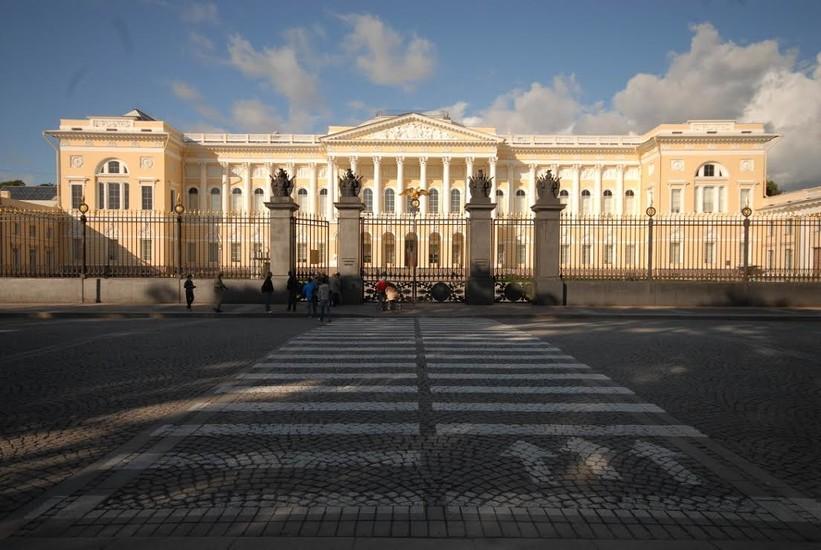
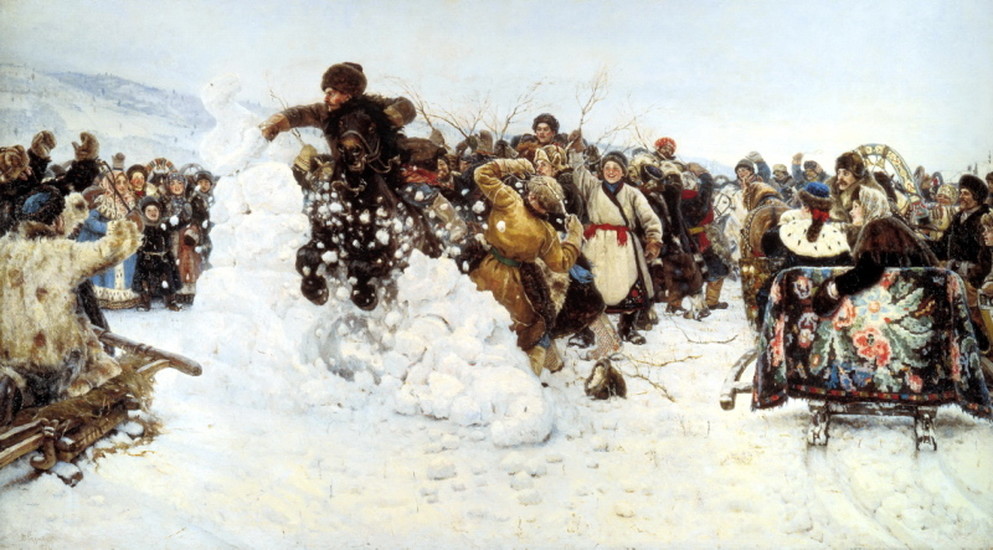
The palace’s permanent exhibits form the major constituent of the Russian Museum’s collection, with works spanning from icons of the 12th century to avant-gardist movements of the early 20th century. Among which include masterpieces such as Karl Brullov's The Last Day of Pompeii, Hovhannes Aivazovsky's The Ninth Wave and Repin’s monumental Ceremonial Sitting of the State Council. The Benois Wing of the palace, which was constructed between 1914-1919, is the home of the museum’s more modern works and hosts permanent collection of the late 19th - early 21th century art and temporary exhibitions.
For visiting the Mikhailovsky Palace and the Benois Wing and exhibition "Ilya Repin. To the 175th Anniversary of the Artist's Birth" It is not possible to purchase tickets on the site. Tickets only at the ticket office of the Benoit Wing and at the ticket office of the Mikhailovsky Palace
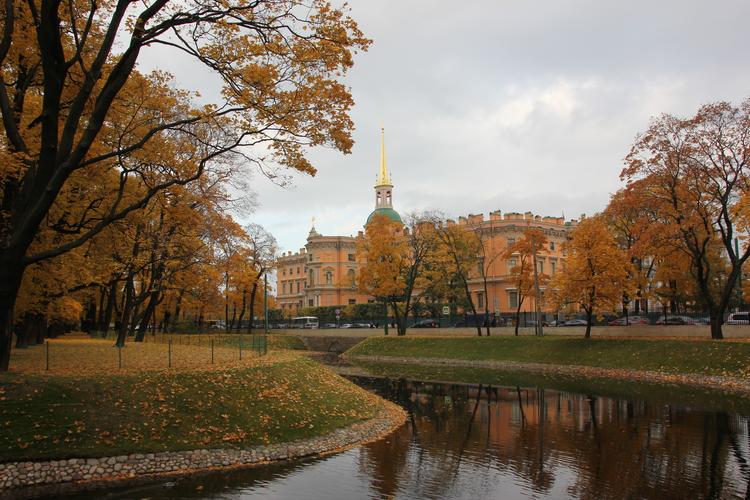
The Mikhailovsky Palace is the traditional epicentre of the Russian Museum, built in 1825. Located within the historic centre of St. Petersburg, it is a fine example of Russian Neoclassical grandeur, having been designed by the Italian architect Carlo Rossi, whose work is manifold across the city. The palace was originally built for Grand Duke Mikhail Pavlovich, whose father, Emperor Pavel I, set aside special funds for the building on the birth of his youngest son in 1798. It was to then house the Grand Duke and his wife, his children and their children successively until the 1890s when Tsar Nicholas II decided to purchase the palace for the purpose of becoming Russia’s first national gallery. Over the course of two years, from 1895 to 1897, the Duke’s former residence was renovated and adjusted for the requirements of a modern museum.