Aruba has the best beaches in the ABC islands, and by most rankings it has some of the best beaches in the Caribbean. The southwest coast is a continuous stretch of fine white coral sand and calm turquoise water, sheltered from the prevailing trade winds by the island’s position and shape, and reliably swimmable year-round. The sun shines for around 320 days annually, the water temperature barely moves from 27°C, and there are no hurricanes to speak of. As beach destinations go, the natural conditions are close to ideal.
What the island also has, particularly along the Palm Beach resort strip, is a significant volume of other people who have reached the same conclusion. This is worth factoring into your planning. Not every beach on the island is equally crowded, equally suited to every purpose, or equally worth the effort of getting to. This guide covers the beaches that genuinely earn their reputations, the one that doesn’t quite, and a few that most visitors never find at all – because the best beach for you depends on what you actually want from a beach day.
All beaches in Aruba are public by law, including those in front of private resorts. The palapas (thatched-palm shade structures) installed on public beaches are also public and first-come, first-served – but note that umbrellas and loungers directly in front of a resort are resort property and not free to use.
The west coast is calm; the east coast is not. The leeward (west and southwest) coast is where all the swimming beaches are. The windward (east and northeast) coast faces the open Atlantic and is beautiful but rough – strong currents, heavy surf and not suitable for swimming. Arikok National Park’s north-facing beaches fall into this category.
A rental car makes everything easier. The main beaches between Oranjestad and the California Lighthouse are close together and accessible by bus (line 2 from Oranjestad serves most of the west coast), but getting to Baby Beach, Mangel Halto or Boca Grandi without your own transport is slow and inconvenient.
Arrive early. This applies especially to Eagle Beach and Palm Beach in high season. Palapas go quickly, car parks fill up, and the difference between arriving at 7am and 10am is significant.
Sun protection is non-negotiable. The trade winds create a cooling effect that masks how intensely the sun is working. Underestimating this is a reliable way to spend the second day of your holiday indoors.
Eagle Beach
Eagle Beach is the best beach on the island. It has been ranked among the top beaches in the Caribbean by TripAdvisor’s Travellers’ Choice awards for several years running, and the ranking is deserved. The beach is wide – genuinely wide, not just wide by comparison – with fine white sand that stays cooler underfoot than most Caribbean beaches, calm and clear water, and the famous fofoti trees whose wind-bent trunks leaning toward the sea have become the defining image of Aruba. The trees are protected by law; do not hang things on them or disturb the area around their roots, which serves as nesting habitat for sea turtles between March and November.
Eagle Beach sits in the low-rise hotel zone south of Palm Beach, fronted by smaller hotels and residential properties rather than towers. This is directly related to why it is better than Palm Beach: fewer rooms means fewer people on the beach below. It is not uncrowded – it is a famous beach on a tourist island – but it is uncrowded relative to its reputation, which is unusual. The snorkelling off Eagle Beach is limited compared to the northern beaches; the reef is further out and the sandy bottom close to shore has less to offer underwater. Come here to swim, to lie in the sun, and to watch the fofoti trees do what they do in the late afternoon light.
Best for: Swimming, sunbathing, photography, families, turtle watching in season
Facilities: Free palapas, beach bar, watersports rentals, parking (free, can fill up in high season)
Snorkelling: Limited – better options elsewhere
Crowds: Moderate; arrive before 9am for a palapa in peak season
Palm Beach
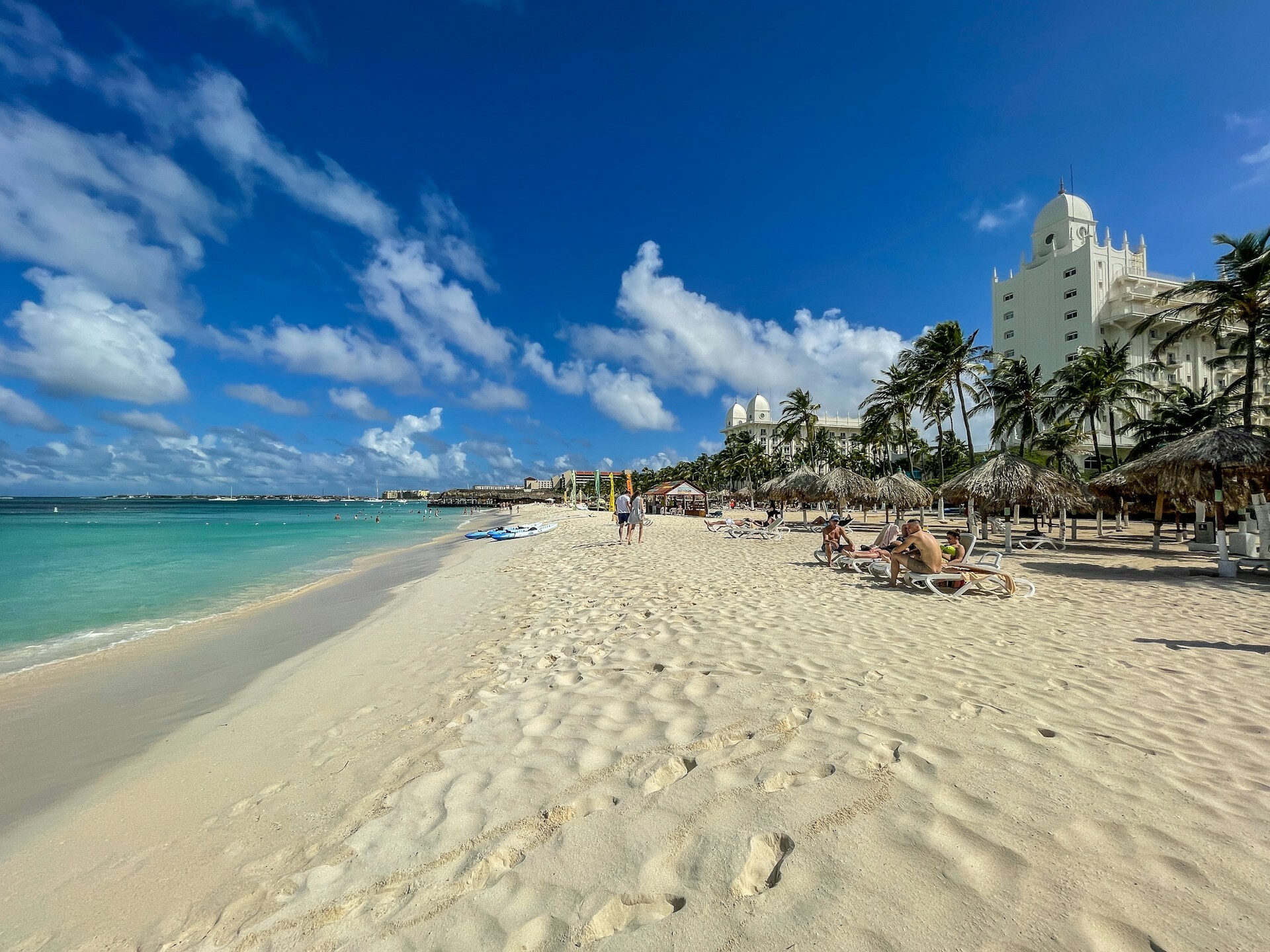
Palm Beach is the most famous beach in Aruba and the one most visitors end up spending the most time on, largely because most of the large resort hotels sit directly behind it. The beach itself is genuinely beautiful – the same white sand and turquoise water as Eagle Beach, backed by the full-service infrastructure of the resort strip. Watersports are available in abundance: jet skis, parasailing, banana boats, paddleboards, catamarans, sailing tours, snorkelling trips. There is no shortage of things to do or things to eat and drink within a very short walk.
The honest qualification is that Palm Beach is a resort beach, and it feels like one. The high-rise hotels that line the back of the beach change the character of the place significantly – more crowded, more commercial, more active than Eagle Beach, and considerably more so than anywhere further north. None of this is necessarily a problem if resort infrastructure is part of what you want from a beach holiday. Palm Beach works extremely well for people staying in the adjacent hotels who want a full-service beach experience. It works less well for people who drove across the island specifically to swim somewhere beautiful in relative peace.
Best for: Watersports, families staying in resort hotels, all-day beach days with food and drink on hand
Snorkelling: Limited from shore; better via boat tour
Crowds: High, particularly in winter high season and during cruise ship days
Arashi Beach
Arashi Beach is at the northwestern tip of the island, a short drive past the low-rise hotel zone and just before the California Lighthouse, and it offers a noticeably different character from the two beaches above. The sand is white, the water calm and clear, the beach itself relatively small. The snorkelling is consistently good: the reef starts close to shore, the coral formations are healthy, and the fish population is more diverse than the beaches further south. The palapas are available and free; there is a small snack hut on site.
Arashi works particularly well as a morning snorkelling stop before the wind picks up in the afternoon. On calmer days the water visibility is excellent; on windier days the chop makes the experience less pleasant. The beach gets busier than it used to – it is no longer the secret it once was – but it remains significantly quieter than Palm Beach and Eagle Beach, particularly on weekday mornings. A useful tip: if the main section of Arashi is crowded, walk north along the shoreline toward the lighthouse. The beach continues and the crowds thin quickly.
Best for: Snorkelling, families, quieter beach days, sunset views
Snorkelling: Good, particularly in calm conditions; reef starts close to shore
Crowds: Light to moderate; much quieter than Palm and Eagle Beach
Boca Catalina
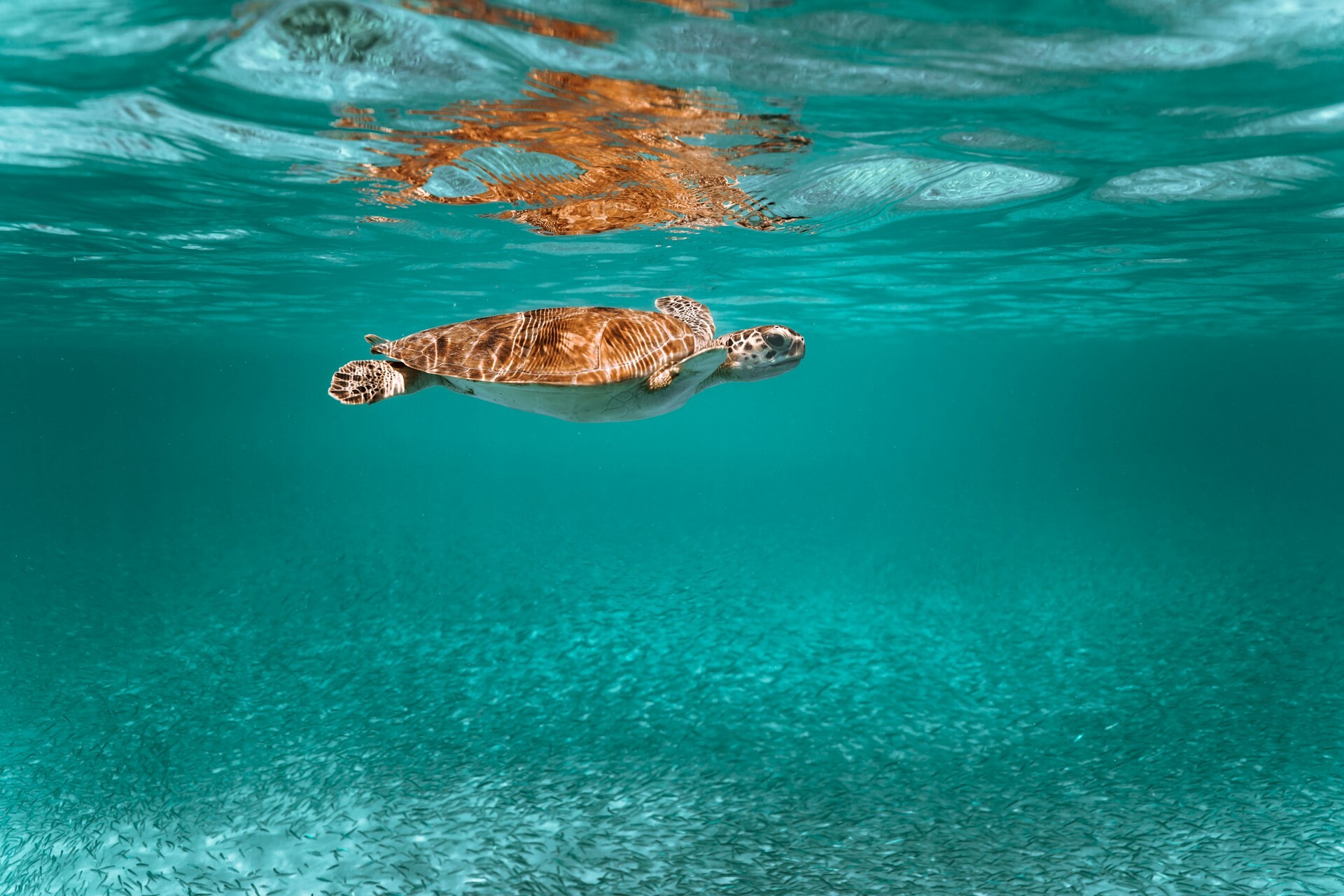
Boca Catalina is a small cove between Malmok and Arashi on the northwest coast, and it is the best snorkelling beach accessible without a boat on the island. The cove is sheltered, the water reliably clear, the reef shallow enough for beginners and interesting enough for experienced snorkellers – sea turtles feed in the seagrass beyond the nearshore zone, schools of tropical fish move through the coral formations, and the occasional barracuda regards proceedings from a distance. The beach itself is small and not particularly sandy; there is minimal shade and no food or water available on site. This is a snorkelling spot with some sand attached to it, not a beach that happens to have snorkelling.
Tour boats from Palm Beach regularly stop at Boca Catalina as part of snorkelling excursions, but the beach is accessible independently with a car, a small roadside parking area and your own gear. Coming early on a weekday morning – before the tour boats arrive – gives you the cove more or less to yourself, which is how it is best experienced.
Best for: Snorkelling, sea turtle sightings, experienced swimmers
Facilities: Minimal – bring water, food and your own snorkel gear
Snorkelling: Excellent, the best shore snorkelling on the island
Crowds: Light in the morning; can get busy when tour boats arrive mid-morning
Mangel Halto
Mangel Halto is on the south coast, a twenty-minute drive from Oranjestad past the airport and the refinery infrastructure of the island’s industrial south. The approach is not promising. The beach itself, once you arrive, is a revelation: a sheltered lagoon ringed by mangroves, with calm and exceptionally clear water over a mix of sandy bottom and reef, reliably good snorkelling in relatively shallow water, and a genuinely quiet atmosphere that reflects both the effort required to reach it and its distance from the hotel strip. The mangrove forest fringing the lagoon adds an ecological dimension absent from the resort beaches.
The snorkelling here is the best on the south coast, with healthy coral formations, sea turtles in the seagrass and a diverse fish population. The beach is small and the facilities minimal – some palapas, no food or drink vendors in any reliable sense – which means bringing everything you need. It is popular with local families on weekends; weekday mornings offer the best combination of calm water and minimal company.
Best for: Snorkelling, quiet beach days, local atmosphere, families
Facilities: Some palapas, limited shade; bring food, water and snorkel gear
Snorkelling: Very good; best south-coast option
Crowds: Light on weekdays; popular with locals at weekends
Baby Beach
Baby Beach is at the southeastern tip of the island, about 35 minutes by car from Oranjestad, and it is the best beach in Aruba for young children and for anyone who wants to swim in genuinely shallow, flat-calm, warm water without currents or waves. The lagoon is almost entirely enclosed by a natural rock barrier, the depth rarely exceeds waist height across most of its width, and the water temperature is several degrees warmer than the west-coast beaches. The snorkelling around the rock wall and in the deeper channel at the lagoon’s edge – parrotfish, barracuda, angelfish, frequent sea turtle sightings – is considerably better than the beach’s family-friendly reputation might suggest.
The Lago Oil Refinery sits on the horizon, which is either irrelevant or mildly jarring depending on your tolerance for industrial backdrops. The Aruba Esso Club facilities at the western edge of the beach – built in the 1950s for refinery workers – are an odd historical footnote now serving as a beach bar and snack area. Baby Beach is not a secret and is not trying to be: it is a genuinely excellent beach for what it is, and what it is happens to suit a specific set of needs very well.
Best for: Young children, beginner swimmers, calm-water snorkelling, sea turtle sightings
Facilities: Beach bar, snorkel rental, toilets, parking (free)
Snorkelling: Good around the rock wall and deeper channel; exceptional for the effort required
Crowds: Moderate; busy on weekends with local families
Manchebo Beach
Manchebo Beach is the southern extension of Eagle Beach, separated from it by nothing except a change in the name and a slight reduction in facilities. The sand is the same; the water is the same; the main differences are that Manchebo is slightly more exposed to the trade winds (making it cooler and breezier than Eagle Beach on most days), has fewer facilities, and attracts fewer visitors as a result. For people who want the Eagle Beach experience without the Eagle Beach crowd, Manchebo is the answer.
The beach is backed by a small cluster of low-rise properties and has historically been one of the quieter stretches on the west coast. It is worth noting that the wind exposure makes it less suitable for children or tentative swimmers on rougher days, when the chop can be more pronounced than on the sheltered northern section of Eagle Beach. On calm days, it is simply a beautiful and relatively uncrowded Caribbean beach.
Best for: Couples, quiet beach days, anyone who finds Eagle Beach too busy
Facilities: Limited; fewer vendors and services than Eagle Beach
Snorkelling: Limited
Crowds: Light; consistently quieter than Eagle Beach
Boca Grandi
Boca Grandi is on the southeast coast, facing the open Atlantic, and it is not a swimming beach. The currents are strong, the surf is unpredictable, and entering the water here without specific local knowledge and considerable experience is inadvisable. This is stated plainly rather than diplomatically because the distinction matters: Aruba’s west-coast beaches are routinely described as safe for swimmers of all levels, and they are, but Boca Grandi is the opposite end of that spectrum.
What Boca Grandi offers instead is the best kitesurfing and windsurfing on the island, a dramatic east-coast landscape entirely unlike the resort strip, the occasional sea bean washed up from Venezuelan rivers (locals call them djucu and consider them good luck), and a genuine sense of being on a different island from the one in the brochures. Experienced surfers also find it worthwhile. If none of those apply to you, the beach is still worth a stop for the scenery, provided you treat the water with the respect it deserves.
Best for: Kitesurfing, windsurfing, experienced surfers, dramatic scenery
Facilities: Minimal; some kitesurfing operators in the area
Snorkelling/swimming: Not recommended due to currents and surf
The honest summary, for people who want a direct answer:
Best overall beach: Eagle Beach. The reputation is deserved.
Best for snorkelling: Boca Catalina, followed by Arashi and Mangel Halto.
Best for families with young children: Baby Beach, then Eagle Beach.
Best for avoiding crowds: Manchebo Beach or Arashi on a weekday morning.
Best for watersports: Palm Beach for organised activities; Boca Grandi for kitesurfing and windsurfing.
Best for a quiet local experience: Mangel Halto on a weekday, or Rodgers Beach next to Baby Beach if you want something smaller still.
Most overrated: Palm Beach – beautiful, but the crowds and resort infrastructure are not for everyone, and Eagle Beach delivers a better experience for most purposes.
The west coast beaches between Oranjestad and the California Lighthouse are close enough together that beach-hopping is feasible in a single day with a car. A morning at Boca Catalina for snorkelling, an afternoon at Eagle Beach for swimming and sunset – that covers most of what the island’s coastline does best in a single unhurried day.