The birthplace of the Buddha – and a lesson in squandered potential that may finally be turning a corner
Let's start with the extraordinary part. Lumbini, a quiet stretch of the Terai plains in southern Nepal, is where Siddhartha Gautama was born around 563 BCE – the man who became the Buddha, whose teachings went on to shape the lives of roughly 500 million people. That is not a minor claim to fame. Lumbini is, by any reasonable measure, one of the most important places on earth: a UNESCO World Heritage Site, a living pilgrimage destination, and a point of orientation for nearly every Buddhist tradition in the world.Now for the less extraordinary part. The average visitor spends about 30 minutes here.
Thirty minutes. At the birthplace of the Buddha. That figure has been documented, cited, quietly deplored, and apparently left unchanged by four decades of government master plans, ministerial promises, and development projects. It tells you most of what you need to know about how Lumbini has been run.
The story is, in a bleak sort of way, impressively consistent. In 1978, the Nepal government and the United Nations approved a master plan for Lumbini designed by Kenzō Tange – one of Japan's most celebrated architects. It was a serious, considered vision: a planned pilgrimage zone built on the structure of the Buddhist path itself, with a sacred garden at its heart and a monastic zone radiating outward. It was supposed to be finished by 1995. As of 2019, it was still 85% complete. Thirty-eight tourism ministers have arrived in that time, each announcing they would finally see it through, and each departed without doing so. An international airport was built at vast expense, opened with considerable fanfare in 2022, and has since operated mostly domestic flights while the international connections it was designed to attract materialise at a pace that would try the patience of a saint – Buddhist or otherwise.
We are not telling you this to put you off going. We are telling you this because Lumbini is genuinely worth more than 30 minutes – far more – and the only way to make that case honestly is to be straight about what it has and hasn't been, rather than reach for the tourist board's brochure copy.
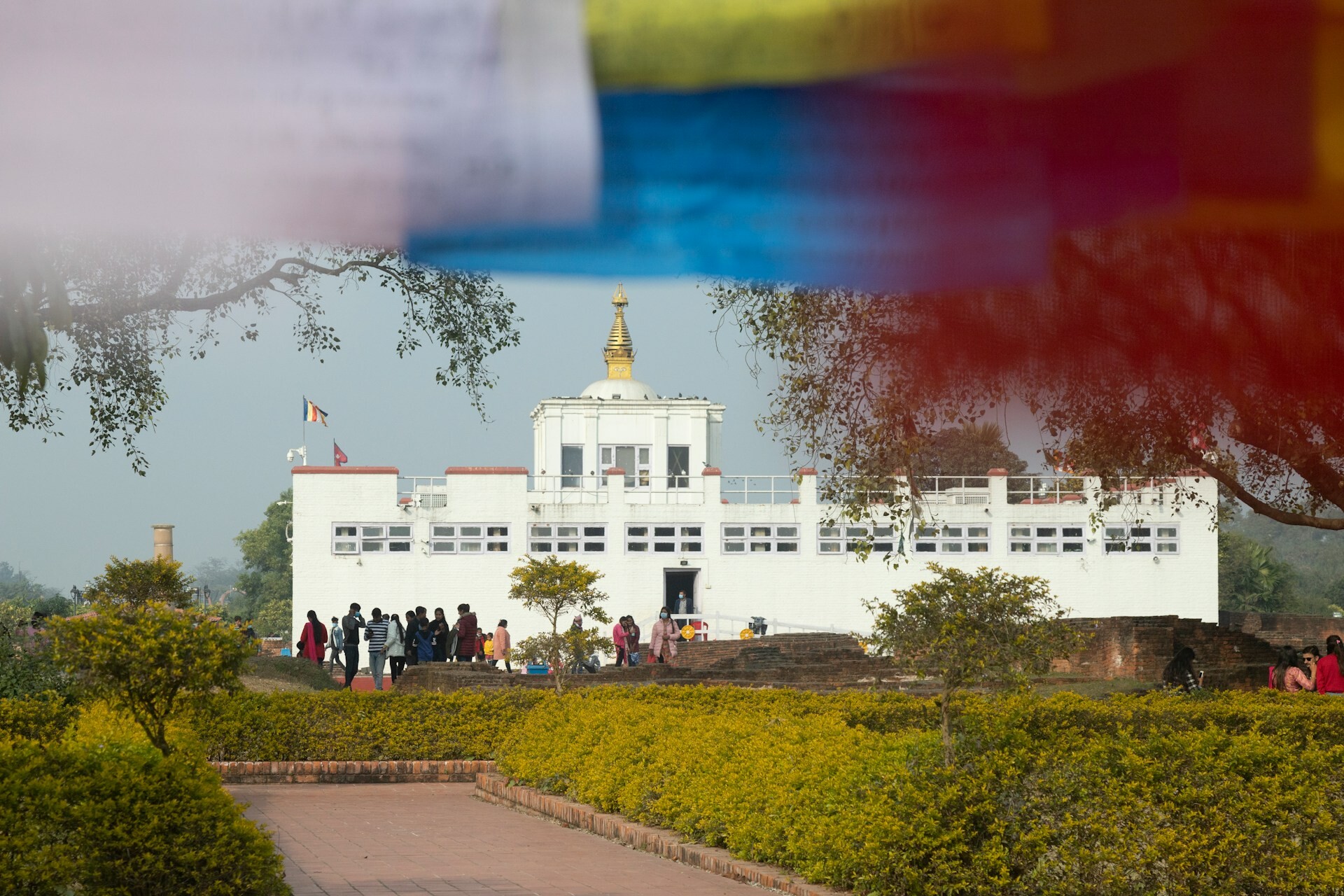
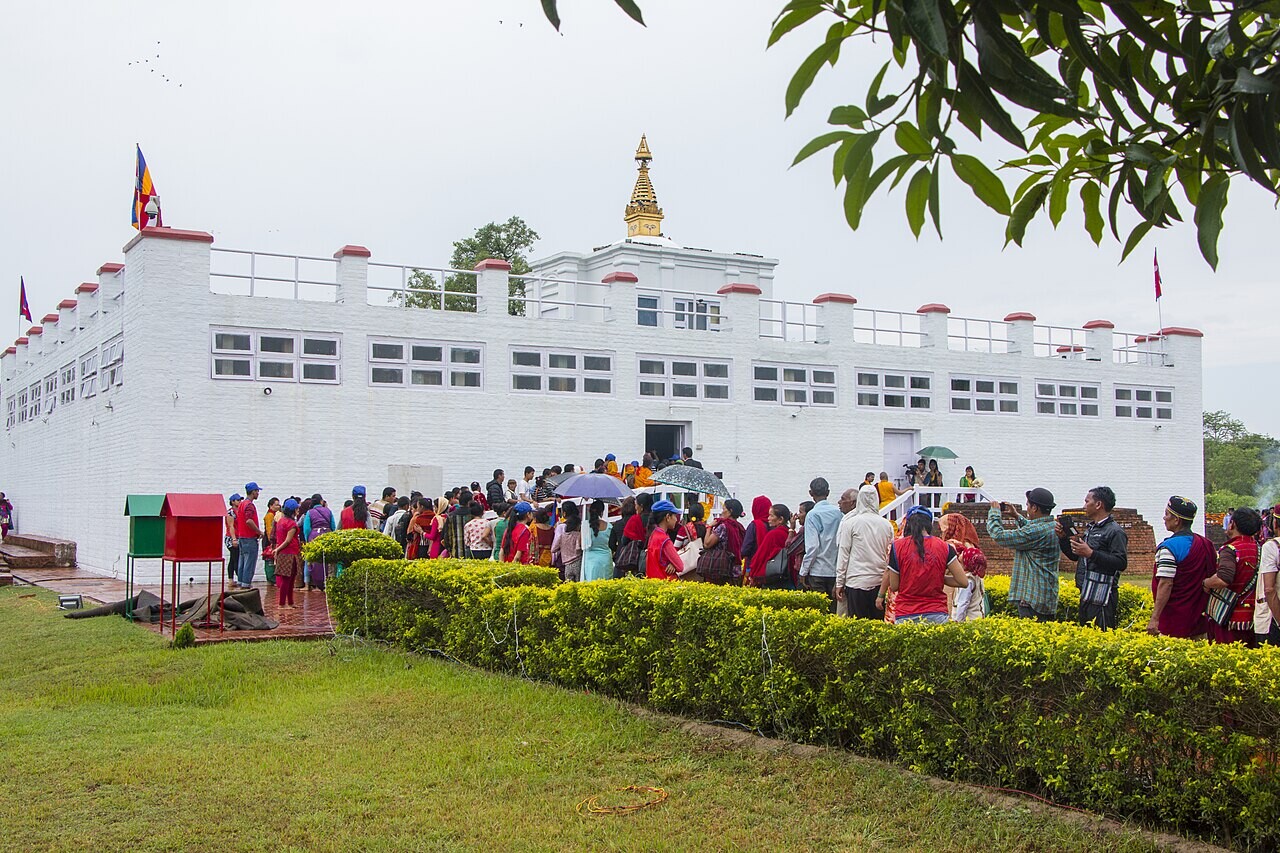
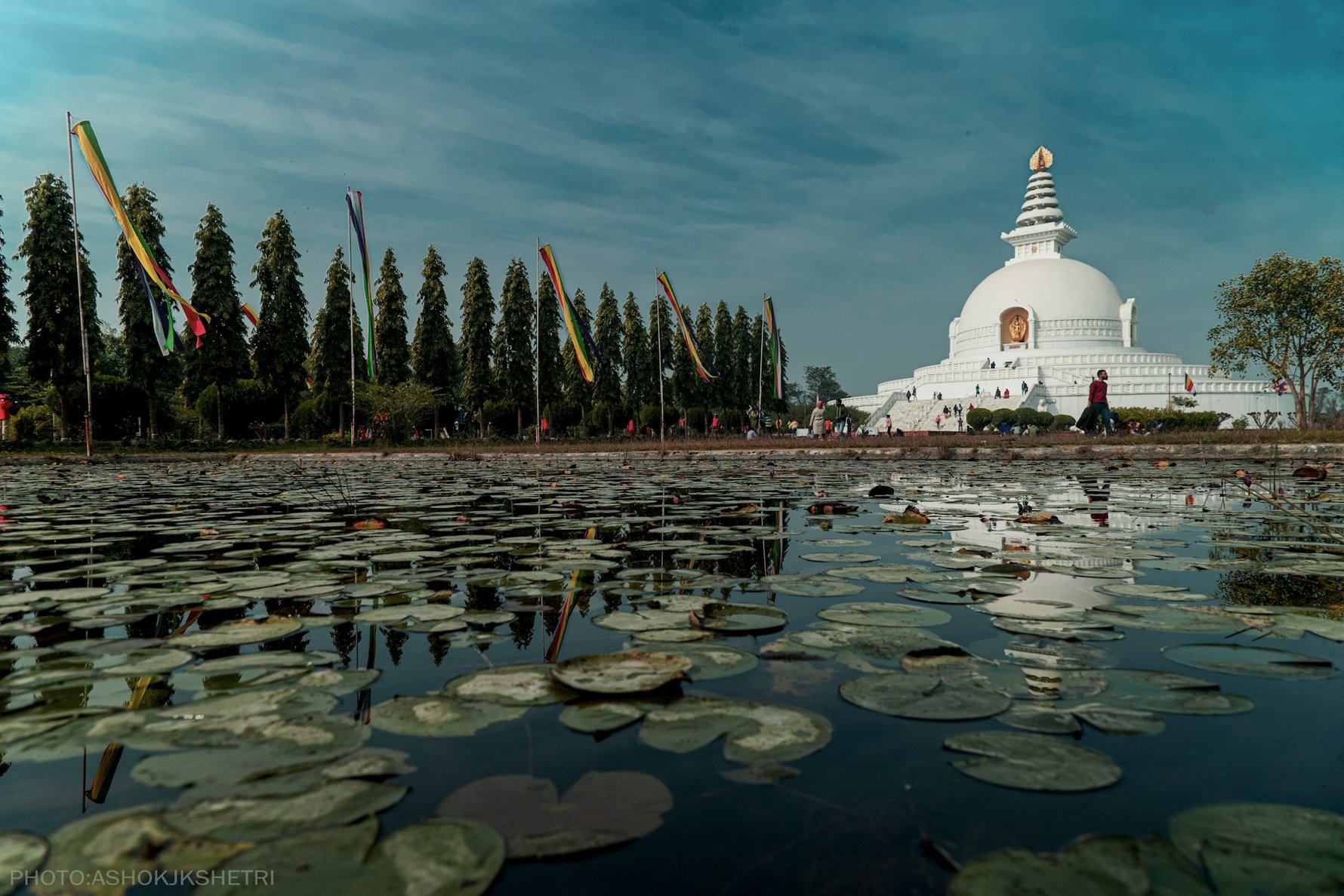
What it is: a place of real, uncommon stillness. The Sacred Garden surrounding the Maya Devi Temple – the archaeologically verified spot of the Buddha's birth, venerated by Emperor Ashoka in the 3rd century BCE and rediscovered by the modern world in 1895 – is as genuinely peaceful as anywhere in Nepal. The Monastic Zone, where Buddhist communities from more than 20 nations have each built their own monastery along a central canal, is one of the more quietly surreal walks in Asia: Korean temple, German monastery, Vietnamese pagoda, Chinese complex, Thai monastery, Myanmar pagoda, all in a row, each a confident architectural expression of a different tradition's relationship with the same faith. The World Peace Pagoda shines white above the treeline. Monks cycle past on the flat paths. The Terai light in the early morning is something else entirely.
What it isn't: a joined-up, well-functioning international destination. Not yet. Infrastructure remains patchy, signage inconsistent, the food scene functional rather than inspiring. The airport still hasn't delivered on its promise.
But – and this is the first time in a while that this conjunction has felt earned – there are genuine reasons for cautious optimism. The World Bank has approved an $85 million loan for the Greater Lumbini Area Development Project, the most serious external investment the region has seen. More significantly, Nepal's new government, which came to power in early 2026 on an explicit platform of breaking with the dysfunction and short-termism of its predecessors, has placed Lumbini among its priorities. Gautam Buddha International Airport's underperformance is, the new administration has acknowledged, something that needs to be actually fixed rather than just discussed. Whether these promises hold is a question Nepal has heard before. But the political conditions feel meaningfully different from previous cycles of announced intention and quiet abandonment.
For the general traveller – not a pilgrim, not a Buddhist scholar, simply someone building a Nepal itinerary who wants to understand why this country is more than mountains – Lumbini deserves at least two nights. One day covers the Sacred Garden and leaves you with the feeling of having ticked something important. Two days lets you cycle the Monastic Zone without rushing, sit somewhere quiet for longer than is strictly efficient, and leave with a sense of why this place matters rather than merely that it does. A third day, if your schedule allows, opens the door to beginning to understand Buddhism rather than simply photograph it.
Lumbini fits naturally into a southern Nepal loop alongside Chitwan National Park, roughly four hours to the east, or as a detour from the Kathmandu to Pokhara corridor for travellers with the flexibility to go via the Terai. It is not a destination that rewards a rushed half-day. History spent 2,500 years being patient here. You can manage two nights.
What to see and do in Lumbini
The site divides into three zones, which is worth understanding before you arrive. The Sacred Garden in the south contains the Maya Devi Temple, the Ashoka Pillar, the Pushkarini Sacred Pond, and the excavated ruins that surround the birthplace – this is the UNESCO World Heritage core and the heart of any visit. The Monastic Zone extends north from the Sacred Garden, bisected by a central canal, with Theravada monasteries to the east and Mahayana and Vajrayana monasteries to the west, each built by a different Buddhist nation in its own architectural style. The New Lumbini Village at the northern end has the main visitor facilities, the Lumbini Museum, and the research institute.The full zone is too spread out to cover on foot comfortably, particularly between April and September when the Terai heat is serious. Bicycles are the right way to do it – flat, manageable, and cheap to hire near the main gate.
Read our full guide to what to see in Lumbini.
Getting to Lumbini
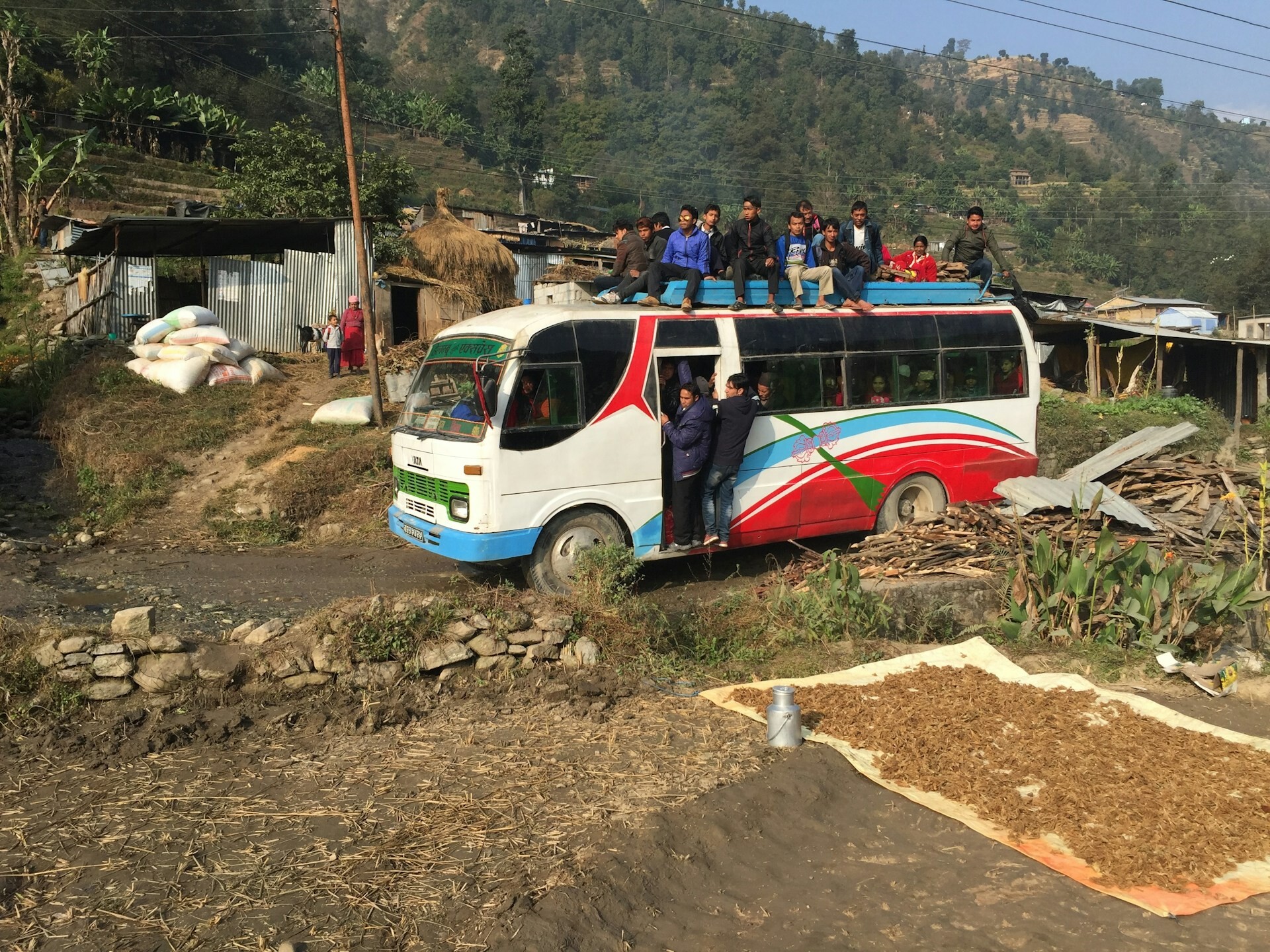
Most visitors arrive by bus from Kathmandu (8–10 hours) or Pokhara (6–8 hours) to Bhairahawa, then transfer the final 20–22km by local bus or taxi. Despite what some agents will tell you, buses don't go directly to Lumbini Bazaar – Bhairahawa is always the intermediate stop. Gautam Buddha International Airport handles domestic flights from Kathmandu and, in theory, some regional international routes. Coming from India, the Sunauli border crossing is only 26km away, making Lumbini a natural entry or exit point for overland travellers.Read our full guide to getting to Lumbini.
Getting around Lumbini
Hire a bicycle. The site is flat, the distances are real, and cycling is the right pace for the Monastic Zone in particular – slow enough to take things in, fast enough to cover the ground without melting. Rickshaws are the alternative for those who'd rather be passengers. Walking the whole thing in the heat is possible; it is not recommended.Where to stay in Lumbini
Options range from basic guesthouses in Lumbini Bazaar through mid-range hotels to a handful of smarter properties. More unusually, several monasteries in the Monastic Zone accept visitors as guests for a nominal daily rate – the Korean Temple being the best known – which is a different kind of stay entirely. Standards have improved in recent years, though the accommodation offer still lags behind what a site of this significance deserves. The food scene is functional; this is not the place to arrive expecting Thamel-level variety. Alcohol is largely absent, as befits an active pilgrimage site.Meditation and retreat in Lumbini
Several centres in and around Lumbini offer structured meditation and retreat programmes, from introductory sessions through to multi-day silent retreats. The Panditarama Vipassana Centre and the Lumbini International Research Institute are the most established options. You don't need to be a Buddhist to participate – most programmes are designed for curious newcomers as much as committed practitioners. Sitting in meditation a short walk from the Buddha's birthplace is, it's fair to say, a reasonably compelling context for the exercise.Read our full guide to meditation and retreat in Lumbini.
Buddha Jayanti: Lumbini's biggest festival
Once a year, Lumbini delivers fully on its potential. Buddha Purnima – also known as Buddha Jayanti – marks the Buddha's birth, enlightenment, and passing on the full moon of April or May (the date shifts with the lunar calendar). Pilgrims converge from across Asia and beyond, monks and nuns from dozens of traditions gather in the Sacred Garden, and the atmosphere is charged in a way that the site's usual quietude doesn't remotely prepare you for. If your dates allow it, this is when to be here. Book accommodation well in advance.Read our guide to Buddha Jayanti in Lumbini.
The development story: 40 years of almost
For those who want the full context on how Lumbini came to be simultaneously one of the world's most important pilgrimage sites and one of its most persistently under-developed, the history of the master plan is both instructive and, in a grim way, darkly comic. From Kenzō Tange's 1978 design to the World Bank's 2026 loan, via 38 tourism ministers and a succession of missed deadlines, the story of Lumbini's development is a concentrated study in the gap between Nepal's ambitions and its institutions' ability to deliver them. The gap, at last, may be narrowing.Read our feature: Lumbini's long road to becoming the destination it should be.
When to go
October to March is the best window: manageable temperatures, clear skies, and the site at its most pleasant for walking and cycling. October and November are the sweet spot. April and May bring real heat but also Buddha Jayanti, which for many visitors more than compensates. Monsoon (June to September) is hot, humid, and occasionally disrupted by flooding on the access roads – not recommended unless you're passing through regardless.Practical information
Entry fee: NPR 700 for foreign nationals; NPR 200 for SAARC nationals; free for Nepalis. One ticket covers the entire Development Zone. Verify before travel as fees are subject to revision.Opening hours: temples generally open in the morning until around noon, close for a couple of hours, then reopen until around 5pm. Arrive early for the best light and the coolest temperatures.
Cash: there is an ATM in Lumbini, but it has a well-earned reputation for running out or going offline. Withdraw what you need in Bhairahawa before heading to the site.
Dress: cover shoulders and knees when entering temples and monasteries; remove footwear at the threshold. This applies throughout the Sacred Garden and the Monastic Zone. Lumbini is an active place of worship for millions of pilgrims.
Photography: permitted in open areas and exterior courtyards. Restricted or prohibited inside many inner sanctums – always check before raising a camera. Do not photograph monks or pilgrims without permission.
Heat: Lumbini sits at around 100 metres above sea level on the Terai plains. Between April and September temperatures regularly exceed 35°C with humidity to match. Stone surfaces – including the World Peace Pagoda forecourt – become too hot to stand on without footwear by mid-morning. Carry water, wear a hat, and keep your walking to the cooler hours.
See also: Nepal Visa Guide | Getting from Kathmandu to Pokhara | Chitwan National Park | Volunteering in Nepal