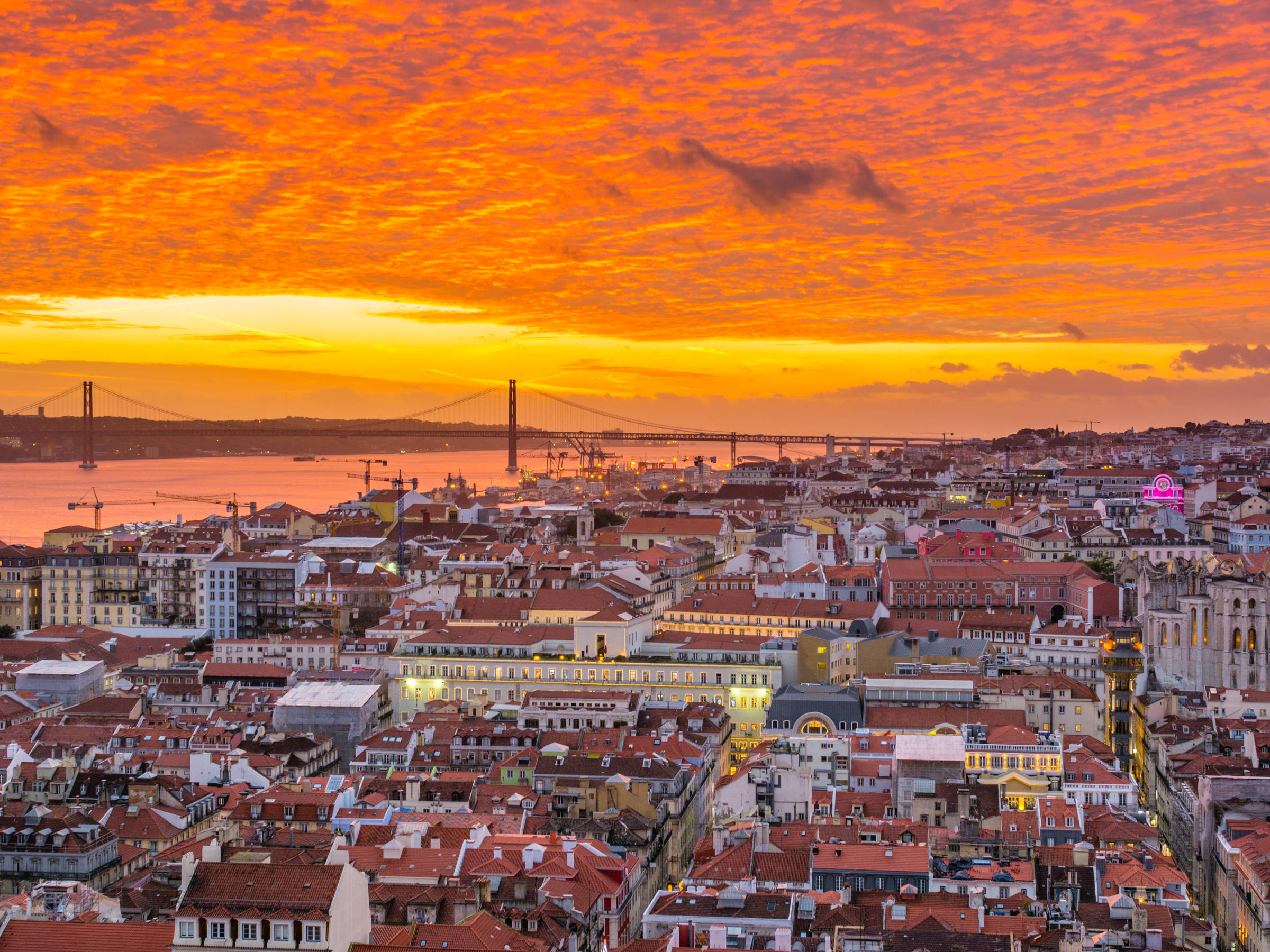

Portugal’s capital has been accumulating things worth looking at for a very long time. Settled by the Phoenicians, occupied by the Romans, reshaped by the Moors, and then rebuilt almost entirely from scratch after an earthquake in 1755 reduced most of it to rubble, Lisbon has layers of history stacked on top of each other in a way that rewards attention. It also has hills, which are beautiful and which will destroy your legs within the first twenty minutes if you are not prepared for them.
The good news is that the city repays the effort. Few European capitals manage to combine genuine historical weight with the kind of easy, sun-warmed atmosphere that makes you want to sit outside with a custard tart and reconsider your plans for the afternoon. Prices below were correct when we wrote this, though we make no promises about how much time has passed since then – check the official websites before you go.
The style is Manueline, Portugal’s own contribution to architectural history, which takes late Gothic as its starting point and then decorates it with ropes, anchors, armillary spheres and any other maritime motif the stonemasons could fit in. The two-storey cloister is among the finest examples of this style anywhere, and the church inside contains the tombs of Vasco da Gama and the poet Luís de Camões, who wrote the national epic. It survived the 1755 earthquake more or less intact, which was more than could be said for most of Lisbon. UNESCO agreed it was worth protecting in 1983.
Today the castle is primarily a viewpoint with archaeological ambitions. The eleven towers and restored medieval walls are worth walking for the panoramas alone, which take in the terracotta rooftops of Alfama, the wide curve of the Tagus and, on clear days, the hills beyond. The archaeological site within the walls shows evidence of occupation going back to the 7th century BC, with layers of Phoenician, Roman and Islamic settlement visible in the excavations. There are also peacocks wandering the grounds, though they feature less prominently in the UNESCO literature.
The tower is Manueline throughout, decorated with carved ropes, crosses of the Order of Christ and a rhinoceros head on one of the corbels – thought to be one of the first representations of a rhinoceros in European architecture, prompted by an animal sent as a gift to Manuel I from the Governor of India in 1515. The rhinoceros unfortunately drowned en route to Rome shortly afterwards, but the stonework has proved more durable. The tower also served as a prison at various points, with dungeons in the basement used to hold captives until at least 1830. UNESCO listed it alongside the Jerónimos Monastery in 1983.
Alfama is where fado was born. The mournful, saudade-soaked music that is now UNESCO-listed Intangible Cultural Heritage first took shape in the smoky taverns here in the 19th century, and the neighbourhood is still the best place in the city to hear it performed with something approaching authenticity. Tram 28 – the famous yellow rattletrap that grinds its way through the quarter – is a genuine piece of working public transport, which makes it simultaneously a tourist attraction and a reliable venue for pickpocketing. Keep your bag in front of you.
The collection traces the art form from its origins in the Moorish-influenced geometric patterns of the 15th century through to the blue-and-white pictorial panels of the 17th and 18th centuries and on to the present day. The showpiece is a 23-metre-long panel painted around 1738 showing the Lisbon waterfront in meticulous detail: a panoramic photograph made of 1,300 tiles, depicting a city that no longer exists. Seventeen years after this panel was completed, the earthquake destroyed the buildings it shows. Several landmarks are still recognisable; others are gone entirely.
The coaches themselves date from the 16th to the 19th century and represent the full spectrum of royal and aristocratic ostentation. The oldest pieces belonged to Philip II of Spain, who was briefly also Philip I of Portugal from 1581. The highlight is a set of three baroque carriages built in Rome in 1715 for Portugal’s ambassador to Pope Clement XI, decorated so heavily in gilded carvings of gods, allegorical figures and assorted mythological scenes that they barely look like vehicles at all. They were used exactly once.
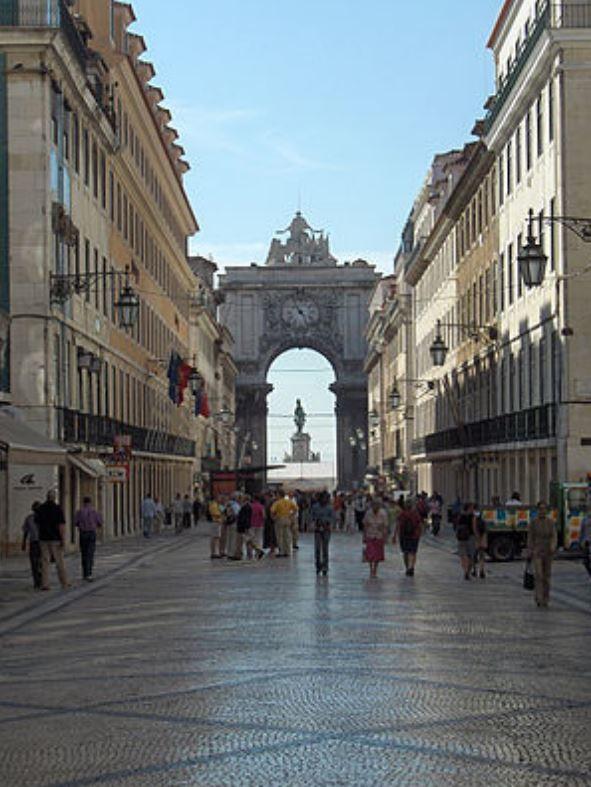
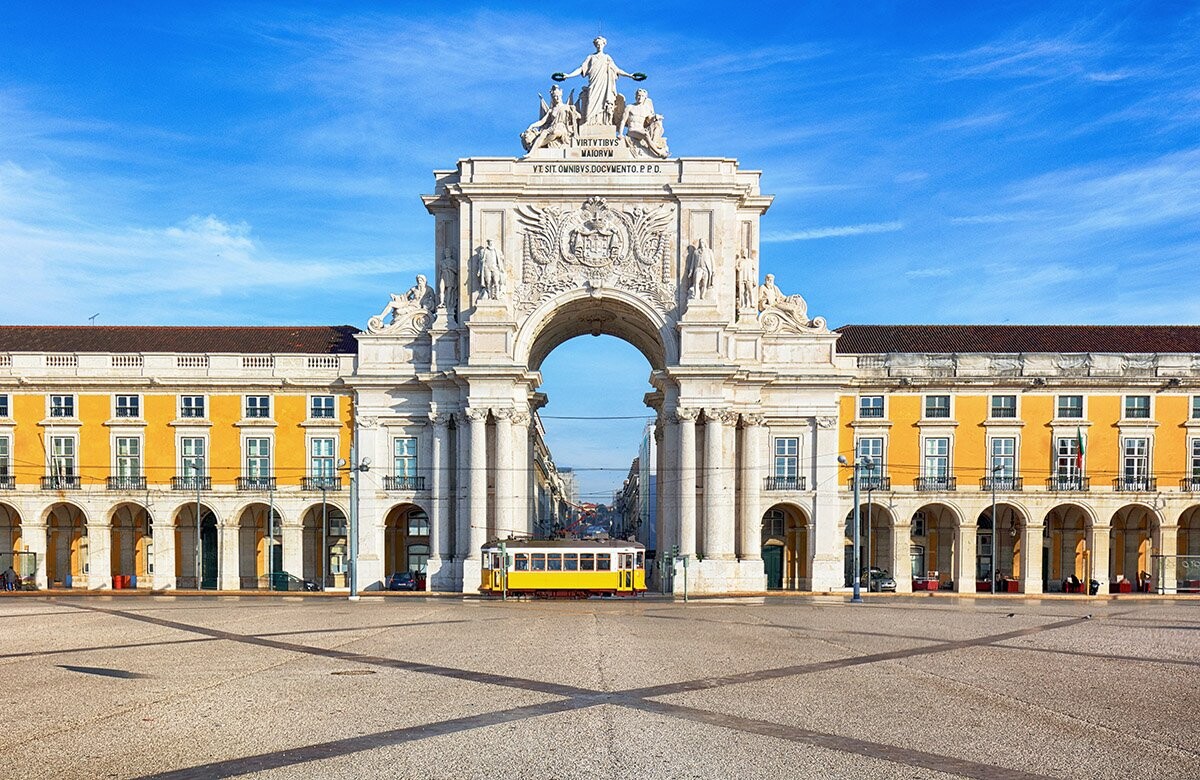
The result is one of Europe’s grandest public squares: three sides of elegant lemon-yellow arcaded buildings open at the south onto the wide river, with a triumphal arch at the north end and a bronze equestrian statue of King José I at the centre. It was here, in 1908, that King Carlos I and his son Luís Filipe were shot dead in their carriage by republican conspirators, an event that hastened the end of the Portuguese monarchy two years later. The square is enormous, frequently windswept and entirely free to walk around.
The result is one of the most arresting architectural sights in the city: a forest of Gothic arches holding nothing but Lisbon’s notoriously blue sky, with a small archaeological museum in the surviving sacristy. The collection is eclectic by necessity rather than design, encompassing Egyptian sarcophagi, medieval royal tombs, Peruvian mummies standing upright in glass cases, and assorted fragments from the city’s other earthquake casualties. It is a stranger place than it sounds, which is saying something given that it starts from “roofless Gothic church with mummies.”
The collection is quietly astonishing. There are paintings by Rembrandt, Manet, Monet, Renoir and Turner. There are Greek coins from 460 BC, Roman medallions, medieval illuminated manuscripts and an entire room of jewellery by René Lalique. There is a Houdon marble of Diana that once belonged to Catherine the Great, purchased by Gulbenkian in 1930. The range is extraordinary, and the quality is consistently high in a way that reflects a collector buying what he genuinely loved rather than what was fashionable. One of the most underrated museums in Europe.
The absolute centrepiece is the Panels of Saint Vincent, painted by Nuno Gonçalves around 1470: six large panels depicting King Afonso V, the court, the clergy, the military, fishermen and friars in an act of veneration that amounts to one of the first collective portraits in European art. Sixty figures in all, rendered with a naturalism that sat entirely outside the conventions of the time. They disappeared after the earthquake, were rediscovered in 1828, and their authorship remained disputed for decades. Also on the walls: Hieronymus Bosch’s Temptation of Saint Anthony, which is every bit as unsettling as you would expect from Hieronymus Bosch. The 16th-century Japanese Namban screens on the second floor – depicting the arrival of early Portuguese traders in Japan, as seen from the Japanese side – are worth seeking out. The Portuguese are rendered with exaggerated noses and startled expressions, and do not come off especially well.
Lisbon’s food and drink scene rewards exploration well beyond the custard tart, though the custard tart is not something to be taken lightly. The city does excellent seafood – bacalhau (salt cod) prepared in approximately one thousand different ways, grilled sardines in season, percebes (barnacles) if you are feeling adventurous – and the neighbourhood restaurants of Alfama and Mouraria tend to offer better value and more honest cooking than anything within sight of the Praça do Comércio. Ginjinha, the sour cherry liqueur served in small bars throughout the Baixa, costs around one euro a shot, which is exactly the right price for something served in a thimble-sized plastic cup.
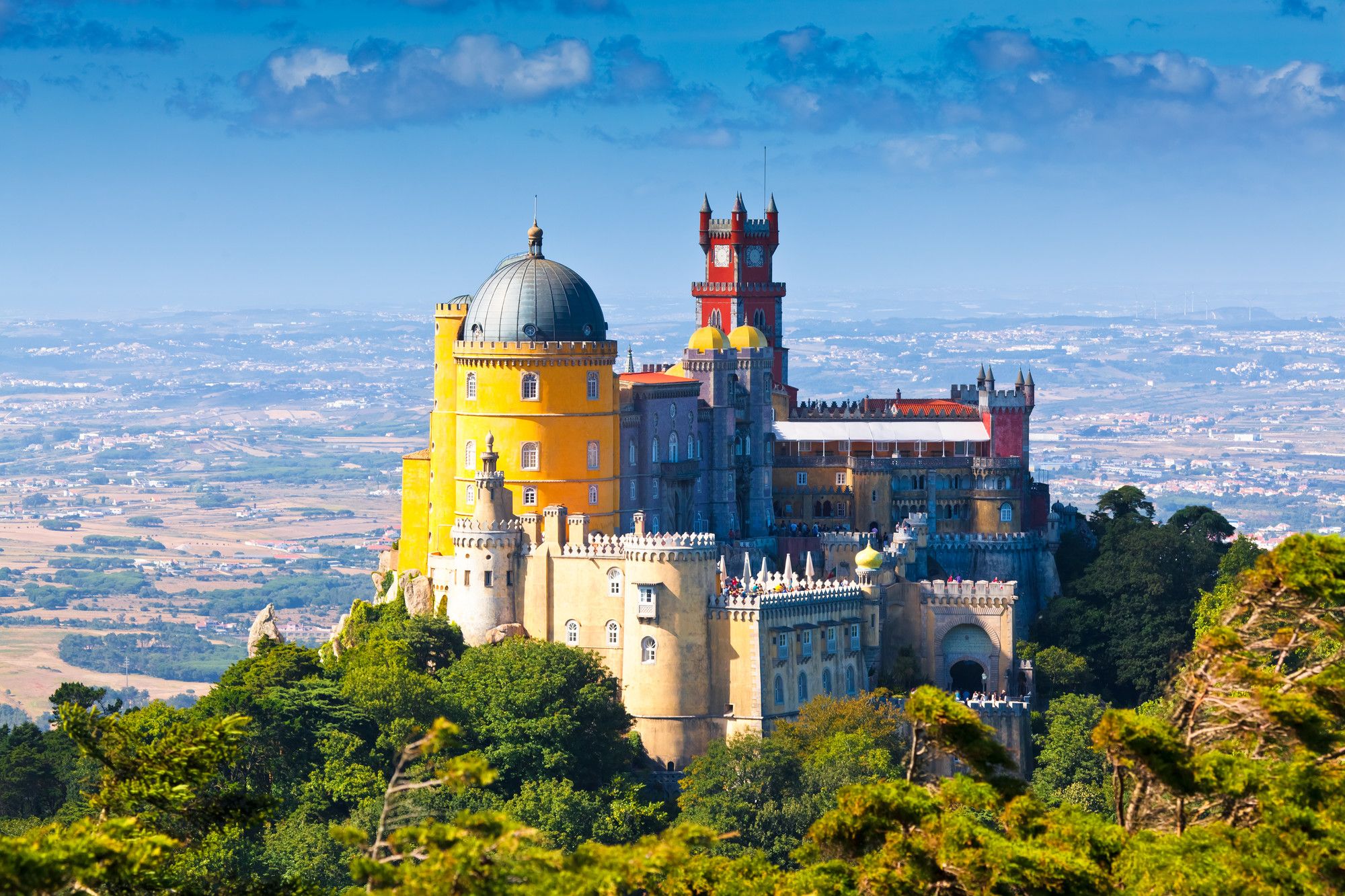
The obvious day trip from Lisbon is Sintra, 40 minutes by train from Rossio station, where a collection of fairy-tale palaces and Romantic follies in the forested hills above the town has been collectively UNESCO-listed since 1995. The Pena Palace alone – a riot of turrets, battlements and clashing colours that looks like a collaboration between Ludwig of Bavaria and a particularly enthusiastic confectioner – justifies the excursion. Further afield, Cascais and its beaches are on the same train line, while Évora, the walled Roman city in the Alentejo with its own bone chapel, is around 90 minutes by bus and an entirely different kind of afternoon.
The good news is that the city repays the effort. Few European capitals manage to combine genuine historical weight with the kind of easy, sun-warmed atmosphere that makes you want to sit outside with a custard tart and reconsider your plans for the afternoon. Prices below were correct when we wrote this, though we make no promises about how much time has passed since then – check the official websites before you go.
1. Jerónimos Monastery
If there is a single building in Portugal that captures the country’s brief, extraordinary moment as the dominant maritime power of the known world, it is the Jerónimos Monastery in the riverside district of Belém. Construction began in 1501 on the orders of King Manuel I, built on the very spot where Vasco da Gama and his crew prayed before setting off on the voyage that opened the sea route to India. The money came largely from a tax on spices – pepper, cinnamon, cloves – and the building reflects exactly how much of that money there was. It took a century to complete.The style is Manueline, Portugal’s own contribution to architectural history, which takes late Gothic as its starting point and then decorates it with ropes, anchors, armillary spheres and any other maritime motif the stonemasons could fit in. The two-storey cloister is among the finest examples of this style anywhere, and the church inside contains the tombs of Vasco da Gama and the poet Luís de Camões, who wrote the national epic. It survived the 1755 earthquake more or less intact, which was more than could be said for most of Lisbon. UNESCO agreed it was worth protecting in 1983.
- Location: Praça do Império, Belém. Take tram 15E from Cais do Sodré or the Cascais train line to Belém station.
- Best time to visit: First thing in the morning or late afternoon; midday in summer is genuinely unpleasant. The first Sunday of each month offers free entry, but the queues reflect that fact.
- Ticket prices: Around €18 for adults; the church itself is free. Book online to avoid the ticket office queue, which can be substantial.
- Good to know: The Pasteis de Belém bakery is a five-minute walk away. The monks who once lived here are credited with inventing the original recipe for the custard tart. We are inclined to believe them.
2. São Jorge Castle
The Castelo de São Jorge has sat on its hilltop above Alfama since at least the 5th century, though the various powers that occupied it over the centuries kept making changes. The Visigoths built the first fortifications, the Moors expanded them significantly in the 9th century, and Afonso Henriques – Portugal’s first king – took the castle from them in 1147 after a siege that involved a contingent of English and Flemish crusaders passing through on their way to the Holy Land. It then served as the main royal residence until the 16th century, when the court moved on to more comfortable arrangements in Belém.Today the castle is primarily a viewpoint with archaeological ambitions. The eleven towers and restored medieval walls are worth walking for the panoramas alone, which take in the terracotta rooftops of Alfama, the wide curve of the Tagus and, on clear days, the hills beyond. The archaeological site within the walls shows evidence of occupation going back to the 7th century BC, with layers of Phoenician, Roman and Islamic settlement visible in the excavations. There are also peacocks wandering the grounds, though they feature less prominently in the UNESCO literature.
- Location: Rua de Santa Cruz do Castelo, 1100-129 Lisboa. Best reached on foot from Alfama or by taxi; Tram 28 passes nearby.
- Best time to visit: Mornings on weekdays for thinner crowds. The views at sunset are spectacular but the queues to get in during high season match the occasion.
- Ticket prices: Around €15 for adults. Guided tours of the archaeological site and the Camera Obscura in the Ulysses Tower are included in the price.
- Good to know: The castle is visible from almost everywhere in the city, which makes it an excellent landmark for navigation when the streets of Alfama inevitably disorient you.
3. Belém Tower
Standing at the edge of the Tagus in the Belém district, the Torre de Belém is Lisbon’s most photographed landmark and the image most likely to appear on any postcard of Portugal you have ever seen. It was built between 1514 and 1520 under military architect Francisco de Arruda, intended to guard the entrance to Lisbon’s harbour during the reign of Manuel I. For generations of Portuguese sailors departing on voyages of discovery, it was the last thing they saw leaving and, if they were lucky, the first thing they saw returning.The tower is Manueline throughout, decorated with carved ropes, crosses of the Order of Christ and a rhinoceros head on one of the corbels – thought to be one of the first representations of a rhinoceros in European architecture, prompted by an animal sent as a gift to Manuel I from the Governor of India in 1515. The rhinoceros unfortunately drowned en route to Rome shortly afterwards, but the stonework has proved more durable. The tower also served as a prison at various points, with dungeons in the basement used to hold captives until at least 1830. UNESCO listed it alongside the Jerónimos Monastery in 1983.
- Location: Avenida Brasília, Belém. Five minutes’ walk from the Jerónimos Monastery along the waterfront.
- Best time to visit: Early morning or late afternoon to avoid crowds; the interior is narrow and the staircase to the top is not designed for two-way traffic at peak hours.
- Ticket prices: Around €8 for adults. Closed Mondays and public holidays.
- Good to know: The tower can only be visited by a limited number of people at a time. Book in advance in summer, or you may find yourself queuing for a building that is considerably smaller on the inside than it looks from the riverbank.
4. Alfama
Alfama is the oldest neighbourhood in Lisbon, and the only part of the city that survived the 1755 earthquake more or less intact – a fact explained partly by its position on solid bedrock, and partly by the irony that the wealthy residents who had already fled to less earthquake-prone parts of the city took most of the city’s fragile assets with them. What remained was the working-class quarter of the fishermen and dock workers, and it is their city, whitewashed and stacked up the hillside in an improbable tangle of alleys and staircases, that you walk through today. The name comes from the Arabic al-hamma, meaning hot springs, a reminder that the neighbourhood was already ancient when the Moors arrived.Alfama is where fado was born. The mournful, saudade-soaked music that is now UNESCO-listed Intangible Cultural Heritage first took shape in the smoky taverns here in the 19th century, and the neighbourhood is still the best place in the city to hear it performed with something approaching authenticity. Tram 28 – the famous yellow rattletrap that grinds its way through the quarter – is a genuine piece of working public transport, which makes it simultaneously a tourist attraction and a reliable venue for pickpocketing. Keep your bag in front of you.
- Location: East of the Baixa, below São Jorge Castle. The easiest entry point is from Praça do Comércio, heading uphill.
- Best time to visit: Mornings for the atmosphere without the crowds; evenings for fado and the neighbourhood’s more atmospheric bars. June brings the Festas de Lisboa, when Alfama turns into an extended street party.
- Ticket prices: The neighbourhood itself is free. The Fado Museum on Largo do Chafariz de Dentro charges around €5 for adults.
- Good to know: The Feira da Ladra flea market takes place in the Campo de Santa Clara, at the top of the neighbourhood, on Tuesdays and Saturdays.
5. Museu Nacional do Azulejo
Portugal’s relationship with the decorative ceramic tile – the azulejo – borders on the obsessive. Tiles cover church walls, railway stations, house façades and metro platforms in a way that has no real equivalent anywhere else in Europe, and the Museu Nacional do Azulejo is the museum that explains how this particular national fixation developed. It occupies the Madre de Deus convent, founded in 1509 by Queen Leão, and the convent church alone – dripping with gilded baroque woodwork and its walls entirely faced in azulejos – justifies the trip across town.The collection traces the art form from its origins in the Moorish-influenced geometric patterns of the 15th century through to the blue-and-white pictorial panels of the 17th and 18th centuries and on to the present day. The showpiece is a 23-metre-long panel painted around 1738 showing the Lisbon waterfront in meticulous detail: a panoramic photograph made of 1,300 tiles, depicting a city that no longer exists. Seventeen years after this panel was completed, the earthquake destroyed the buildings it shows. Several landmarks are still recognisable; others are gone entirely.
- Location: Rua Madre de Deus 4, Xabregas district. Take bus 794 from outside Santa Apolónia station; the museum is not well-served by metro.
- Best time to visit: Weekday mornings, when it is quieter than the central sights. Being off the main tourist trail, it rarely gets unpleasantly crowded.
- Ticket prices: Around €8 for adults. Closed Mondays.
- Good to know: Allow at least two hours. The convent garden has a pleasant café where it is perfectly reasonable to sit for longer than strictly necessary.
6. Museu Nacional dos Coches
The Museu Nacional dos Coches is the most visited museum in Belém and, by some measures, the most visited museum in Portugal. This is either a mystery or entirely explicable, depending on how you feel about ceremonial horse-drawn carriages. Founded in 1905 by Queen Amélia, the collection was originally housed in the royal riding arena adjacent to the Belém Palace; the main exhibits now occupy a large modern building across the road, designed by Pritzker Prize-winning architect Paulo Mendes da Rocha, though the original riding arena remains part of the complex and is by far the more atmospheric of the two spaces.The coaches themselves date from the 16th to the 19th century and represent the full spectrum of royal and aristocratic ostentation. The oldest pieces belonged to Philip II of Spain, who was briefly also Philip I of Portugal from 1581. The highlight is a set of three baroque carriages built in Rome in 1715 for Portugal’s ambassador to Pope Clement XI, decorated so heavily in gilded carvings of gods, allegorical figures and assorted mythological scenes that they barely look like vehicles at all. They were used exactly once.
- Location: Avenida da Índia 136, Belém. A short walk from the Jerónimos Monastery and the Belém Tower.
- Best time to visit: Weekday mornings. The museum is large enough that it rarely feels overwhelmed even in summer.
- Ticket prices: Around €10 for the combined ticket covering both buildings; free on Sundays. Closed Mondays.
- Good to know: Start in the original royal riding arena rather than the modern building. Its ornate interior gives useful context for the scale of ambition on display in the coaches themselves.
7. Praça do Comércio
The Praça do Comércio – still called the Terreiro do Paço (the Palace Yard) by most Lisboetas, a name that has stuck despite the palace being destroyed 270 years ago – is the point at which Lisbon opens itself to the Tagus. Before the 1755 earthquake, the Ribeira Palace stood on this site: a royal residence containing a 70,000-volume library and important works by Titian, Rubens and Correggio. The earthquake, fires and subsequent tsunami destroyed all of it. The Marquis of Pombal, who effectively ran the country in the aftermath, ordered the site rebuilt as a commercial square – a pointed renaming, and a signal that the future lay with trade rather than royalty.The result is one of Europe’s grandest public squares: three sides of elegant lemon-yellow arcaded buildings open at the south onto the wide river, with a triumphal arch at the north end and a bronze equestrian statue of King José I at the centre. It was here, in 1908, that King Carlos I and his son Luís Filipe were shot dead in their carriage by republican conspirators, an event that hastened the end of the Portuguese monarchy two years later. The square is enormous, frequently windswept and entirely free to walk around.
- Location: South end of the Baixa, at the waterfront. Metro to Terreiro do Paço on the blue line.
- Best time to visit: Early morning before the tour groups arrive, or in the evening when the light on the river is at its best.
- Ticket prices: Free. The Lisboa Story Centre, housed under the arcades, charges around €10 for adults and provides useful historical context for the city before you explore it.
- Good to know: The Martinho da Arcada café under the western arcade was established in 1782, making it the oldest in Lisbon. The poet Fernando Pessoa was a regular. He is now on the ten-euro note.
8. Convento do Carmo
The Convento do Carmo was, before the 1755 earthquake, the largest and most impressive Gothic church in Lisbon. Founded in 1389 by the military hero Nuno Álvares Pereira, it had stood for nearly 400 years when the earthquake struck on the morning of 1st November, All Saints’ Day, while the congregation was attending mass. The roof collapsed. The decision was made – partly for financial reasons, partly because by the 19th century the Romantics had decided the ruins were more interesting than any rebuild could be – to leave the nave open to the sky, where it has remained ever since.The result is one of the most arresting architectural sights in the city: a forest of Gothic arches holding nothing but Lisbon’s notoriously blue sky, with a small archaeological museum in the surviving sacristy. The collection is eclectic by necessity rather than design, encompassing Egyptian sarcophagi, medieval royal tombs, Peruvian mummies standing upright in glass cases, and assorted fragments from the city’s other earthquake casualties. It is a stranger place than it sounds, which is saying something given that it starts from “roofless Gothic church with mummies.”
- Location: Largo do Carmo, Chiado. A short walk from the top of the Santa Justa Lift, which provides a useful back route in from the Baixa.
- Best time to visit: Mid-morning on a clear day, when the light through the open nave is at its most dramatic.
- Ticket prices: €7 for adults. Closed Sundays.
- Good to know: The route via the Santa Justa Lift deposits you at the top with views over the Baixa. The lift charges a separate fare; the viewing platform is accessible for a slightly lower price than the full ride.
9. Museu Calouste Gulbenkian
Calouste Sarkis Gulbenkian was an Armenian oil magnate born in Istanbul in 1869, who spent his adult life moving around Europe accumulating art with the systematic enthusiasm of someone who genuinely could not stop. By the time he died in Lisbon in 1955 – he had moved there during the Second World War and stayed, apparently finding it agreeable – he had assembled over 6,000 pieces spanning 5,000 years of human history, from ancient Egyptian artefacts to Impressionist paintings. He left the whole collection to Portugal, and the Museu Calouste Gulbenkian, which opened in 1969 in a purpose-built complex set within its own gardens, is the result.The collection is quietly astonishing. There are paintings by Rembrandt, Manet, Monet, Renoir and Turner. There are Greek coins from 460 BC, Roman medallions, medieval illuminated manuscripts and an entire room of jewellery by René Lalique. There is a Houdon marble of Diana that once belonged to Catherine the Great, purchased by Gulbenkian in 1930. The range is extraordinary, and the quality is consistently high in a way that reflects a collector buying what he genuinely loved rather than what was fashionable. One of the most underrated museums in Europe.
- Location: Avenida de Berna 45A, close to Praça de Espanha. Metro to São Sebastião on the yellow or blue line.
- Best time to visit: Weekday mornings; the museum sits slightly away from the main tourist circuit and rarely gets unmanageably busy.
- Ticket prices: Around €10 for adults, covering both the founder’s collection and the modern art collection. Free on Sundays from 2pm.
- Good to know: The gardens surrounding the complex are themselves worth a wander. Allow at least half a day for the full visit.
10. Museu Nacional de Arte Antiga
Portugal’s national gallery occupies a 17th-century palace on a cliff above the Tagus in the Lapa district, and contains the most important collection of Portuguese art in existence. The Museu Nacional de Arte Antiga – also known, charmingly, as the Museum of the Green Windows, after the street it sits on – was established in 1884 to preserve religious artworks following the dissolution of the country’s religious orders, and has been expanding its remit ever since. The collection covers Portuguese painting from the 15th century onwards alongside European masters, Asian decorative arts from the age of discovery, and a formidable collection of gold and silverware.The absolute centrepiece is the Panels of Saint Vincent, painted by Nuno Gonçalves around 1470: six large panels depicting King Afonso V, the court, the clergy, the military, fishermen and friars in an act of veneration that amounts to one of the first collective portraits in European art. Sixty figures in all, rendered with a naturalism that sat entirely outside the conventions of the time. They disappeared after the earthquake, were rediscovered in 1828, and their authorship remained disputed for decades. Also on the walls: Hieronymus Bosch’s Temptation of Saint Anthony, which is every bit as unsettling as you would expect from Hieronymus Bosch. The 16th-century Japanese Namban screens on the second floor – depicting the arrival of early Portuguese traders in Japan, as seen from the Japanese side – are worth seeking out. The Portuguese are rendered with exaggerated noses and startled expressions, and do not come off especially well.
- Location: Rua das Janelas Verdes 9, Lapa. Bus 713, 714 or 727 from the city centre; not easily reached by metro.
- Best time to visit: Tuesday afternoons, when the museum opens at 2pm and tends to be quieter than later in the week. The garden café overlooking the Tagus is a good reason to arrive with time to spare.
- Ticket prices: Around €10 for adults. Closed Mondays.
- Good to know: The museum houses over 40,000 items classified as national treasures. If that sounds like too many things to see in one visit, it is. Pick a floor and be honest with yourself.
What else can you see in Lisbon?
The ten entries above account for a significant amount of time but barely scratch the surface. The Monument to the Discoveries in Belém, a 52-metre concrete prow launched into the Tagus in 1960 in honour of Portugal’s Age of Exploration, is worth seeing if only because the map inlaid on the pavement in front of it shows the routes of the great navigators, and the viewing platform at the top provides a useful perspective on the Belém waterfront as a whole. The Elevador de Santa Justa, a neo-Gothic iron lift designed by a pupil of Gustave Eiffel and completed in 1901, connects the Baixa with the Chiado neighbourhood above; the queue to ride it is often longer than the ride itself, but the viewing platform at the top remains one of the better vantage points in the centre. The LX Factory, a former industrial complex in Alcântara repurposed as a creative hub, offers a Sunday market and a range of independent restaurants and shops that provide a reasonable counterweight to the more tourist-oriented parts of Belém nearby.Lisbon’s food and drink scene rewards exploration well beyond the custard tart, though the custard tart is not something to be taken lightly. The city does excellent seafood – bacalhau (salt cod) prepared in approximately one thousand different ways, grilled sardines in season, percebes (barnacles) if you are feeling adventurous – and the neighbourhood restaurants of Alfama and Mouraria tend to offer better value and more honest cooking than anything within sight of the Praça do Comércio. Ginjinha, the sour cherry liqueur served in small bars throughout the Baixa, costs around one euro a shot, which is exactly the right price for something served in a thimble-sized plastic cup.
The obvious day trip from Lisbon is Sintra, 40 minutes by train from Rossio station, where a collection of fairy-tale palaces and Romantic follies in the forested hills above the town has been collectively UNESCO-listed since 1995. The Pena Palace alone – a riot of turrets, battlements and clashing colours that looks like a collaboration between Ludwig of Bavaria and a particularly enthusiastic confectioner – justifies the excursion. Further afield, Cascais and its beaches are on the same train line, while Évora, the walled Roman city in the Alentejo with its own bone chapel, is around 90 minutes by bus and an entirely different kind of afternoon.