Prague is, by almost any measure, one of the most visited cities in Europe, which raises an obvious question about the phrase “hidden gem.” Nothing in the historic centre has been hidden since roughly 1990. What the city does offer, in quantity, is places that the main tourist circuit consistently overlooks: a fortress older than the castle that most visitors come for, a Baroque pilgrimage complex that thousands walk past on the way to something else, a nature reserve on the edge of the city that most visitors never find. The entries below range from genuinely obscure to merely undervisited. All of them repay the small effort required to reach them.
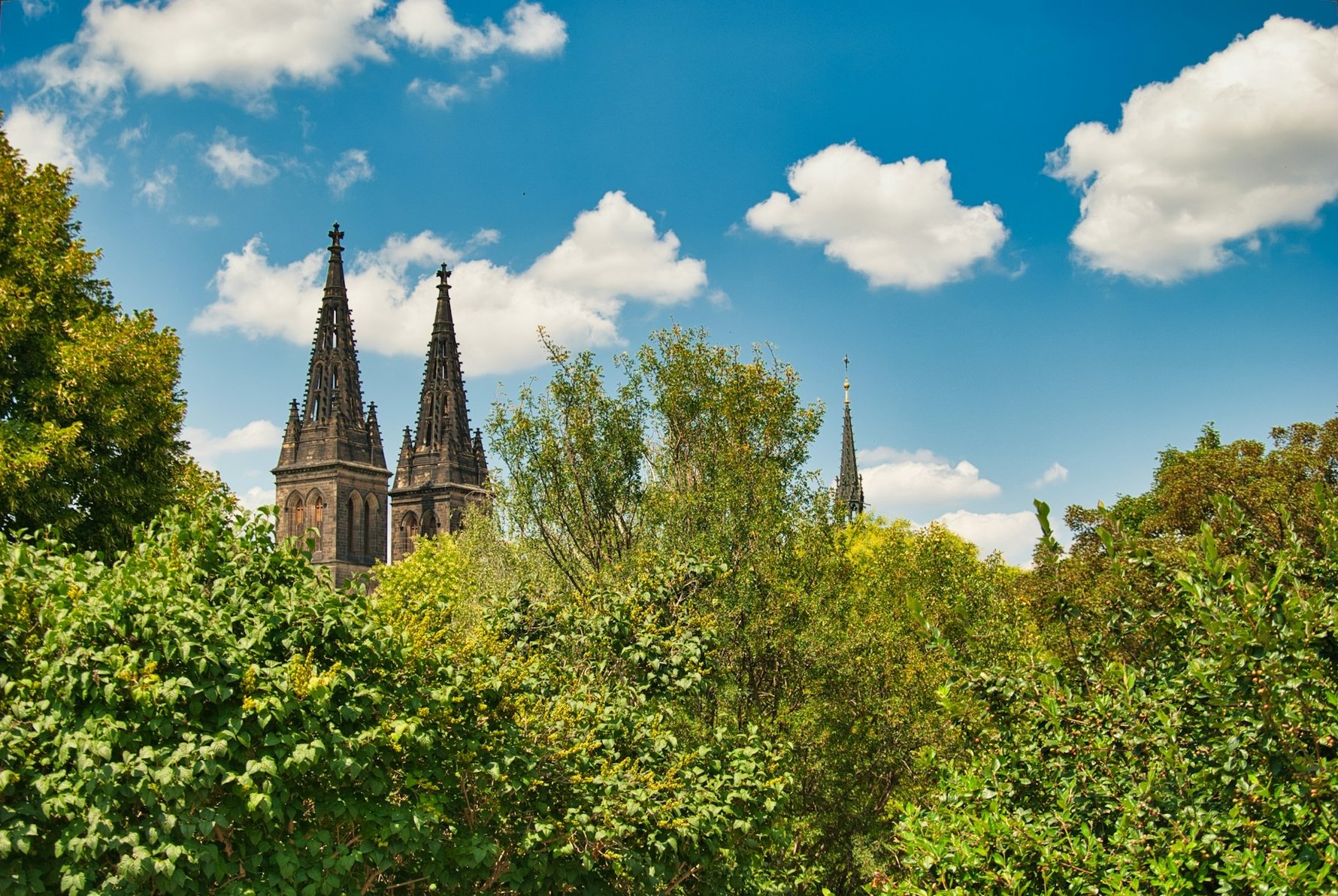
Vyšehrad is the older of Prague’s two great hilltop fortresses, predating Prague Castle as a seat of Bohemian princes and offering views of the Vltava from the south that the castle, looking down from the north, cannot match. The outdoor grounds are free and open year-round, with the original Romanesque Rotunda of St Martin – the oldest surviving building in Prague – the neo-Gothic Church of Saints Peter and Paul, and the underground casements that house some of the original Baroque statues from the Charles Bridge (the ones on the bridge today are reproductions). The crowds that fill the castle quarter above Malá Strana rarely make it this far south.
The cemetery adjoining the church contains over 600 notable Czechs – Dvořák, Smetana, Mucha, Karel Čapek among them – and the Slavín pantheon at its eastern end, where the nation’s most distinguished figures share a collective tomb. It is formal and well-maintained without being stiff. Worth a morning.
Location: Vyšehrad, Prague 2. Metro line C to Vyšehrad, then a short walk uphill.
Best time to visit: Weekday mornings, when the castle crowds have not yet reached here. Spring for the park in bloom.
Ticket prices: The outdoor area and cemetery are free. Entry to the casements and individual buildings costs around 50–100 CZK; check vysehrad.cz for current prices.
Good to know: The cemetery is open until 7pm in summer, 5pm in winter. The park grounds are accessible at all hours.
2. Loreta Prague
A few hundred metres from the main gate of Prague Castle, Loreta Prague is a Baroque pilgrimage complex that most visitors walk straight past on their way to something more famous. Founded in 1626 by Kateřina Benigna of Lobkowicz, it was built around a replica of the Santa Casa – the supposed house of the Virgin Mary, originally in Nazareth and, according to legend, transported by angels to the Italian town of Loreto when the Turks advanced on the Holy Land. There were once 50 such replicas across Bohemia alone; Prague’s is the grandest surviving example.
The complex wraps cloistered arcades around the central chapel, with the Church of the Nativity at one end and a treasury on the upper floor containing the Diamond Monstrance, a late 17th-century object set with 6,222 diamonds commissioned for Emperor Leopold I. The bell tower plays a 27-bell carillon on the hour between 10am and 5pm. There is never a queue.
Location: Loretánské náměstí 7, Prague 1. Tram 22 to Pohořelec.
Best time to visit: Any morning. Quieter than the castle complex regardless of when you go.
Ticket prices: Around 260 CZK for adults. Check loreta.cz for current prices and opening hours.
Good to know: The carillon is audible from Loretánské Square even if you do not go inside, which is one way to experience it. Those who do go in tend to spend 45 to 90 minutes.
3. Fun Arena
Top hidden gems in Prague: Fun Area
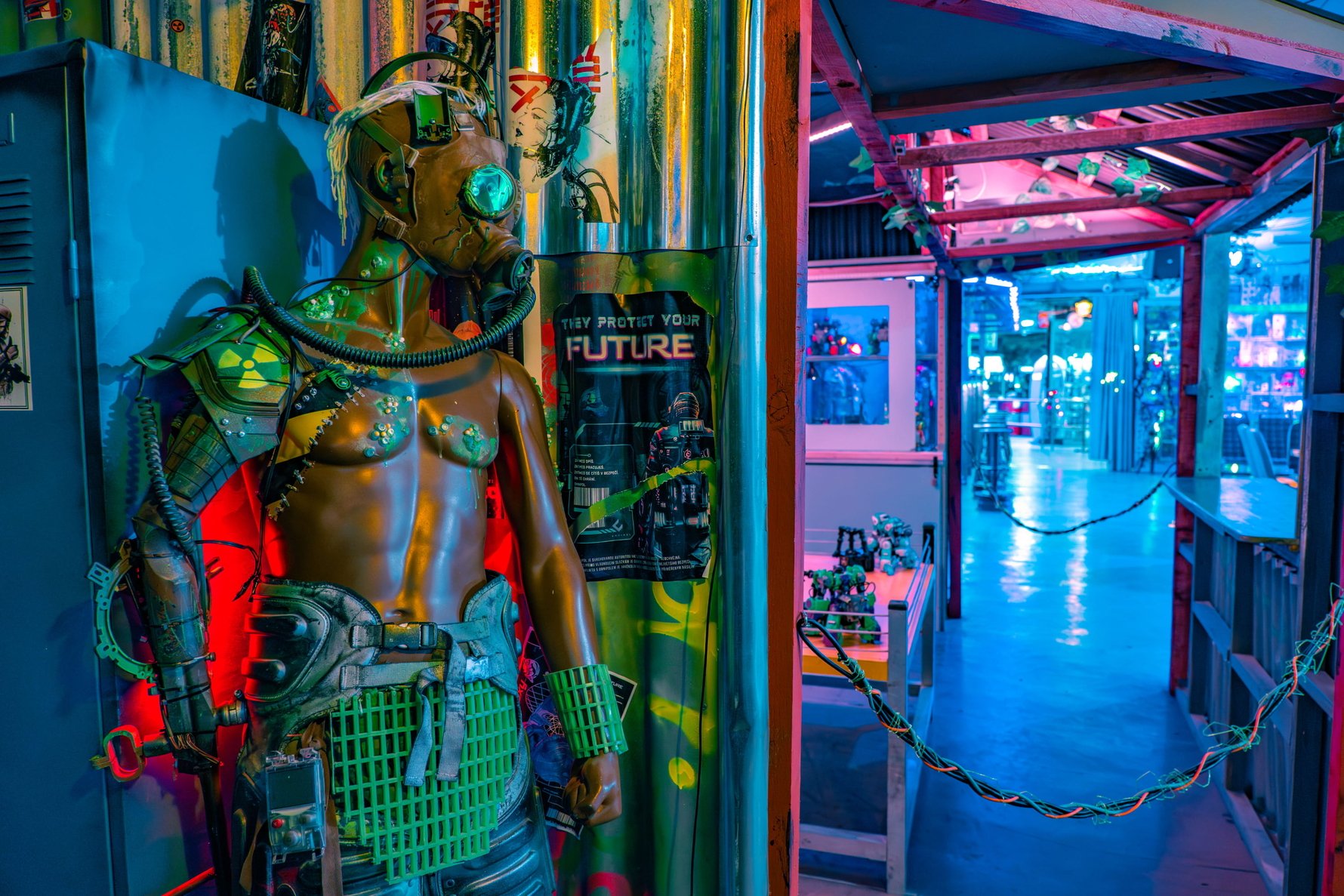
Prague has been beautiful for about a thousand years, and it is very much aware of this fact. Fun Arena, mercifully, is not. Tucked inside a brutalist building near Metro C Opatov in Prague 4 – the kind of architecture that the rest of the city spent decades pretending didn’t exist – it descends underground into a sprawling cyberpunk hub that feels like someone fed a sci-fi film script into a knitting machine and then built the result.
The centrepiece is the largest playable arcade museum in the Czech Republic, covering everything from original pinball machines to retro consoles, but there is plenty beyond the screens too: axe throwing, robot fights, and HADO, a Japanese augmented reality sport in which players hurl virtual energy balls at each other on a physical court, which is either the future of competitive sport or proof that we have too much time on our hands. Probably both. The space also moonlights as a cultural venue, hosting live concerts, karaoke parties and chess or Beyblade tournaments. The historic centre is very nice, obviously, but if you want to experience a worldwide unique cyberpunk and sci-fi atmosphere or have some real fun, Fun Arena is the place to head (it’s literally in the name).
Location: Bartůňkova 1761/7, Praha 4-Chodov. Metro C to Opatov. funarena.cz
Best time to visit: Weekday evenings for a quieter experience; weekends are busier but more atmospheric.
Ticket prices: Entry and pricing vary by activity. Check the website for current packages.
Good to know: The venue hosts regular events and tournaments. Worth checking the calendar before you go.
4. Speculum Alchemiae
Speculum Alchemiae is a hidden gem in the most literal sense: it was only discovered because a flood in 2002 caused the street above it to collapse. When the water from the Vltava receded, workers clearing damage beneath a house in the Josefov quarter broke through into a network of underground chambers that had been sealed for centuries – a 16th-century alchemical laboratory, intact beneath the mud, used during the reign of Emperor Rudolf II when Prague was the centre of European occult science and men like Edward Kelley were at work attempting to turn lead into gold on behalf of the imperial court.
The house above, believed to be one of the oldest in Prague, was the former residence of Kelley himself. Guided tours take visitors through a secret door concealed in the library, down into the underground rooms where the original furnaces, crucibles and retorts are preserved. A mummified crocodile hangs from the ceiling, referred to by the alchemists as a dragon. Rudolf II is said to have accessed the lab via a tunnel connecting it to Prague Castle. Whether or not you believe that, the space is genuinely extraordinary.
Location: Haštalská 1, Prague 1, Josefov. A short walk from Old Town Square.
Best time to visit: Tours run throughout the day; book ahead as group sizes are small.
Ticket prices: Around 200 CZK for a 30-minute guided tour. Cash preferred; check locally for current arrangements. alchemiae.cz
Good to know: Access to the underground chambers is by guided tour only. The surface-level shop is open to walk-ins.
5. Letná Beer Garden
The Letná Beer Garden sits on the plateau of Letná Hill directly above the Vltava’s left bank, and offers what is arguably the finest free view of Prague: seven bridges in a single sweep, the Old Town roofline, Prague Castle and Hradčany from the far side of the river, the whole thing framed by the hilltop parkland behind you. It is where Praguers actually spend their warm evenings, which is a reasonable recommendation in itself. The garden has 1,400 seats under sycamore trees and sells straightforward Czech lager at straightforward Czech prices, both of which distinguish it from the tourist-facing establishments in the old town.
The plateau itself has history: a colossal statue of Stalin stood at its western edge from 1955 until 1962, when it was demolished after a popular campaign against it. The giant metronome that occupies the same spot today – installed in 1991 after the Velvet Revolution – is a more cheerful monument, and serves as a backdrop for the informal skateboarding community that has claimed the area beneath it.
Location: Letenské sady, Prague 7. Tram to Čechův most or Letenské náměstí, then uphill into the park.
Best time to visit: Any warm evening from April to October. Sunset is predictably good.
Ticket prices: The park and views are free. Beer is priced as beer.
Good to know: The garden opens seasonally, typically April to October, weather permitting. Walk west from the garden toward the Hanavský Pavilion for the best view of the river bridges.
6. DOX Centre for Contemporary Art
The DOX Centre for Contemporary Art occupies a converted factory complex in Holešovice, the former industrial district north of the city centre that has spent the past two decades becoming one of Prague’s more interesting neighbourhoods. It is the largest private contemporary art institution in the Czech Republic, showing international and Czech contemporary art across a programme that takes architecture, design and social questions as seriously as painting and sculpture. The building itself – a 19th-century industrial structure given a significant contemporary extension – is worth seeing as an object, and the rooftop airship (a permanent installation named the Gulliver, a 42-metre zeppelin that doubles as a reading room) settles any lingering questions about what kind of institution this is.
The permanent collection is modest; the temporary exhibitions are the point. Past shows have covered subjects from surveillance and urban planning to Central European avant-garde movements of the 20th century. It operates a bookshop and a café with a terrace. Most visitors to Prague do not make it to Holešovice at all, which means that when you do, the crowds are thin.
Best time to visit: Check the programme before going; the temporary exhibition schedule determines whether any given visit is worth making the journey.
Ticket prices: Around 180–220 CZK for adults; verify current prices on the website.
Good to know: The Gulliver airship/reading room requires a separate ticket. Allow at least two hours for the full complex.
7. Divoká Šárka
Divoká Šárka translates as “Wild Šárka,” which is either a nature reserve on the northwestern edge of Prague or, according to Czech legend, the place where a warrior maiden threw herself from a cliff after betraying her lover Ctirad during the Maidens’ War. Possibly both. The reserve covers more than 250 hectares of gorges, meadows, woodland and rocky cliffs formed by the Šárecký stream cutting through ancient rock – a landscape that feels nothing like a city of over a million people until you check the tram stop and discover you are 30 minutes from Wenceslas Square.
In summer, the main draw is the outdoor swimming lido known as Koupaliště U Veselíků, fed directly by a natural spring and nicknamed “The Shiverer” by locals for water temperatures that remain bracingly cold regardless of the July heat. The Džbán lake higher up the valley is also open for swimming when conditions allow. In cooler months, the reserve is excellent for walking, and is one of the only places near Prague where the black woodpecker has been recorded.
Location: Liboc, Prague 6. Tram to Divoká Šárka, then walk down into the valley following the stream.
Best time to visit: Summer for swimming; spring and autumn for walking. Year-round for the gorge itself.
Ticket prices: The reserve is free. The outdoor lido charges around 150–200 CZK for adults; check locally as arrangements have been in flux.
Good to know: Bring a picnic. There are barbecue areas and meadows throughout the reserve, and a pub near the main valley for those who need something warmer than spring water.
8. Olšany Cemetery
Olšany Cemetery is the largest in Prague and one of the largest in the Czech Republic: 50 hectares, twelve interconnected sections, an estimated two million burials since its foundation in 1680, when it was established in a hurry to deal with plague victims who could no longer be buried within the city walls. That origin is reflected in its character – it grew fast, absorbed everyone, and has been accumulating dead Praguers continuously for three and a half centuries, which gives it a layered density that the more curated cemeteries of the old town cannot match.
The funerary art ranges from Baroque to Art Nouveau to Soviet-era minimalism, in various states of upkeep. Jan Palach – the student who set himself on fire in Wenceslas Square in January 1969 in protest at the Soviet invasion – is buried here, as are writers, actors, politicians and a former Communist president. Large sections are overgrown in the way that large, old, under-visited cemeteries get overgrown, which is most of what you could want from a place like this.
Location: Vinohradská 153, Prague 3, Žižkov. Metro A or C to Flora.
Best time to visit: Autumn, when the fallen leaves on the older sections achieve the appropriate atmosphere without any effort on your part.
Ticket prices: Free.
Good to know: The cemetery is large enough to get lost in, which is not a bad outcome. Pick up a map at the entrance. Jan Palach’s grave is in section 3 of the main cemetery; it is signposted.
Štvanice Island sits in the Vltava between Holešovice and the New Town, accessible on foot across the Hlávkův Bridge, and has the kind of history that accumulates when a piece of land has been used continuously since the 17th century for purposes that were never quite respectable. The island’s name translates as “hunt” or “baiting,” a reference to the animal-baiting arena that operated here until 1816. In 1931, architect Josef Fuchs built a wooden stadium on the island – the first artificial ice rink in Prague – where the Czechoslovak national team won their first Ice Hockey World Championship in 1947. The stadium deteriorated over subsequent decades, was damaged by the same 2002 floods that uncovered the Speculum Alchemiae, and was eventually demolished in 2011.
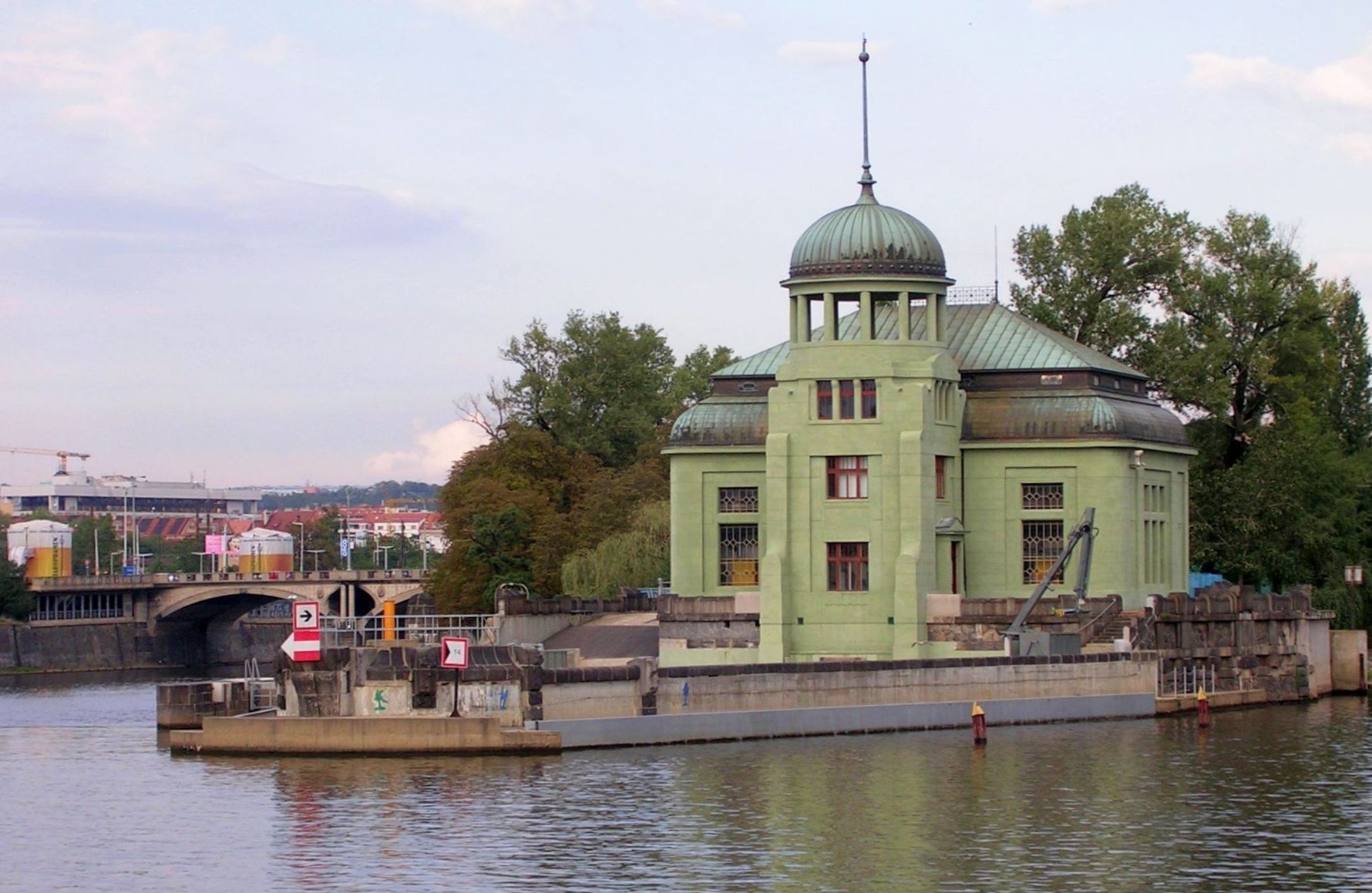
What remains is a pleasantly semi-derelict island park with tennis courts, a skatepark that has hosted international competitions since 1993, a small hydroelectric plant still operational at the southern tip, and the kind of quiet that is unusual this close to the city centre. The river views are good from both banks of the island, and the Negrelli Viaduct that spans the water nearby is one of the older pieces of railway infrastructure in central Europe.
Location: Štvanice Island, Prague 7. Accessible on foot from the Hlávkův Bridge from either the Holešovice or New Town sides.
Best time to visit: Any time. The island is quiet by nature, though summer evenings occasionally bring open-air events.
Ticket prices: Free to access. The skatepark and tennis courts have their own arrangements.
Good to know: Combine with the DOX Centre in nearby Holešovice for a full afternoon off the tourist circuit.
10. Lobkowicz Palace
A caveat before proceeding: Lobkowicz Palace is inside Prague Castle, which disqualifies it from most definitions of “hidden.” It earns its place here precisely because of that location – the castle complex is one of the most visited sites in Europe, and the Lobkowicz Palace, at the far eastern end, is the part almost no one reaches. The reason to seek it out specifically is that it is the only privately owned building in the entire UNESCO-protected castle complex, returned to the Lobkowicz family in 2002 after confiscations by the Nazis in 1939 and the Communist government in 1948, and reopened as a museum in 2007.
Private ownership makes a difference. The audio guide is narrated by family members rather than institutional actors, the collection – 22 rooms covering seven centuries of Bohemian history – is curated with a specificity that state institutions rarely manage, and the objects are genuinely extraordinary: original manuscripts with Beethoven’s own handwritten annotations, including his 4th and 5th symphonies; paintings by Velázquez, Canaletto and Bruegel the Elder; five centuries of armour and military equipment. Daily classical concerts in the Baroque Concert Hall, with its 17th-century frescoes, are available for a separate ticket.
Location: Jiřská 3, Prague Castle complex. Enter the castle from Hradčanské náměstí and walk east through the complex. lobkowicz.cz
Best time to visit: Morning on weekdays, when the castle crowds are thinner. The palace requires a separate ticket from the general castle entry.
Ticket prices: Around 300–340 CZK for adults including the audio guide. Classical concerts are around 600 CZK separately. Verify current prices at the palace or on the website.
Good to know: The Lobkowicz Palace ticket is separate from the standard Prague Castle ticket. If you are already paying castle admission, factor this in; if the palace is your main reason for visiting Hradčany, you can go directly without purchasing a full castle circuit.