If you’re spending your summer in Zadar, this is not just a city to see, it’s a city to move through, slowly and curiously. Step by step, you’ll find exhibitions inside historic palaces, concerts echoing through centuries-old churches, and open-air stages set against Roman stones and Adriatic evenings. And when you think you’ve seen it all, the region quietly expands: into islands, small coastal towns and inland landscapes where music continues in more unexpected, intimate ways.
This guide is here to help you navigate that rhythm. Follow it as a companion through the season or simply let it lead you to whatever catches your attention along the way.
Zadar: Where Stories Surface
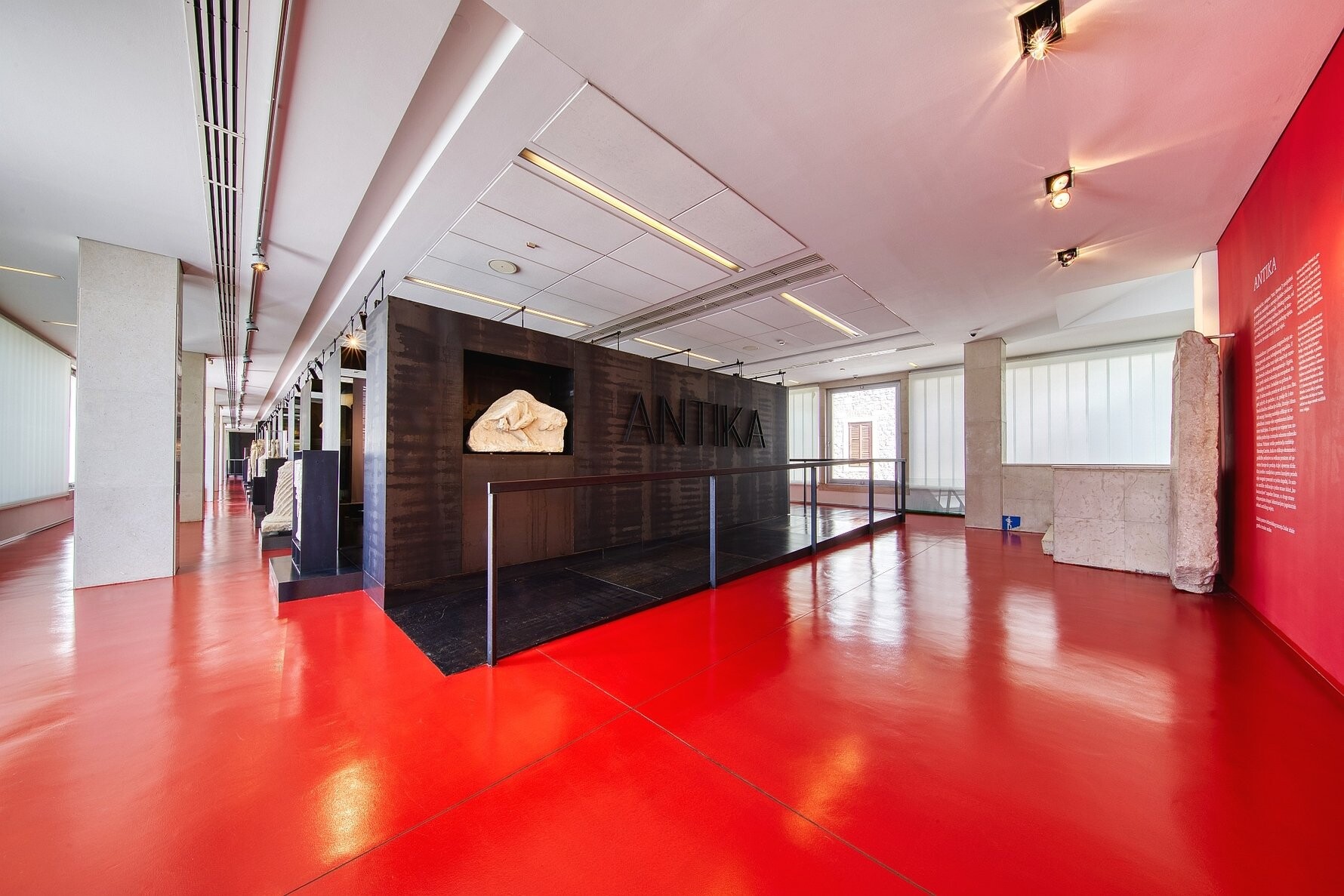
Across the city’s museums and historic palaces, Zadar unfolds a season of exhibitions that move between antiquity, contemporary art and immersive heritage, all within a few steps of each other.
At II Palaces, Antun Boris Švaljek – A Cloud in the Mind, until 1 October presents a major retrospective of Antun Boris Švaljek. His work spans painting, drawing and sculpture, blending surrealism, humour, pop culture and postmodern imagination into a distinctive and playful visual language.At the Archaeological Museum Zadar , Batina – Treasure of the Cross, until 15 September reveals a remarkable medieval hoard of 56 silver coins from the time of the First Crusade, discovered along the Danube a small archaeological find that opens up a much larger story of movement, trade and medieval Europe.
The museum’s summer programme continues with Bibimus! – Drinks, Feasts and Customs of the Ancient World , running from 15 July until the end of September. Through archaeological artefacts, visual material and interpretive displays, the exhibition explores the culture of wine, beer and ancient feasting from Mesopotamia and Egypt to Greece and the Roman Empire, revealing how drinking shaped everyday life, ritual, trade and social identity across the ancient Mediterranean.
From 16 June to 10 September, Rector palace hosts Anatomy of Smoke: A Retrospective of a Habit , tracing the cultural evolution of smoking from a ritual practice to a global visual icon, shaped by art, advertising and modern media, and featuring works by Pablo Picasso, Andy Warhol and Keith Haring.
At the Museum of Ancient Glass, Millefiori: Ancient Mosaic Glass from Croatia, until 1 October, explores the luminous world of ancient glassmaking through intricate floral and geometric millefiori patterns, revealing the refinement and Mediterranean connections of antiquity. From 28 May to 31 October, the museum also presents In Vitro – Stories of Glass in Pharmacy and Medicine Through the Ages, an exhibition exploring the fascinating role of glass in medicine, pharmacy, and healing practices from antiquity to the modern era.
From 23 June, Peaks of the Depths – Underwater Heritage of the Split-Dalmatia County, presented at ICUA, expands the season beyond Zadar. The exhibition brings together more than a hundred underwater finds spanning prehistory to modern history from Neanderthal tools and ancient shipwrecks to WWII aircraft wrecks, enhanced by multimedia installations and VR experiences that allow visitors to explore submerged heritage in an immersive way.
The season concludes at Providur’s Palace with the 8th Painting Biennale (15 October – 29 January 2027), a major contemporary art showcase featuring around one hundred artists from Croatia and abroad, transforming historic interiors into a vibrant map of today’s painting scene.
Zadar Under the Stars: Music in a Living Monument
Every summer, Zadar transforms into one of the Adriatic’s most atmospheric open-air concert stages during the Musical Evenings at St Donatus. a festival where classical, early and contemporary music echo through Roman ruins, medieval churches and hidden stone courtyards.
Founded more than sixty years ago, the festival owes much of its identity to the visionary Croatian conductor Pavle Dešpalj, whose idea of transforming the 9th-century Church of St Donatus into a world-class concert venue permanently shaped the city’s cultural life. Today, the festival remains deeply embedded in Zadar’s cultural DNA, woven into the identity of the city as profoundly as its Roman stones and Adriatic sunsets.The 66th edition, inspired by stars, celestial phenomena and the freedom of imagination, opens on 5 July at the Roman Forum with Gustav Holst’s The Planets and John Williams’ Star Wars Suite, performed by the Croatian Radiotelevision Symphony Orchestra and Women’s Choir under the baton of conductor Tomislav Fačini. The spectacular open-air opening concert is free to the public.
Highlights of the Early Music Cycle inside the Church of St Donatus include Into The Winds performing medieval and Renaissance dance music on 10 July , followed by the Dutch vocal ensemble Cappella Pratensis on 12 July with Guillaume DuFay’s Missa Ecce ancilla Domini in the ritual performance Missa Aurea.
Major summer concerts continue with pianist Danijel Detoni, flautist Lucija Stilinović Churikova and horn player Yevhen Churikov on 16 July, the celebrated cellist Monika Leskovar and pianist Martina Filjak on 22 July, and the Zadar Chamber Orchestra with conductor Ivan Repušić , violinist Roman Simović and soprano Marija Kuhar Šoša on 25 July, performing Mahler and Bruch.
Further highlights include the Zagreb Soloists with guitarist Filip Mišković on 28 July, the Croatian Guitar Duo with the legendary Edin Karamazov on 31 July, chamber performances by Marko Genero and Maria Grazio, as well as Airi Suzuki, Kajana Pačko and Boris Kusnezow on 3 August.
The festival’s contemporary CODA programme explores jazz, folk and experimental sound through projects such as Duckling Soup by the