Cádiz itself is the major attraction, a city of narrow streets and salt-bleached facades that gets under your skin in the most marvellous of manners. Founded by the Phoenicians around 1100 BC, it has a reasonable claim to being the oldest continuously inhabited city in the Western world, a fact the locals are perfectly aware of and entirely entitled to be smug about.
But what are the bucket-list items within the boundaries of this ancient peninsular city? What should you make a beeline for, the sights that make the brochure covers and linger in the memory long after you’ve left? We’ve done the walking so you don’t have to. Ladies and gentlemen, the very best that Cádiz has to offer.
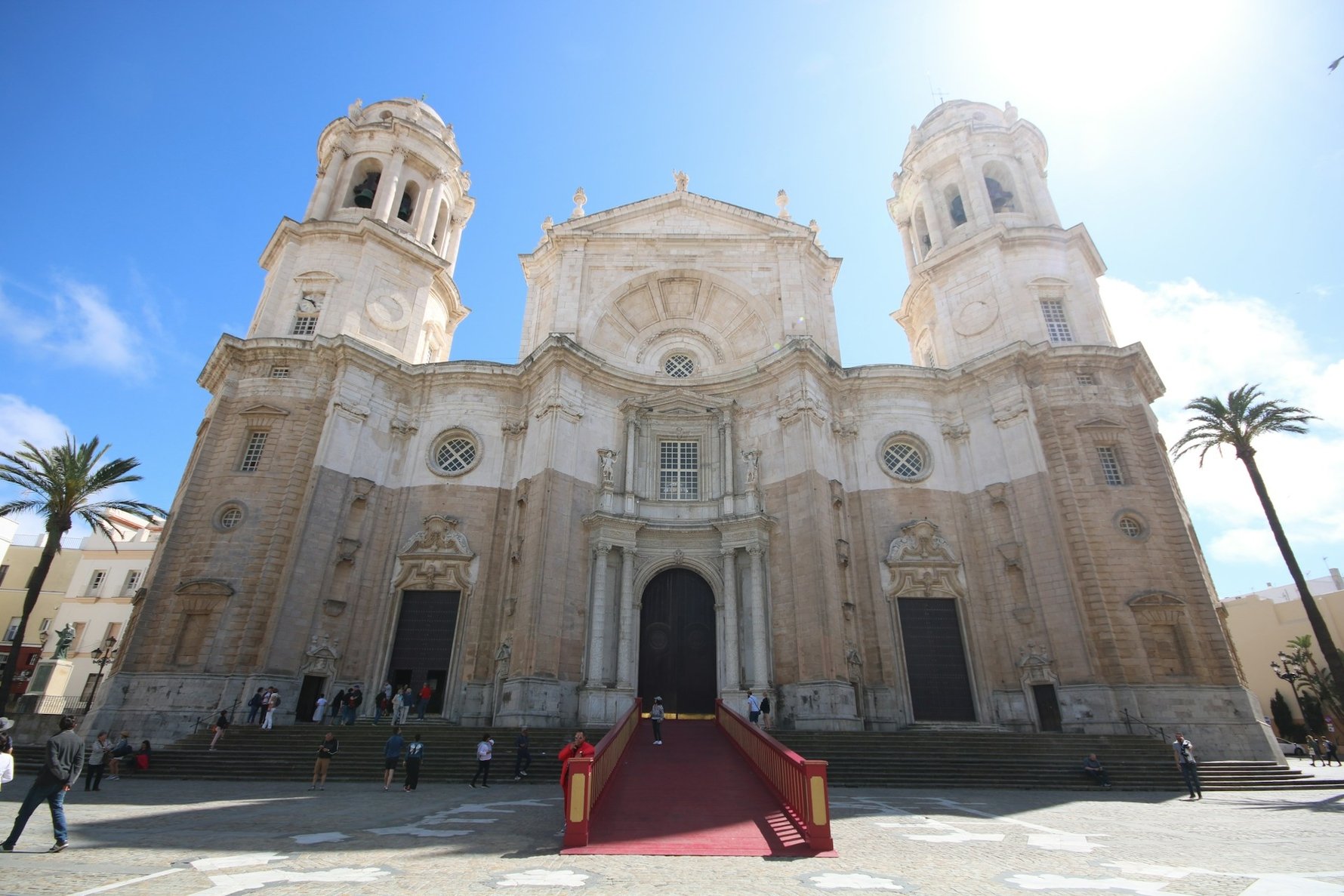
The golden dome of Cádiz Cathedral is visible from almost everywhere in the city, which is either the mark of a great building or a very flat cityscape. It is, in fact, both. Construction began in 1722, at the height of the city’s prosperity as Spain’s gateway to the Americas, and the project dragged on for 116 years, passing through the hands of multiple architects and accumulating Baroque, Rocóco and Neoclassical influences along the way. The result is a building that shouldn’t quite work but absolutely does.
The crypt is particularly worth your time. Completed in 1732 and designed by Vicente Acero, it is the oldest part of the building and houses the remains of the composer Manuel de Falla, among others. The clock tower, included in your ticket, offers views over the rooftops and out across the Atlantic that justify every one of the stairs. The cathedral museum, a short walk away in the Plaza Fray Félix, is also covered by your admission and contains an impressive collection of religious goldsmithing and paintings.
Location: Plaza de la Catedral, s/n, 11005 Cádiz
Best time to visit: Weekday mornings to avoid tour groups. Sunday afternoons bring a different kind of crowd, so plan accordingly.
Ticket prices: €7 general admission; €6 seniors; €5 students and groups. Children under 12 free. Includes the clock tower and museum.
Good to know: The cathedral is also known as the Catedral Nueva, to distinguish it from the older Iglesia de Santa Cruz nearby. Walking along the Paseo del Campo del Sur seafront promenade at sunset, with the dome catching the last of the light, is one of the finer free experiences Cádiz has on offer.
2. Torre Tavira
At 45 metres above sea level, Torre Tavira is the highest of the roughly 100 surviving watchtowers that still punctuate the Cádiz skyline. There were originally 160 of them, built by merchants in the 18th century to keep an eye on incoming ships and, one suspects, on each other. Torre Tavira was designated the city’s official watchtower in 1778 and takes its name from its first watchman, one Antonio Tavira, a man who clearly made an impression.
The tower now houses Spain’s first camera obscura, installed in 1994, which projects a real-time 360-degree image of the city onto a concave screen in a darkened room. It sounds like the sort of thing a Victorian might have invented as a party trick, and the description does not do it justice. The guided sessions run every half hour and are genuinely impressive. The rooftop terrace offers the best panoramic view in the city.
Location: Calle Marqués del Real Tesoro, 10, 11001 Cádiz
Best time to visit: Mid-morning, once the light is good for the camera obscura session.
Ticket prices: €7 with camera obscura; €5 without. Reduced rates for over-65s, students, large families and groups.
Good to know: Opening hours vary by season: 10:00–18:00 October to April; 10:00–20:00 May to September. The tower is closed on 25 December and 1 and 6 January, in case you were planning a very unusual holiday itinerary.
3. Roman Theatre
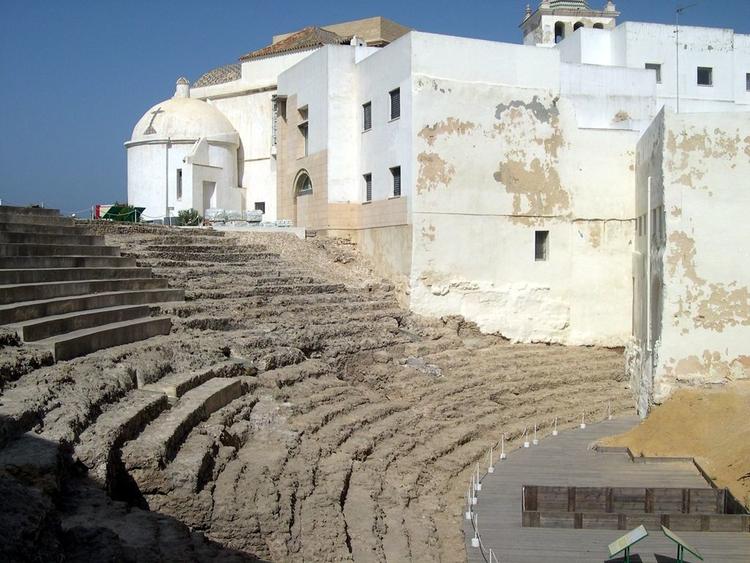
The Roman Theatre of Cádiz dates to around 70 BC, which makes it one of the oldest and largest Roman theatres in Spain. It was capable of seating somewhere between 10,000 and 20,000 spectators, which puts your local multiplex to shame on multiple levels. The theatre lay entirely unknown until 1980, when a fire in the El Pópulo neighbourhood revealed what had been hiding under the city for two millennia. This is the sort of discovery that makes urban archaeology either thrilling or deeply inconvenient, depending on whether you own the building above.
What makes the site particularly striking is that it remains only partially excavated, with modern buildings sitting directly on top of the unexcavated sections. You can stand in the ancient seating area and look up at inhabited apartments. The information panels inside are clear and informative, and there is a small exhibition of artefacts found on site.
Best time to visit: Morning, before the heat builds in summer. Easily combined with a walk through El Pópulo.
Ticket prices: Free. Some things in life still are.
Good to know: Closed on the first Monday of each month and certain public holidays, including 24 and 31 December. Check ahead if your visit falls near a holiday.
4. Mercado Central de Abastos
Built in 1838 on the site of a former convent allotment, the Mercado Central de Abastos is one of Spain’s oldest covered markets and one of its most rewarding. The building alone is worth a look, with more than 150 stalls arranged under an iron and glass structure that has been doing its job for the best part of two centuries. The central section is devoted almost entirely to fish and seafood, which is both unsurprising given Cádiz’s location and genuinely impressive in its variety.
Swordfish, tuna, prawns, squid, cuttlefish and things without obvious English names are arranged with considerable pride by vendors who have been doing this their whole lives. The fruit, vegetable and meat sections surround the seafood core, and the small bars tucked into the market’s edges are where locals actually eat: fried seafood, Spanish tortilla, and whatever looked good that morning.
Location: Plaza de las Flores, 1, 11004 Cádiz
Best time to visit: Weekday mornings, when everything is fresh and the atmosphere is at its most genuine. Arrive before noon.
Ticket prices: Free to enter. Leaving without buying something is theoretically possible but unlikely in practice.
Good to know: Closed Sundays. The market sits adjacent to the Plaza de las Flores, one of Cádiz’s most pleasant squares, which makes for a natural extension of any morning visit.
5. Museo de Cádiz
The Museo de Cádiz occupies a 19th-century former convent on the Plaza de Mina and divides its collection across three floors: archaeology on the ground floor, fine art on the first, and an unexpected collection of puppets on the second. The puppets belong to the La Tía Norica de Cádiz tradition, a puppet show form dating back to around 1790, and they are genuinely strange and wonderful.
The archaeology collection covers the city’s Phoenician and Roman periods in considerable depth, including two remarkable 5th-century BC Phoenician sarcophagi carved from white marble. The fine art floor features a series of paintings by Zurbarán, originally from the Charterhouse of Jerez de la Frontera and confiscated during the 1835 dissolution of the monasteries. It is a better collection than many cities twice the size of Cádiz can manage.
Location: Plaza de Mina, s/n, 11004 Cádiz
Best time to visit: Weekday afternoons, when the tour groups are elsewhere.
Ticket prices: Free for EU citizens; €1.50 for all others. One of the better deals in Andalusia.
Good to know: The Plaza de Mina outside is one of Cádiz’s most attractive squares. Combine the museum with a sit-down in the square and you have a solid half-day sorted.
6. Gran Teatro Falla
The Gran Teatro Falla is the kind of building that stops you mid-stride. Its Neo-Mudéjar facade, built from red and ochre brick with horseshoe arches and ornate tilework, sits in the Plaza Fraguela with a confidence that borders on theatrical, which is apt. The original theatre on this site burned down, as 19th-century theatres had a habit of doing, and the current building opened in 1905. It takes its name from the Cádiz-born composer Manuel de Falla, whose influence on Spanish classical music in the 20th century was considerable.
The theatre is best known outside Cádiz as the home of the city’s legendary Carnival, which takes over the building every February for the musical competitions that are central to the festival. For the rest of the year it hosts opera, dance, theatre and concerts. If you can catch a performance inside, the gilded auditorium with its red velvet seating is worth the ticket price alone.
Location: Plaza Fraguela, s/n, 11001 Cádiz
Best time to visit: The exterior is worth seeing at any time. For the interior, check the programme and book ahead.
Ticket prices: Varies by performance. The exterior is free to admire, which requires no booking.
Good to know: The Carnival competitions held here each February are among the most distinctive cultural events in Spain: choral groups compete with satirical songs written for the occasion, and the atmosphere is unlike anything else on the Spanish calendar.
7. La Caleta Beach and its Castles
La Caleta is the only beach in the old city centre, a small crescent of sand tucked between two castles that together frame one of the more cinematically satisfying views in Andalusia. At one end stands the Castillo de Santa Catalina, built in 1596 under Felipe II and now used as a cultural centre and exhibition space. At the other, connected to the mainland by a long breakwater promenade, sits the Castillo de San Sebastián, an island fortress whose site was, according to classical tradition, once occupied by a temple to the god Kronos.
La Caleta featured in the James Bond film ‘Die Another Day’ as a stand-in for Cuba, a casting decision that says something interesting about both locations. The beach itself is relatively small by Andalusian standards but entirely pleasant, and the walk out along the San Sebastián breakwater, with the Atlantic on both sides and the city receding behind you, is one of the finest short walks Cádiz has to offer.
Location: Playa de la Caleta, 11002 Cádiz
Best time to visit: Early morning or early evening in summer. Out of season, it is quieter and the light on the castles is particularly good.
Ticket prices: The beach and breakwater walk are free. The Castillo de Santa Catalina hosts changing exhibitions; entry prices vary.
Good to know: The promenade along the Avenida Campo del Sur connects La Caleta to the cathedral area along the seafront and is worth walking in either direction.
8. El Pópulo
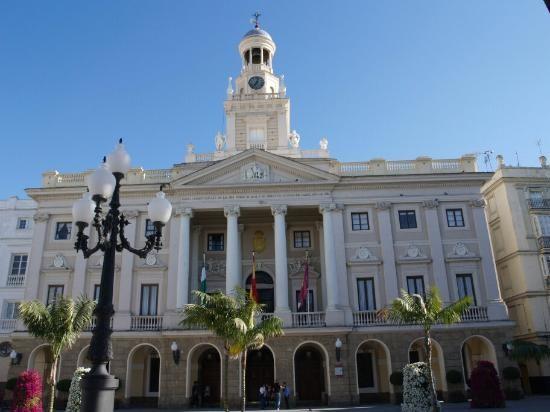
El Pópulo is the oldest neighbourhood in Cádiz, a compact tangle of medieval lanes dating to the 13th century, entered through three surviving Baroque arches: the Arco del Pópulo, the Arco de la Rosa and the Arco de los Blancos. The neighbourhood contains the Roman Theatre (covered separately above), the old cathedral – the Iglesia de Santa Cruz, now functioning as a parish church – and the Plaza de San Juan de Dios, where the neoclassical City Hall looks out over a square busy enough to justify sitting down in it for a while.
El Pópulo rewards slow walking. The streets are narrow enough that the buildings provide shade for most of the day, and the neighbourhood has a lived-in, unhurried quality that the more tourist-facing parts of the city occasionally lack. It is, in short, the sort of place that makes you wish you had more afternoons spare.
Location: El Pópulo, 11005 Cádiz. The Arco del Pópulo on Calle Sopranis is a good entry point.
Best time to visit: Morning or late afternoon. Midday in summer is best avoided in these narrow streets.
Ticket prices: Free. The neighbourhood itself costs nothing; the sights within it vary (the Roman Theatre is free; the old cathedral is free to enter as a working church).
Good to know: The Plaza de San Juan de Dios has several café terraces that are well-positioned for watching Cádiz go about its business. We recommend this activity enthusiastically.
9. Parque Genovés
Parque Genovés is the largest park in the historic centre of Cádiz, a 19th-century seaside garden that sits between the old city walls and the Atlantic. It contains more than 100 species of plants, a man-made lake with a waterfall, an open-air theatre, commemorative statues and topiary that someone has clearly spent a great deal of time on. The park gets its name from the Genoese merchants who lived in this part of Cádiz during the city’s prosperous trading years.
It is, in essence, exactly what a good city park should be: a place to slow down, to watch children feed the ducks, to sit under a tree and question whether you really need to visit one more church today. The answer is probably yes, but the park makes a compelling case for the alternative.
Location: Alameda de Apodaca, 11001 Cádiz
Best time to visit: Morning or early evening. It is popular with locals throughout the day, which is a reliable indicator of quality.
Ticket prices: Free.
Good to know: The Alameda de Apodaca promenade runs alongside the park with sea views towards the bay. The Gran Teatro Falla is a short walk away, making this a natural pairing.
10. Oratorio de San Felipe Neri
The Oratorio de San Felipe Neri is a small elliptical Baroque church from 1719 that punches considerably above its weight in terms of historical significance. On 19 March 1812, the Spanish Cortes – convened in Cádiz while the rest of the country was under Napoleonic occupation – promulgated here the first Spanish constitution, a liberal document that influenced constitutions across Europe and Latin America for decades. A plaque on the wall notes the occasion with appropriate restraint.
The church itself is quietly beautiful, with a central oval nave, side chapels, and a notable painting of the Immaculate Conception by Murillo above the main altar. It is the sort of place that rewards visitors who know what happened here, and the Museo de las Cortes de Cádiz nearby provides the context if you need it, including an extraordinary 1777 mahogany and ivory model of the city.
Location: Calle Santa Inés, 38, 11004 Cádiz
Best time to visit: Weekday mornings. The church is rarely crowded, which is part of its appeal.
Ticket prices: €3, which includes entry to the adjoining museum space.
Good to know: The Museo de las Cortes de Cádiz on Calle Santa Inés is free to enter and makes an excellent companion visit. The 1812 Constitution – known as ‘La Peña’ (‘The Rock’) by those who drafted it, for its durability – was a remarkable document for its time, enshrining freedom of the press and the abolition of feudalism while much of Europe was moving in the opposite direction.
What else can you see in Cádiz?
The list above covers the highlights, but Cádiz has a habit of offering things you didn’t know you wanted. The Gadir Archaeological Site beneath the old town preserves the remains of Phoenician and Roman structures, including ancient fish-salting factories. The Alameda de Apodaca promenade is one of the finest seaside walks in Andalusia. Playa de la Victoria, south of the old city, provides a long stretch of Atlantic beach for those who want more sand and fewer history lessons.
The food deserves its own afternoon. Cádiz is serious about fried fish – pescaíto frito is a local religion – and the tapas bars of the La Viña neighbourhood around Calle de la Palma are among the best in the city. Sherry, produced in nearby Jerez de la Frontera, is the drink of the region and worth approaching with an open mind even if you think you don’t like it.
For day trips, Jerez de la Frontera is 35 minutes away by train and offers flamenco, horses and the bodegas that produce some of the world’s finest fortified wines. Tarifa, at the southernmost tip of Europe with views across to Morocco, is an hour by bus and a world apart. Neither requires a car, which in Cádiz – a city where parking is a competitive sport – is very much a feature, not a bug.