Bilbao spent most of the 20th century as a grimy industrial port city that people passed through rather than visited. Then, in 1997, Frank Gehry arrived with some titanium cladding and a very ambitious set of plans, and Bilbao became one of the most discussed urban transformations in modern European history. The city has been dining out on it ever since, and why not: the Guggenheim changed everything, and Bilbao had the good sense to keep going from there.
What you find today is a city that has earned its reputation, one that balances serious contemporary architecture with a medieval old town, world-class art with some of the best bar food in Spain, and a fierce Basque identity with an open, genuinely welcoming character. Here, in rough order of fame, are the ten things you shouldn’t leave without seeing.
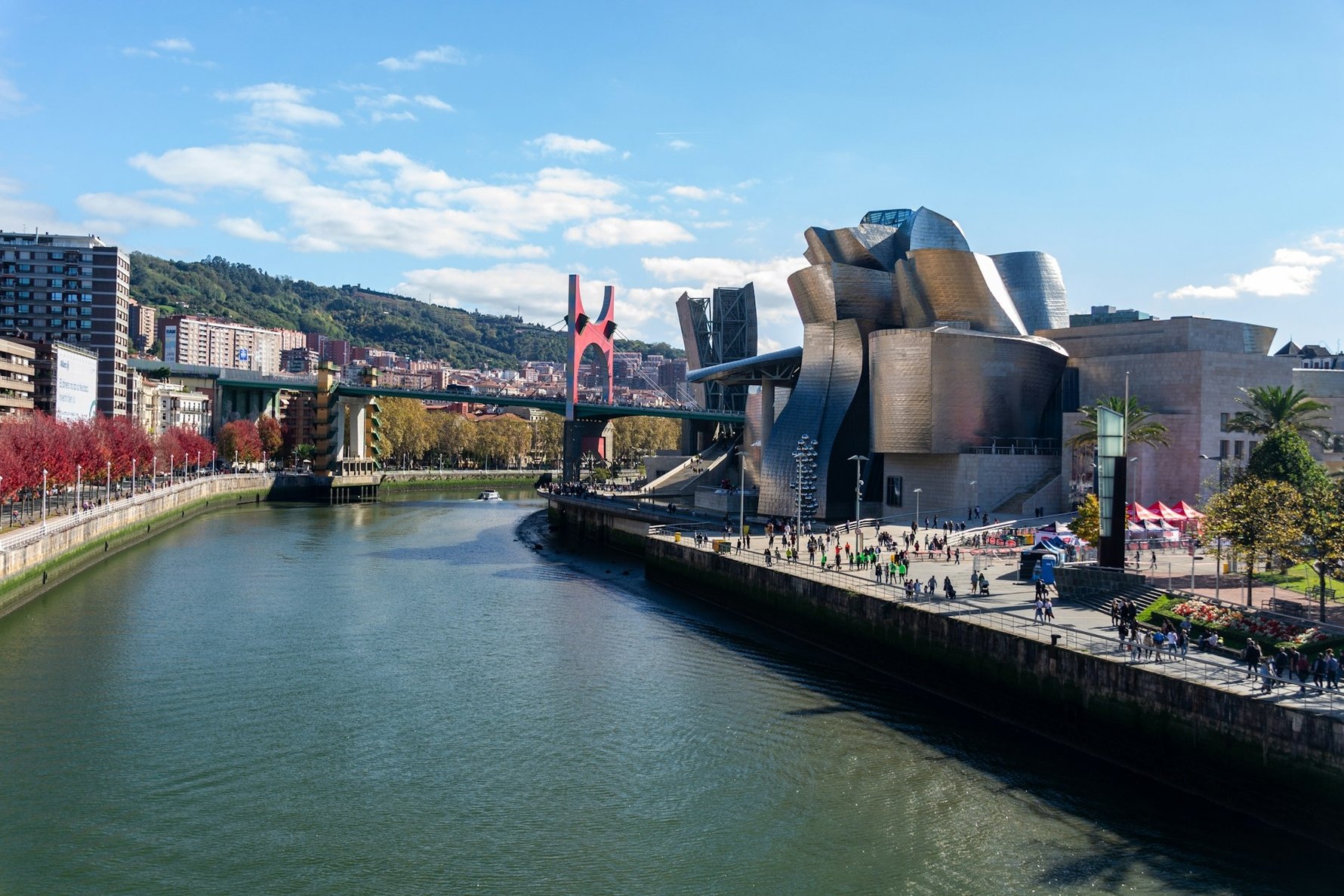
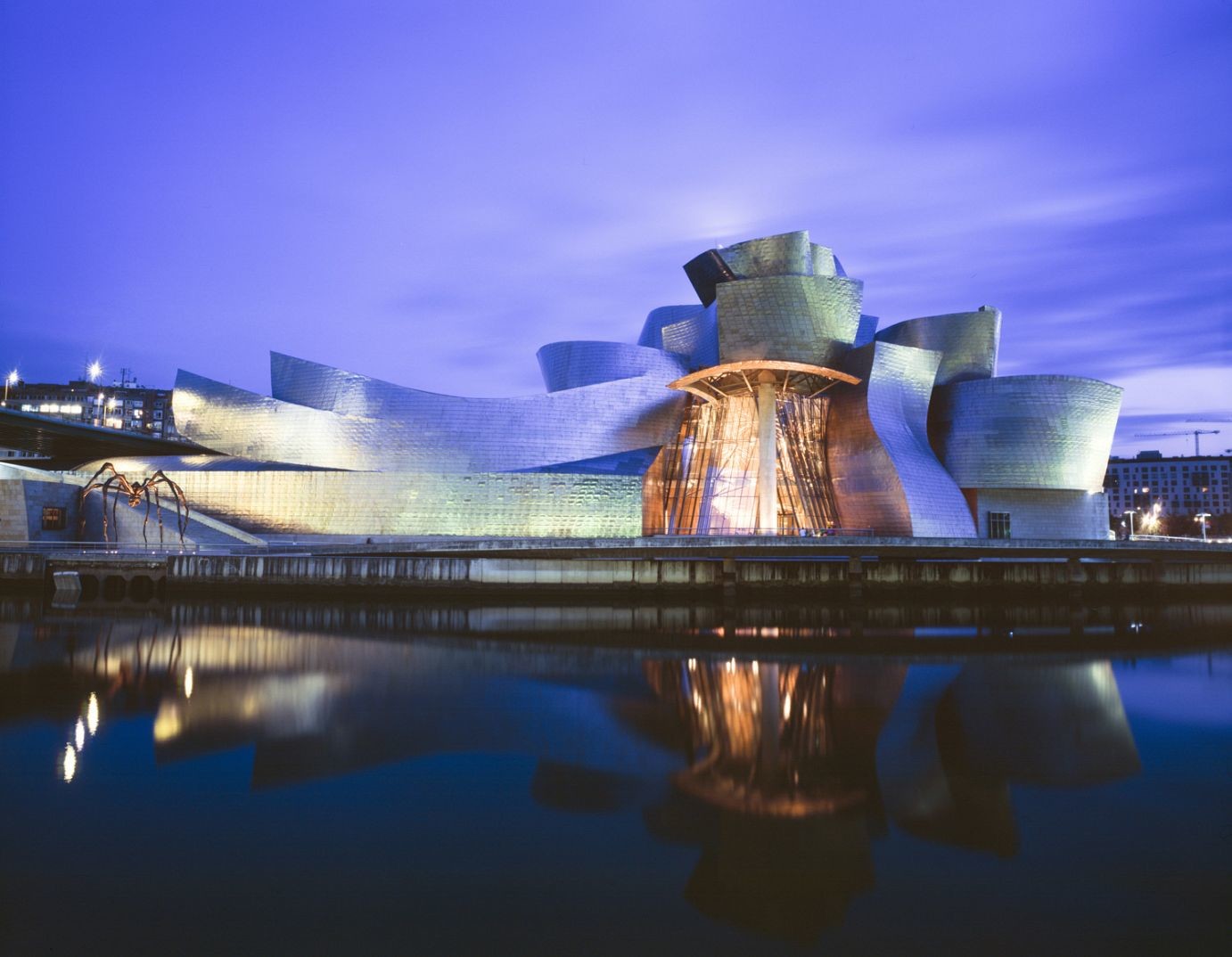
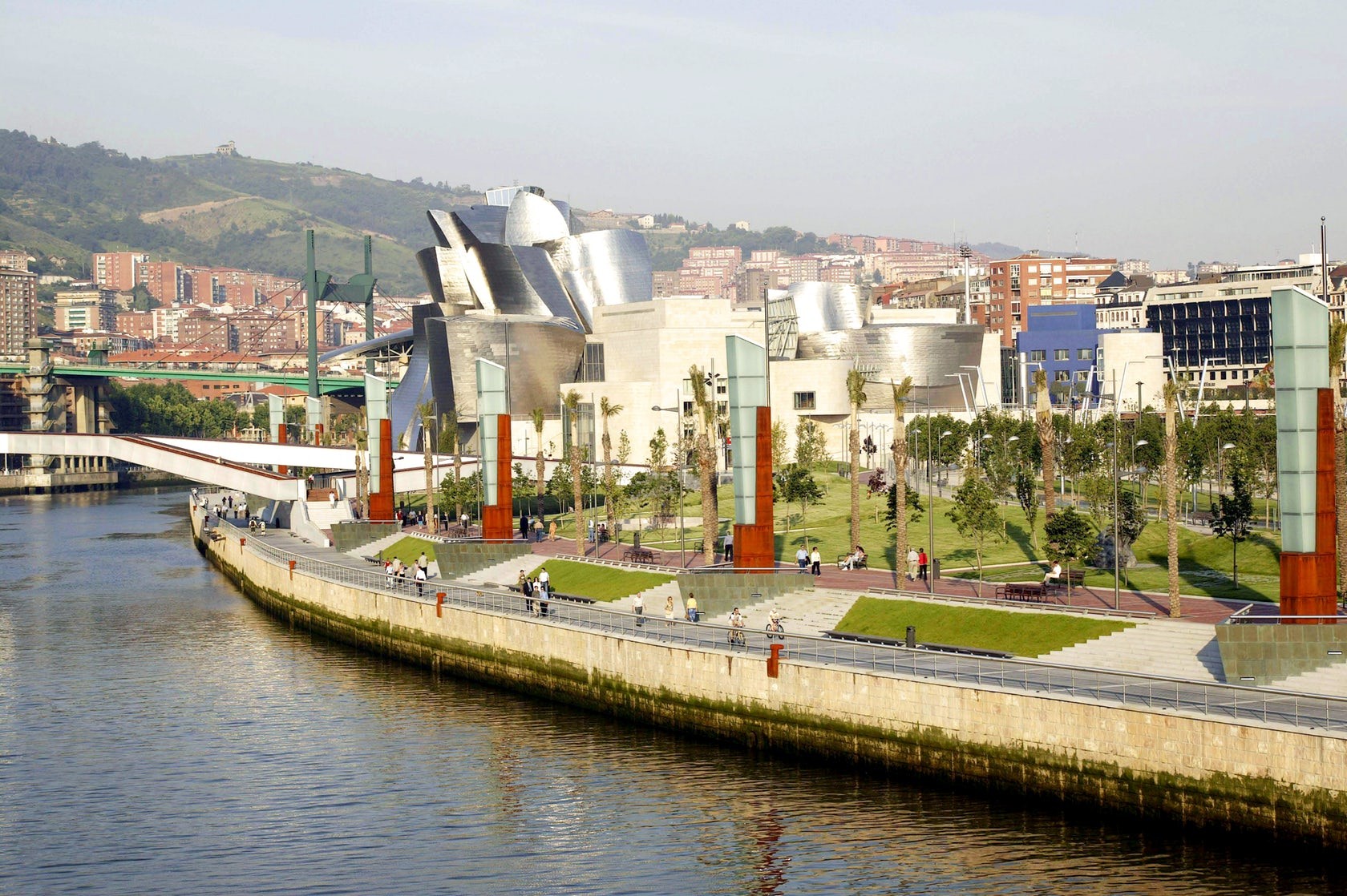
There are buildings that you know from photographs and then see in person and feel faintly disappointed by. The Guggenheim Museum Bilbao is not one of them. Frank Gehry’s titanium-clad construction on the banks of the Nervión, completed in 1997, is more arresting in the flesh than any image suggests, partly because the reflective panels shift with the light and the weather, and partly because the sheer scale of the thing is difficult to convey in two dimensions. The building sits 16 metres below the city’s street level, which makes it simultaneously enormous and surprisingly intimate from the riverbank.
The permanent collection includes Richard Serra’s ‘The Matter of Time’, a series of enormous weathered steel sculptures that occupy an entire gallery and reward slow walking considerably more than a quick circuit. Outside, Jeff Koons’ Puppy stands guard on the city side of the museum: a 12-metre West Highland terrier constructed from living flowers, which has been there long enough that Bilbaínos now regard it with affectionate familiarity. Louise Bourgeois’ Maman, a nine-metre bronze spider by the river, is more unsettling. The temporary exhibition programme is consistently strong; check the website before you visit.
Location: Abandoibarra Etorbidea, 2, 48009 Bilbao
Best time to visit: First thing in the morning, or on Tuesday evenings when admission is free between 18:00 and 20:00. Booking online in advance is strongly recommended, particularly in summer.
Ticket prices: €16 online; €18 at the door. Students and over-65s: €8 online / €9 at the door. Under-18s free. The Artean Pass combines entry with the Museo de Bellas Artes at a discount.
Good to know: Closed December 25 and January 1; check the website for Monday closure dates, which vary by season. Security queues in high summer can be lengthy; the museum warns of waits of up to an hour. A walk around the building’s exterior and down to the riverbank costs nothing and is not optional.
2. Casco Viejo
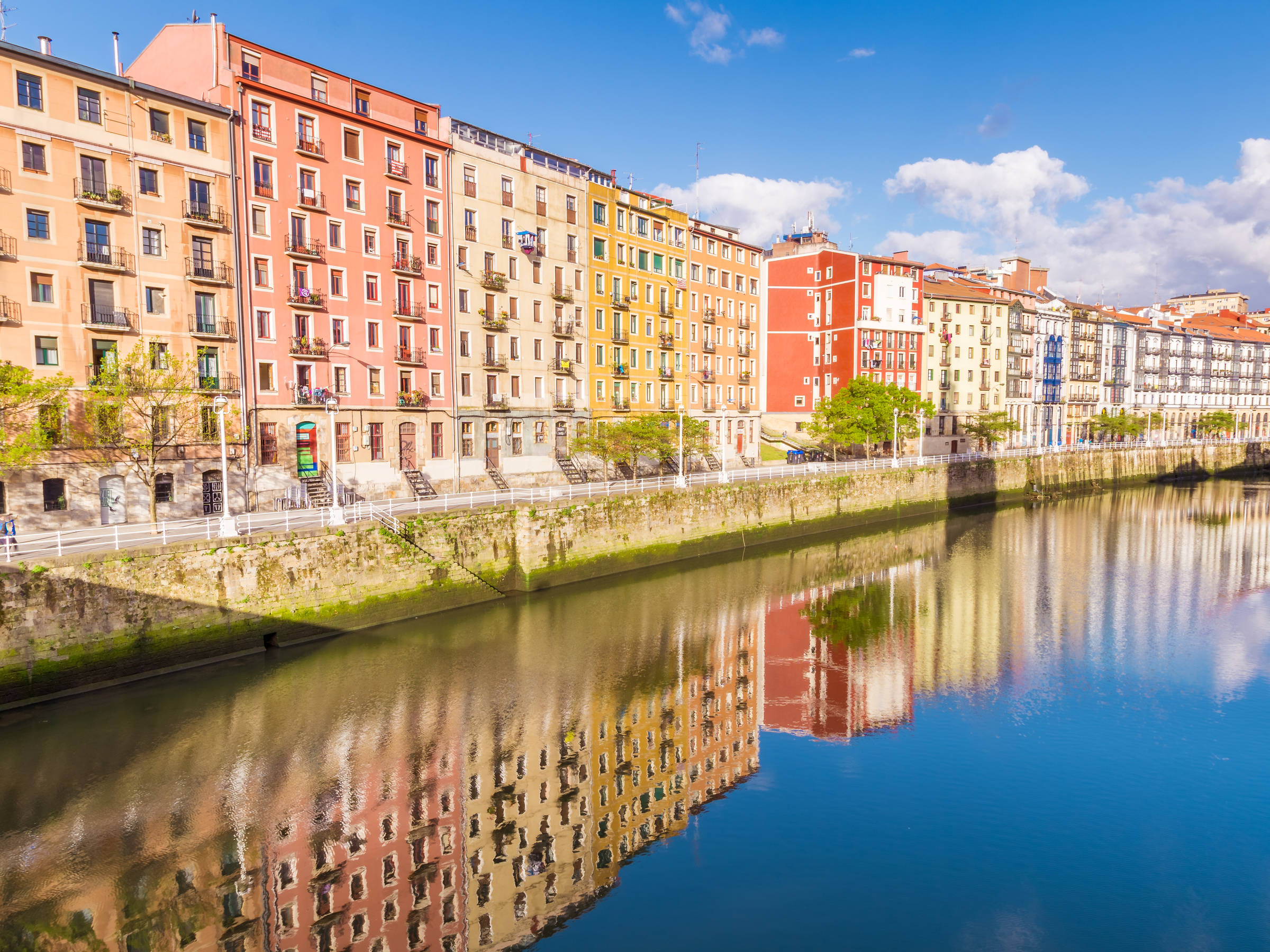
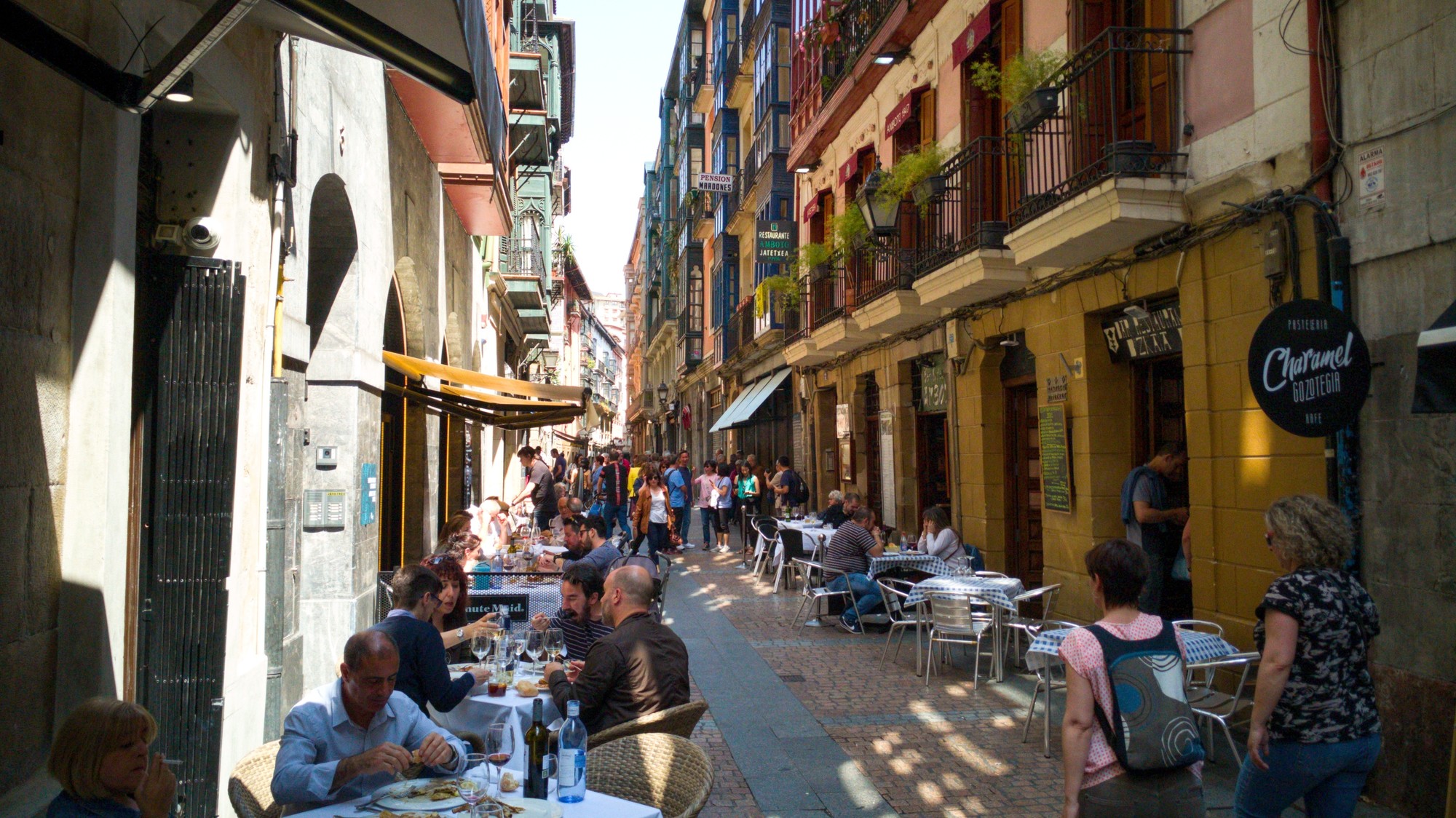
Bilbao was founded in 1300 and the Casco Viejo, the old quarter on the right bank of the Nervión, is where it started. The neighbourhood is built around the Siete Calles, the seven original streets laid out in the medieval period, now lined with pintxo bars, independent shops and the kind of architectural mix that accumulates over seven centuries without anyone planning it. The Gothic Cathedral of Santiago sits at the heart of the quarter, recognised as a cathedral only in 1955 despite having been there since the 14th century, which suggests a certain administrative unhurriedness on someone’s part.
The Plaza Nueva, a neoclassical arcaded square from 1851, is the neighbourhood’s social centre, busy most of the day and particularly so on Sunday mornings when a small market sets up beneath the arches. The Casco Viejo is compact enough to navigate without a map and rewards aimless wandering more than most old towns: the streets are narrow, the bars are excellent and the city has not sanitised the neighbourhood into a theme park version of itself.
Location: Right bank of the Nervión; the Plaza Nueva is a useful starting point.
Best time to visit: Morning for the market atmosphere and quieter streets; early evening for the pintxo bars at their most animated.
Ticket prices: Free. The Cathedral of Santiago charges a small entry fee for tourist visits (around €3); entry for worship is free.
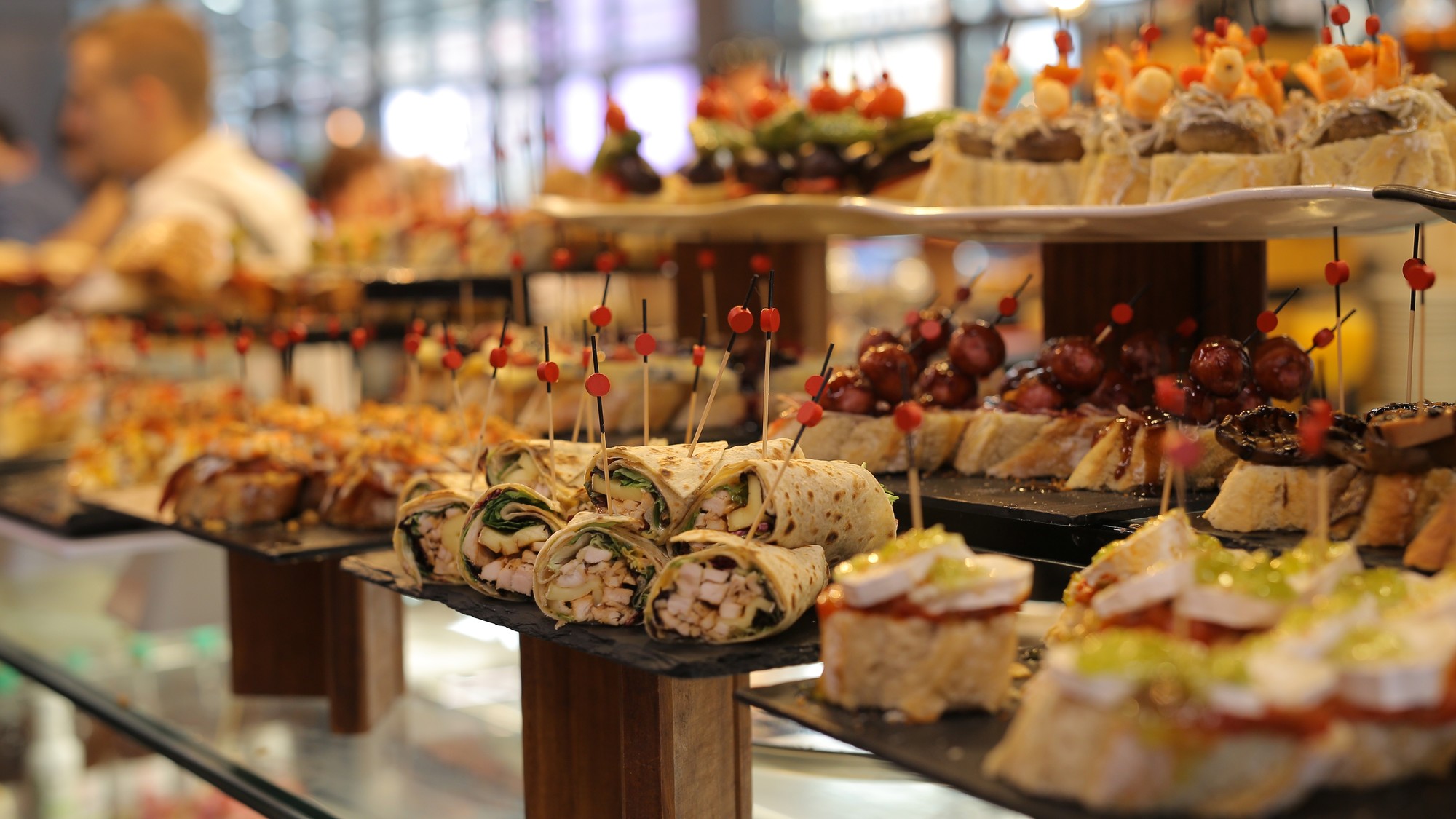
Good to know: Pintxos in the Casco Viejo are typically eaten standing at the bar, ordered one at a time, washed down with txakoli or a small beer. The system is informal and the food is very good. Avoid the tourist-facing places around the Plaza Nueva perimeter and look for bars where locals are actually eating.
3. Museo de Bellas Artes
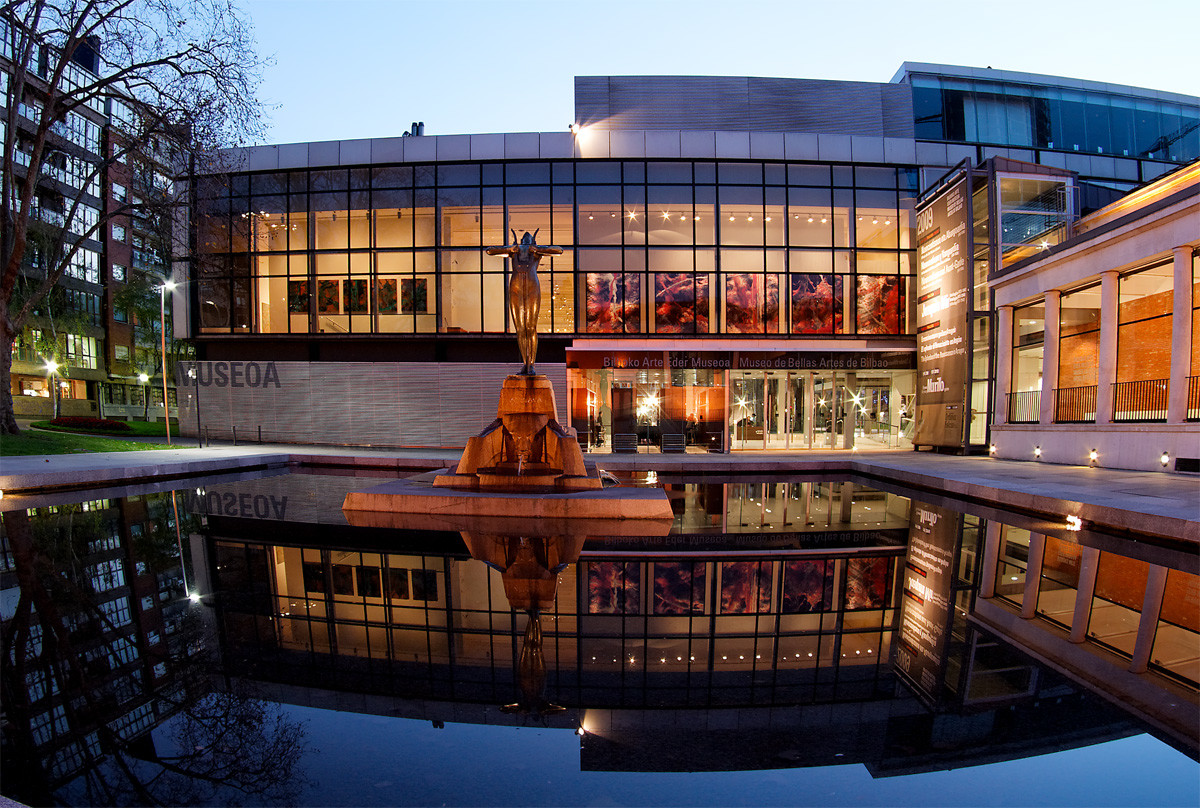
The Museo de Bellas Artes de Bilbao was the result of a 1945 merger between the city’s Fine Arts Museum, founded in 1914, and its Museum of Modern Art, founded in 1924, and it has been quietly accumulating one of the finest collections in Spain ever since. The permanent collection runs from 12th-century religious art through to the present day, with particular strengths in Spanish painting: El Greco, Goya, Zurbarán, Murillo and Ribera are all represented, alongside a significant collection of Basque artists and works by Gauguin, Francis Bacon and Mary Cassatt. It is, in short, considerably more impressive than Bilbao’s proximity to the Guggenheim might lead you to expect.
The museum sits in the Doña Casilda Iturrizar Park, which is a sensible location for a building you may need to leave and re-enter several times to process what’s inside. Frank Gehry is designing an extension, so the building itself will shortly become a point of interest for an additional set of reasons.
Location: Muséo Plaza, 2, 48009 Bilbao
Best time to visit: Wednesday and Friday evenings, when admission is free. Weekday afternoons are generally quieter than weekends.
Ticket prices: €10 general; reduced rates for students and seniors. Free on Wednesday and Friday evenings. The Artean Pass with the Guggenheim is worth calculating if you plan to visit both.
Good to know: The museum is a ten-minute walk from the Guggenheim along the riverbank, making the two a natural pairing. Allow at least two hours; the collection is larger than it first appears.
4. Mercado de la Ribera
Built in 1929 by architect Pedro Ispizua in a Rationalist and Art Deco style, the Mercado de la Ribera sits on the right bank of the Nervión in the Casco Viejo and claims to be the largest covered market in Europe, a boast that seems plausible once you’re inside. Three floors of stalls cover fish, seafood, meat, fruit, vegetables and everything the Basque Country produces in quantity and with pride. The ground floor fish section is the main event: the quality is exceptional, the variety is considerable and the vendors are not shy about their opinions on what you should be buying.
The market has been renovated in recent years and now incorporates gastrobars alongside the traditional stalls, where you can eat what’s been caught or grown that morning. Live jazz appears periodically, which is either a charming addition or a slight distraction depending on your feelings about jazz at 11 in the morning.
Location: Erribera Kalea, 20, 48005 Bilbao
Best time to visit: Weekday mornings. Sunday mornings work too, though some stalls are closed.
Ticket prices: Free to enter.
Good to know: The market faces the Nervión and the Zubizuri Bridge is a short walk upstream, making this an easy starting point for a riverside walk toward the Guggenheim. The Casco Viejo is immediately behind you.
5. Teatro Arriaga
The Teatro Arriaga stands at the entrance to the Casco Viejo like a statement of civic intent, a Neo-Baroque opera house inspired by the Paris Opéra and completed in 1890. It takes its name from Juan Crisóstomo de Arriaga, a Bilbao-born composer who died in Paris in 1826 at the age of 20, having produced a body of work that led him to be called the ‘Spanish Mozart’ by those who felt the comparison was warranted. The theatre was badly damaged by fire in 1914 and rebuilt; the current interior, with its plush red velvet seating and gilded balconies, dates from the reconstruction.
The building hosts opera, dance, theatre and concerts throughout the year and is worth attending if a performance lines up with your visit. If it doesn’t, the exterior is impressive enough to warrant the short walk from either the Guggenheim or the Casco Viejo, and the square in front of it is one of the more pleasant spots in the city to sit down for a moment.
Location: Plaza Arriaga, 1, 48005 Bilbao
Best time to visit: The exterior is worth seeing at any time. Check the programme at teatroarriaga.eus and book ahead for performances.
Ticket prices: Varies by performance. Guided tours of the interior are available on selected dates; check the website.
Good to know: The theatre sits at the point where the Casco Viejo meets the river, making it a natural starting or finishing point for an old-town walk.
6. Zubizuri Bridge
Santiago Calatrava designed the Zubizuri Bridge in 1997, the same year the Guggenheim opened, and Bilbao has not entirely forgiven the timing clash. The pedestrian bridge – its name means ‘white bridge’ in Basque – spans the Nervión with a curved white arch and a glass-panelled walkway that is extremely elegant and, when wet, genuinely hazardous underfoot. A legal dispute with Calatrava followed when the city subsequently extended the bridge without his approval, which says something useful about the relationship between architects and their creations.
The bridge is one of the most photographed structures in Bilbao and earns the attention: from the riverbank it reads as a single fluid gesture, and it connects the Abandoibarra cultural district with the Ensanche, the 19th-century grid expansion of the city, making it a genuinely useful crossing as well as a decorative one.
Location: Spans the Nervión between Abandoibarra and the Ensanche district; visible from the Guggenheim riverbank.
Best time to visit: Early morning or evening for the best light. At night the arch is lit up.
Ticket prices: Free.
Good to know: The glass walkway becomes very slippery in rain. Bilbao is in the Basque Country. It rains. Wear appropriate footwear.
7. Funicular de Artxanda
The Funicular de Artxanda has been carrying Bilbaínos up to the top of Mount Artxanda since 1915, a three-minute ride that rises 226 metres and deposits you at a viewpoint with arguably the finest panoramic view of the city available anywhere. From the top you can trace the Nervión as it curves through the city, identify the Guggenheim, the Casco Viejo and the Ensanche, and understand the geography of Bilbao in a way that no amount of street-level walking quite manages. There is a park at the summit, a large red Bilbao sign that has generated a significant number of photographs, and a restaurant if the view gives you an appetite.
The funicular itself is part of the experience: a short but vertiginous little incline railway that has been doing this particular job for over a century with admirable consistency.
Location: Plaza del Funicular, 48006 Bilbao. The lower station is on the left bank of the Nervión, about 15 minutes’ walk from the Guggenheim.
Best time to visit: Late afternoon for the best light on the city below. Clear days are obviously preferable, though Bilbao in low cloud has a certain atmosphere of its own.
Ticket prices: Around €1 each way; a return ticket costs approximately €1.65. One of the better-value viewpoints in Spain.
Good to know: The funicular runs every 15 minutes, from approximately 07:15 to 22:00 on weekdays and 08:15 to 23:00 at weekends. Times can vary; check the Bilbao city transport website before visiting.
8. Doña Casilda Iturrizar Park
Doña Casilda Iturrizar Park is Bilbao’s finest green space, a late 19th-century landscaped park that runs between the Museo de Bellas Artes and the Ensanche district. It was donated to the city by Doña Casilda de Iturrizar, a wealthy widow whose generosity is commemorated by a statue in the park, though the park itself is a more fitting monument. There is a large ornamental pond with ducks, a pergola of considerable charm, various fountains and enough mature trees to make the temperature noticeably lower than the surrounding streets in summer.
The park is popular with Bilbaínos of all ages throughout the day and functions as a useful connecting point between the Guggenheim riverbank and the Museo de Bellas Artes. It is also simply a very good park, which is worth saying plainly.
Location: Manuel Allende Kalea, 48010 Bilbao; adjacent to the Museo de Bellas Artes.
Best time to visit: Any time. Weekend mornings bring families; weekday afternoons bring a quieter crowd. The park stays open until late evening.
Ticket prices: Free.
Good to know: The park is on the route between the Guggenheim and the Museo de Bellas Artes. If you’re walking between the two, going through the park rather than along the street is the obvious choice.
9. San Mamés Stadium
Athletic Club Bilbao operates under a self-imposed rule unique in professional football: only players from the Basque Country, or trained in Basque academies, are eligible to represent the club. This policy, maintained since the club’s founding in 1901 and applied without exception through decades of changing football economics, has produced a team that is genuinely of its city in a way that almost no other top-level club can claim. Athletic have never been relegated from the Spanish top flight. The San Mamés Stadium, opened in 2013 and known as the ‘Cathedral of Football’ by those who feel the metaphor works, holds 53,000 people and is worth visiting regardless of whether you have any particular interest in football.
The stadium museum covers the club’s history with evident pride and the tour takes you through areas that are closed on match days. If a match is on during your visit, buying a ticket is strongly recommended: the atmosphere at San Mamés is widely regarded as among the best in Spanish football.
Location: Rafael Moreno Pitxitxi Kalea, s/n, 48013 Bilbao. A short walk from the San Mamés metro station.
Best time to visit: Match days for the full experience; non-match days for the stadium tour, which gives access to areas off-limits during games.
Ticket prices: Stadium and museum tour approximately €16 for adults; €10 for children. Match tickets vary by fixture; check the Athletic Club website.
Good to know: The football season runs August to May. Tours on match days have restricted access. Book the tour in advance through the Athletic Club website.
10. Vizcaya Bridge
The Vizcaya Bridge, known in Spanish as the Puente Colgante (‘hanging bridge’) and listed as a UNESCO World Heritage Site since 2006, sits about 12 kilometres downstream from central Bilbao at Portugalete. Built in 1893 by Alberto de Palacio, a student of Gustave Eiffel, it was the world’s first transporter bridge: rather than a conventional crossing, a suspended gondola ferries cars, cyclists and pedestrians across the Nervión estuary, hanging from a high iron framework. It is still in daily operation, a 130-year-old solution to a problem that has since been solved in other, less interesting ways.
The upper walkway, 50 metres above the water, is accessible by lift and offers a vertiginous view of the estuary, the coast and the bridge mechanism itself. The round trip from central Bilbao by metro takes about 30 minutes each way and is worth the effort: this is one of the stranger and more genuinely impressive pieces of engineering in Spain, and the surrounding area of Getxo has beaches and clifftop walks if you want to extend the outing.
Location: Paulino Mendibil Kalea, 48920 Portugalete. Take metro Line 1 to Portugalete station.
Best time to visit: Midday for the best light on the structure; weekdays for fewer crowds on the upper walkway.
Ticket prices: Gondola crossing: around €0.45 per person (on foot). Upper walkway: approximately €9 return, including the lift. Prices subject to change; check the official website.
Good to know: The gondola runs continuously during operating hours and the crossing takes about two minutes. Walking across the upper footbridge and looking straight down through the wooden planks is either a highlight or a significant mistake, depending on your relationship with heights.
What else can you see in Bilbao?
The list above barely scratches the architecture. Centro Azkuna, a 1909 wine warehouse converted by Philippe Starck into a cultural leisure centre, is worth an hour of anyone’s time for the 43 ornate columns alone. The Euskalduna Palace, a concert hall built on the former shipyards and designed to resemble a ship under construction, hosts the Bilbao Symphony Orchestra and has acoustics to match the ambition of the building. Santiago Calatrava’s bridges and Norman Foster’s metro stations mean that even the infrastructure is worth paying attention to.
Bilbao is also, quietly, one of the great eating cities in Europe. The Basque Country takes its food seriously enough that the question is not whether you will eat well, but how much time you are prepared to devote to doing so. The pintxo bars of the Casco Viejo and the Gros neighbourhood are the obvious starting point; the city also has a concentration of Michelin-starred restaurants that reflects the regional culinary tradition rather than contradicting it.
For day trips, San Sebastián is less than an hour by bus and gives you a second, entirely different Basque city for the price of a coach ticket. Gernika, 35 kilometres to the east, is where the Basque parliament sits and where Picasso’s most famous painting found its subject. The Basque coast, accessible by metro to Getxo or by local train to various points along the Biscay shore, adds beaches and clifftops to a city that already has rather a lot going for it.