Yerevan is the kind of city that takes a day or two to understand and then refuses to let you leave. At first glance, it is a largely Soviet city built from pink volcanic tuff stone, wide boulevards and parks, with an abundance of outdoor cafes that would make a Parisian blush. What takes longer to register is the weight of history behind it: this is the capital of the world’s first Christian nation, a country that invented its own alphabet in 405 AD specifically to translate the Bible, survived genocide, survived Soviet annexation, survived the collapse of the Soviet Union, and has somehow emerged from all of that with one of the most vibrant cafe cultures in the Caucasus and a nightlife scene that goes until dawn. Armenia’s relationship with suffering and resilience is not incidental background; it is the entire story, and Yerevan is where that story is most completely told.
The other thing to know before visiting: Mount Ararat, the sacred mountain that appears on Armenia’s coat of arms, dominates the skyline to the southwest and is visible from much of the city on a clear day. It has been in Turkish territory since 1921. This is not something Armenians have made peace with, exactly. But they have learned to live with the view.
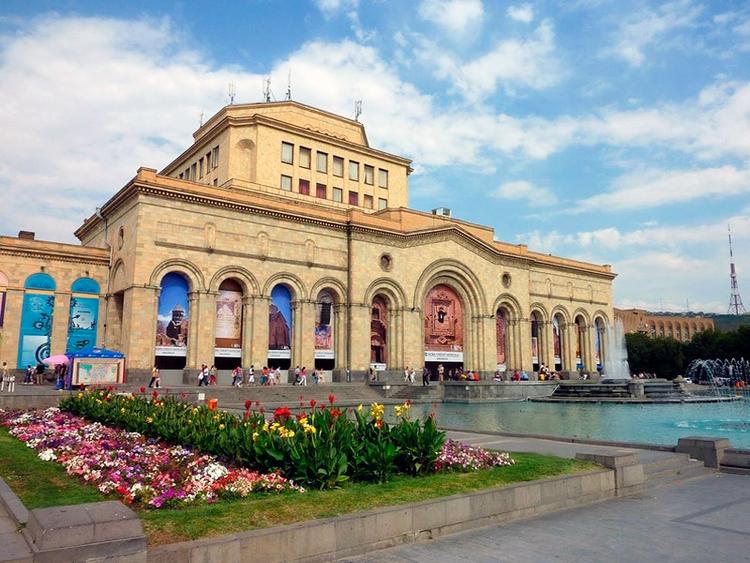
Republic Square is the heart of Yerevan and, for many visitors, the first impression of the city. It is not technically a square – it is a large oval, surrounded by neoclassical buildings faced in the pink and golden volcanic tuff stone that gives Yerevan its nickname of the Pink City – and it is one of the more architecturally coherent city centres in the former Soviet Union, which is not faint praise. The surrounding buildings house the History Museum of Armenia and National Gallery, the Armenian government offices, and the Armenia Marriott Hotel, all arranged in a composition designed by architect Alexander Tamanyan as part of his 1924 urban plan for the Soviet-era city. Construction of the ensemble took until the 1970s to complete. Lenin’s statue stood at the centre until 1991; the square was renamed after independence and the man removed.
The main draw for most visitors is the Dancing Fountains, a choreographed water, light and music show that runs nightly from May to October, from 21:00 to 23:00 or so. The fountains play to a mix of Armenian folk music, classical pieces and occasional rock tracks, the water jets rising and falling in synchrony, and the whole thing illuminated in changing colours against the pink stone backdrop. It is the sort of entertainment that sounds slightly tacky in description and is actually quite wonderful in person. The square fills with locals and tourists in roughly equal measure, families bring children, couples find benches, and the general atmosphere is one of the more uncomplicated pleasures a Caucasian capital has to offer.
Location: Central Yerevan. Metro: Republic Square (line 1).
Best time to visit: The fountains run evenings from May to October; the square is pleasant for a walk at any time of day. The History Museum inside the main building is worth a half day.
Ticket prices: The square itself is free. History Museum of Armenia entry around AMD 1,500 adults.
Good to know: The National Gallery of Armenia, sharing the main building with the History Museum, contains the largest collection of Armenian art in the world and a strong holding of European masters. The two make a natural full-day combination. The cafe terraces along the perimeter of the square are good for watching the fountain show without the crowd crush.
2. The Cascade and Cafesjian Center for the Arts
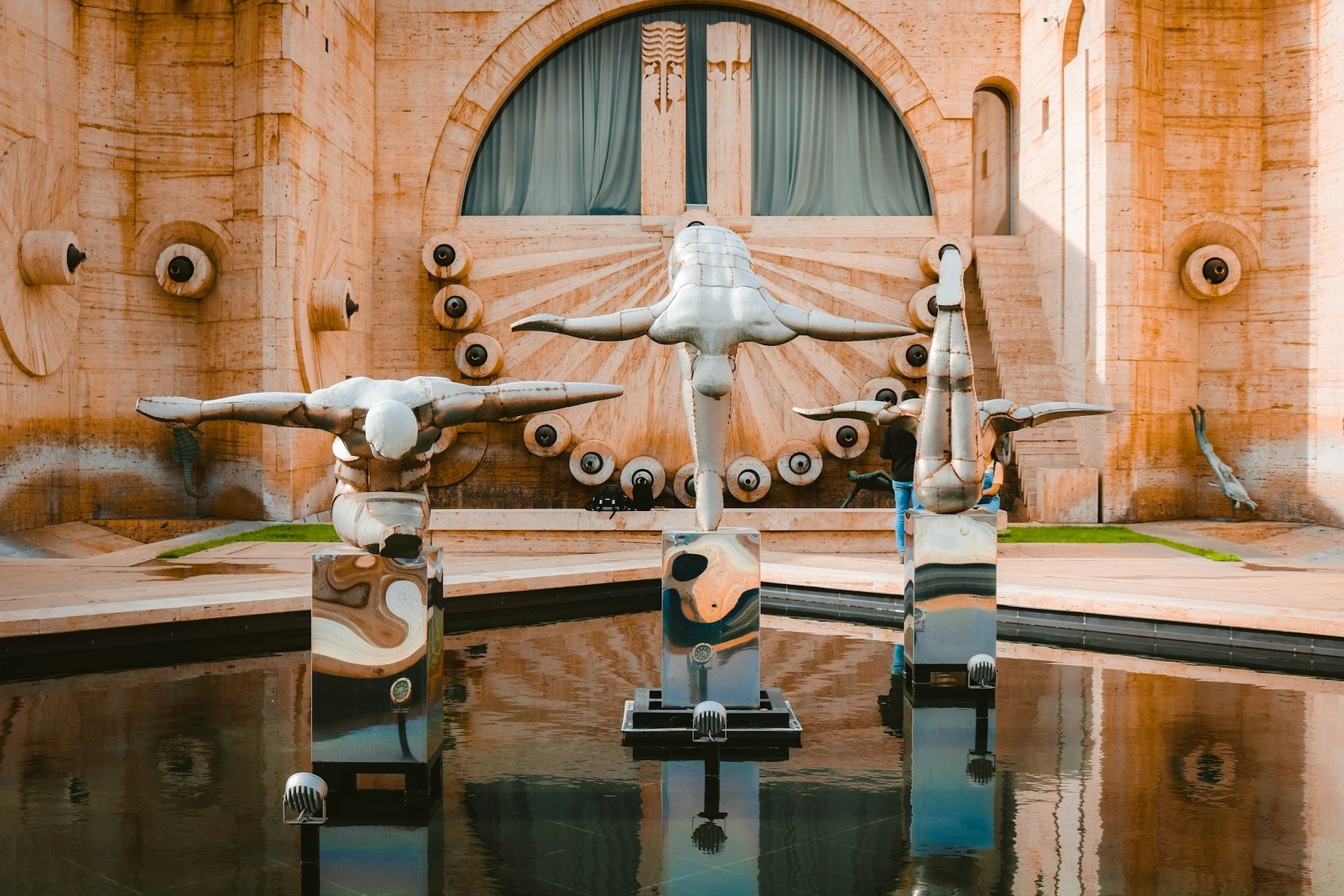
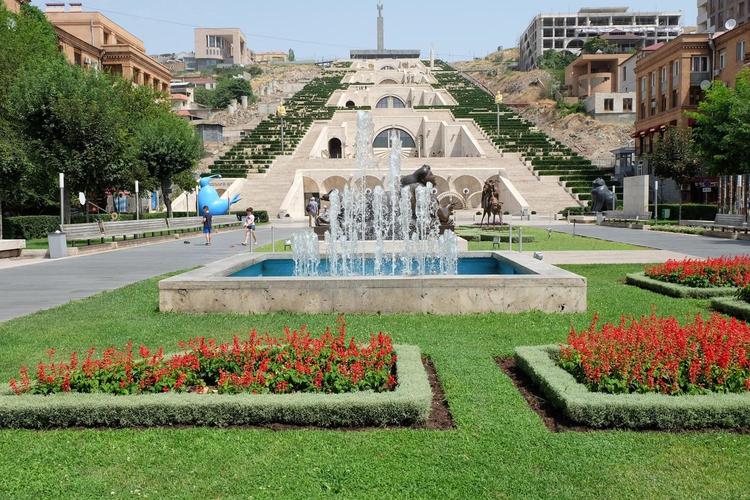
The Cascade is Yerevan’s most distinctive landmark: a monumental limestone staircase of 572 steps climbing the hillside north of the city centre, connecting the lower city to the Haghtanak Park above. The structure was designed as part of Tamanyan’s original 1924 urban plan but construction did not begin in earnest until the 1980s, was interrupted by the catastrophic 1988 Spitak earthquake and the subsequent chaos of the Soviet collapse, and was never fully completed – the top section remains unfinished to this day, which gives the whole thing an endearingly incomplete ambition.
What rescued the Cascade from being merely an impressive piece of Soviet infrastructure was the intervention of Armenian-American philanthropist Gerard Cafesjian, who transformed the interior and surrounding gardens into the Cafesjian Center for the Arts, filling it with his collection of contemporary art, sculpture and glass. The outdoor sculpture garden at the base contains works by Colombian artist Fernando Botero – his characteristic rotund bronze figures seated and standing around the terraces – and a rotating programme of other pieces. The interior galleries house permanent and temporary exhibitions. The escalators inside the structure operate during the day and are free to use, providing a practical alternative to the 572 steps for those whose enthusiasm for the view exceeds their enthusiasm for exercise.
The view from the top – over the pink city below, and on clear days across to the double-peaked snow cone of Mount Ararat – is the best in Yerevan, and the reason most people come.
Location: Northern end of Tamanyan Street, a 15-minute walk from Republic Square. Metro: Republic Square (line 1), then walk north.
Best time to visit: Sunset, for the view and the light on Ararat. The steps are a popular gathering place in the early evening. Mornings are quieter for the galleries.
Ticket prices: The steps and escalators are free. Cafesjian Center for the Arts gallery admission around AMD 1,000–2,000 depending on the exhibition. Website: cascadecomplex.am
Good to know: The Tamanyan Street at the base of the Cascade is one of the better stretches of restaurants and bars in Yerevan, and a natural place to continue the evening after the sunset view. In summer Ararat is frequently hazy; autumn (September–October) offers the clearest views.
3. The Matenadaran
The Matenadaran is the Mesrop Mashtots Institute of Ancient Manuscripts, and it sits at the top of Mashtots Avenue like a basalt fortress with very good intentions. The building, designed by chief city architect Mark Grigoryan and completed in 1957, is severe, monumental, and entirely appropriate as the outer shell for one of the most remarkable collections of manuscripts in the world. Grigoryan incorporated traditional Armenian architectural motifs into a decidedly Soviet-modernist frame; the statue of Mesrop Mashtots himself – the 5th-century scholar who invented the Armenian alphabet in 405 AD, specifically to make Armenian-language scripture possible – stands in front of the building, flanked by statues of his disciples and other luminaries of Armenian learning.
The collection holds over 23,000 manuscripts dating from the 5th century, the largest repository of Armenian manuscripts in existence, and is included in the UNESCO Memory of the World register. The texts cover history, geography, philosophy, medicine, mathematics, astronomy, law and theology, many of them surviving only because an Armenian translation was made when the originals were lost. Works by Hermes Trismegistus, Eusebius of Caesarea and Theon of Alexandria exist today only because Armenian scholars thought them worth copying. The illuminated manuscripts are extraordinarily beautiful: gold and lapis lazuli on vellum, depicting scenes from Armenian history alongside biblical narratives, executed with a precision that does not diminish after seventeen centuries.
The collection is the foundational institution of Armenian cultural identity, the physical proof that the nation survived every attempt to erase it. The Soviets nationalised it in 1920 and, to their credit, invested in preserving it. A new research building opened in 2011, quadrupling the exhibition space.
Location: 53 Mashtots Avenue, at the top of the avenue, 20-minute walk from Republic Square. Metro: Yeritasardakan (line 1). Website: matenadaran.am
Best time to visit: Weekday mornings. Closed Sundays and Mondays.
Ticket prices: Around AMD 1,500 adults. Sundays and Mondays are free (the museum is closed on Mondays, so in practice this means Sundays).
Good to know: An English-language audio guide is available and worthwhile; the context dramatically improves the experience of looking at manuscripts that are, without it, beautiful but opaque. The guided tours offered by the museum are also good. Allow at least two hours.
4. Tsitsernakaberd and the Armenian Genocide Museum
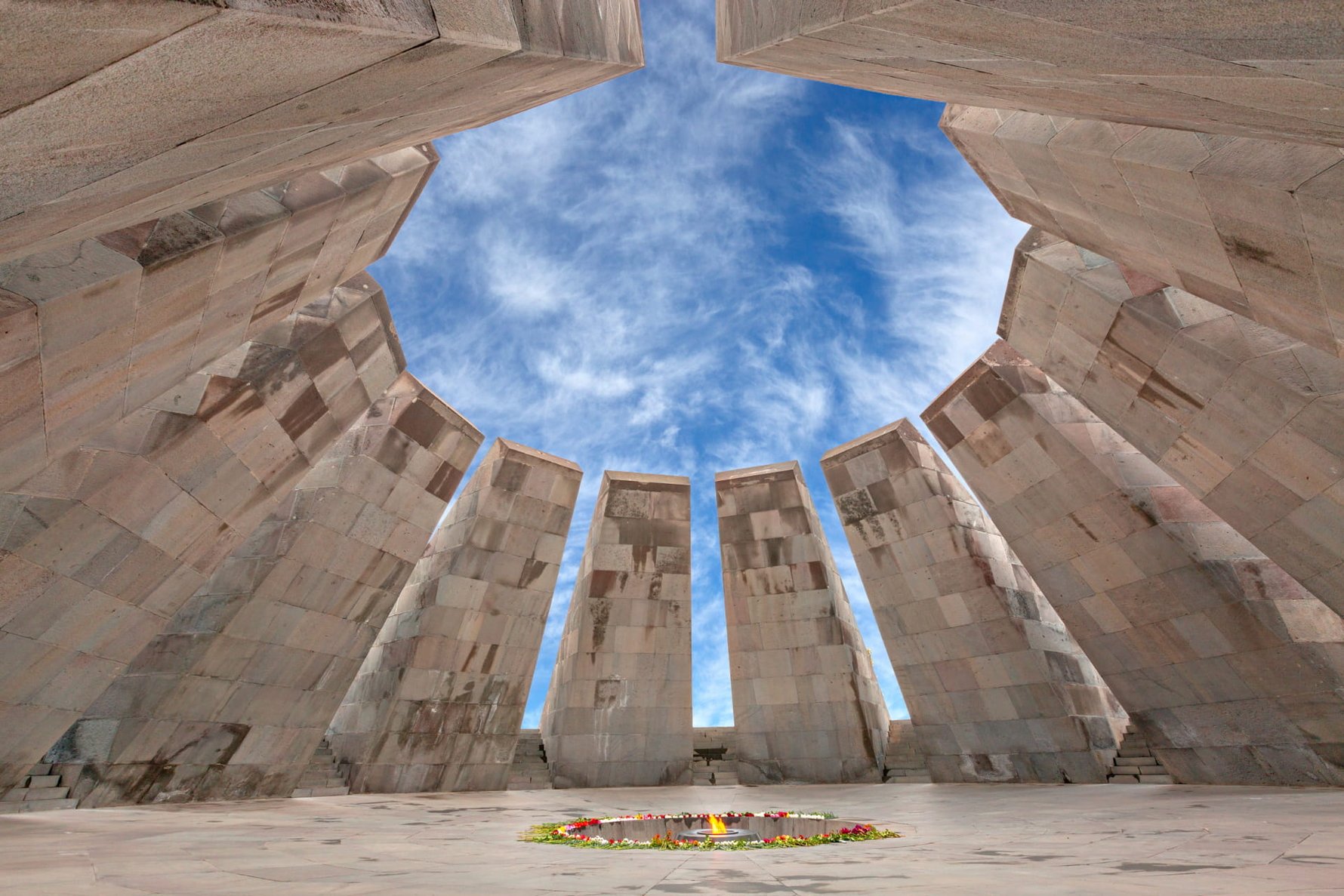
Tsitsernakaberd means Swallow’s Fortress, named for a bird that always returns to its nest even if its home has been destroyed. The memorial complex on this hill above western Yerevan was built in 1967, on the 50th anniversary of the worst phase of the Armenian Genocide, in response to mass demonstrations in 1965 – a remarkable piece of Soviet history in itself, given that public protest in the USSR more commonly ended with the protesters than with a government-sanctioned monument. The complex consists of three elements: a 44-metre stele representing the rebirth of the Armenian people; twelve inclined basalt pylons forming a circle around an eternal flame, one for each of the provinces of Ottoman Turkey where Armenians were massacred; and a 100-metre memorial wall inscribed with the names of the cities and villages where the killings occurred.
The adjacent Armenian Genocide Museum-Institute, built in 1995 on the 80th anniversary, is a serious, well-documented institution. The building is partly underground, its round inner construction described as an allegory of Dante’s circles; the roof is flat and provides a view over the Ararat valley. Inside, the permanent exhibition documents the genocide of 1.5 million Armenians by the Ottoman government between 1915 and 1923 through archival photographs, documents, maps, personal testimonies and diplomatic correspondence. The evidence is extensive; the presentation is measured rather than theatrical; and the effect is heavy. Every year on April 24th – Genocide Remembrance Day – thousands of Armenians walk to Tsitsernakaberd to lay flowers at the eternal flame.
Visiting here is not optional if you want to understand Yerevan. The genocide and its aftermath – the diaspora, the closed Turkish border, the presence of Mount Ararat on the coat of arms of a country that no longer contains it – run through everything in Armenia. The museum provides the context for all of it.
Location: Tsitsernakaberd Highway 8/8, on a hill west of the city centre. A 15–20-minute taxi ride from Republic Square (around AMD 1,000–1,500 via GG Taxi). Website: genocide-museum.am
Best time to visit: Any time; weekday mornings are the least crowded. April 24th involves enormous crowds but is also the most significant day to visit.
Ticket prices: Memorial complex free. Museum-Institute free.
Good to know: The museum is open Tuesday to Sunday, 10:00–17:00 (closed Monday). Allow at least two hours for the museum; more if you wish to spend time at the memorial. The experience is emotionally significant; give yourself time afterwards.
5. The Vernissage Market
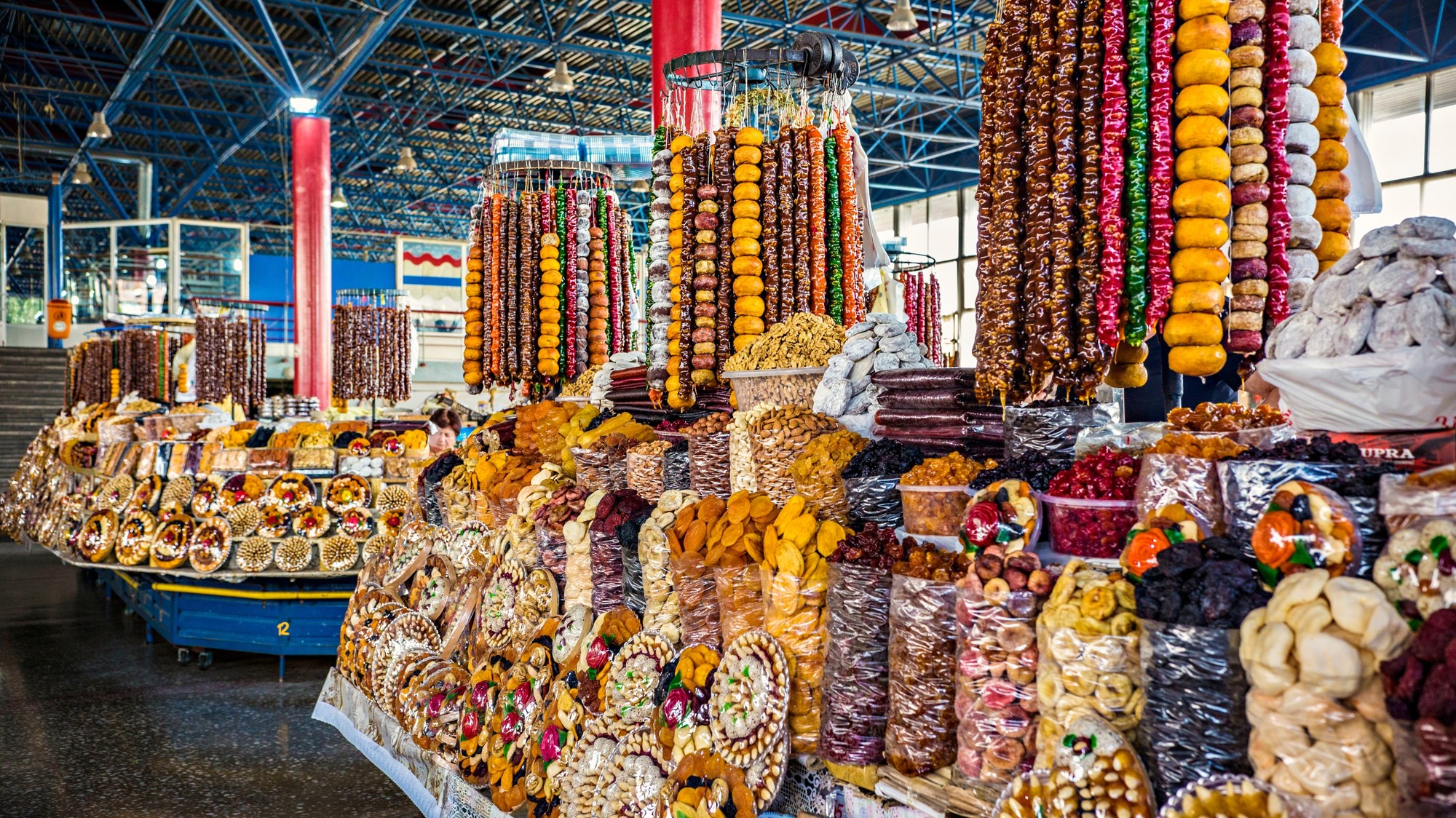
The Vernissage is a weekend open-air market held in the park behind the History Museum, and it is the best place in Yerevan to buy almost anything you are likely to want to take home. The name is French – a vernissage being an art exhibition opening – and reflects the market’s original character as an outlet for Armenian artists and craftspeople, which it retains alongside a considerable quantity of everything else.
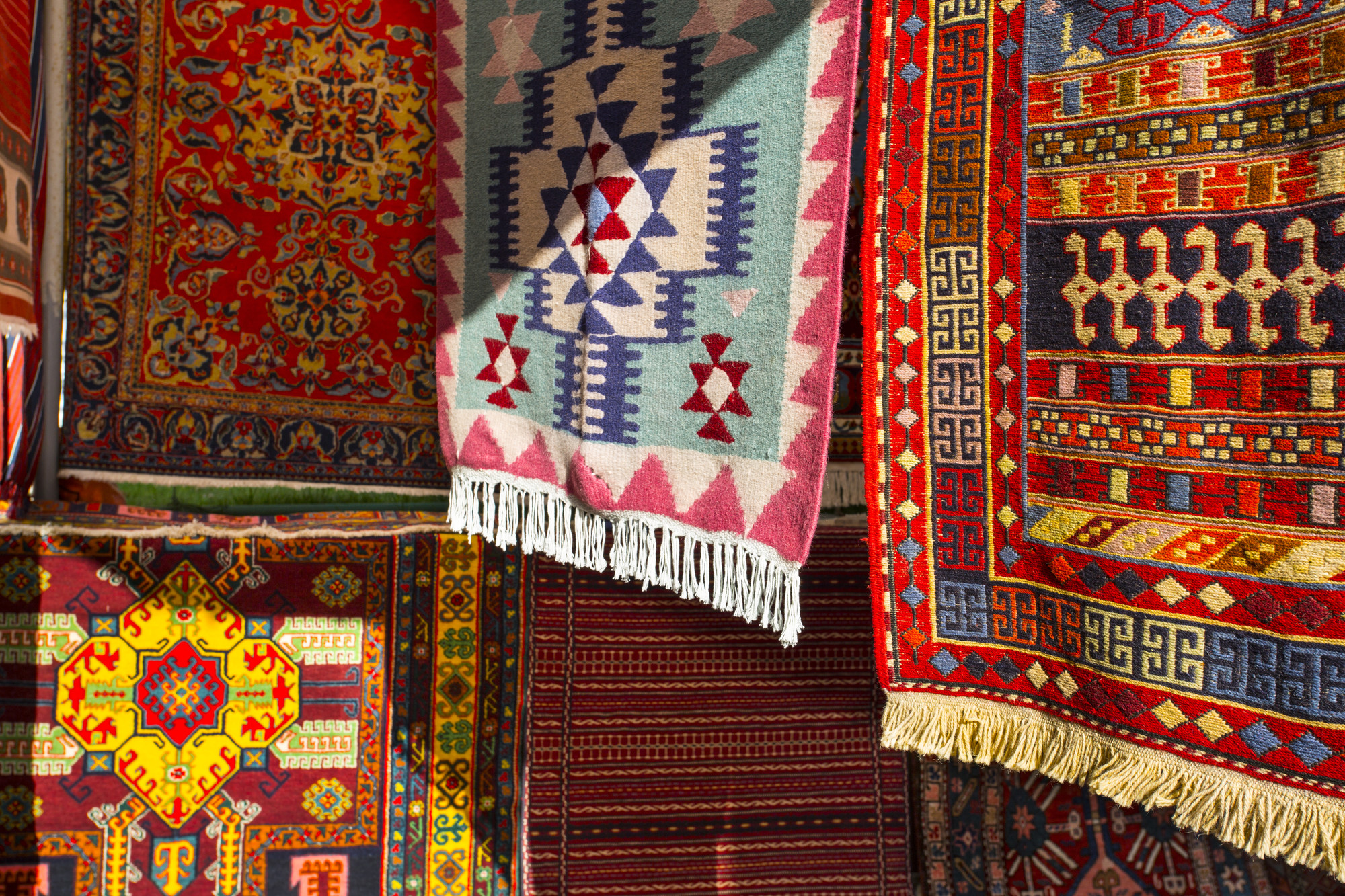
The market divides, roughly, into three categories. The arts and crafts section sells Armenian carpets and kilims (some antique, most not), khachkar cross-stone carvings, ceramics, jewellery in silver and semi-precious stones, lacework, woodwork and paintings by Armenian artists past and present. The antiques section covers Soviet memorabilia, coins, stamps, old cameras, military medals and the sort of objects that end up in flea markets when the people who owned them are no longer around. The souvenir section is the souvenir section. Quality and price vary considerably across all three; bargaining is normal in the first two categories, less so in the third.
The best time to go is Sunday morning, when the market is at its fullest and the antiques section is liveliest. Saturday is also good. The market does not operate on weekdays.
Location: Khanjyan Street, behind the History Museum building, Republic Square. Metro: Republic Square (line 1).
Best time to visit: Sunday mornings from around 09:00–10:00 for the best selection. The market winds down by late afternoon.
Ticket prices: Free to browse. Bring cash; card payment is not generally available.
Good to know: The Vernissage is also the main outlet for Armenian brandy at retail prices well below what you will pay in restaurants. A bottle of Ararat 5-star, the standard bearer of a tradition that goes back to 1887, makes a more interesting souvenir than most things.
6. Etchmiadzin and Zvartnots Cathedral
Etchmiadzin – more properly Vagharshapat, the city containing it, about 18 kilometres west of Yerevan – is the Vatican of the Armenian Apostolic Church: the seat of the Catholicos, the spiritual centre of Armenian Christianity, and the site of the first church in Armenia. The original cathedral was built in 303 AD, two years after King Tiridates III declared Christianity the state religion on the advice of Gregory the Illuminator, making it the oldest national cathedral in the world by most reckonings. The current structure dates largely from the 5th century with subsequent modifications; it was substantially renovated in the 17th century and has been in continuous use ever since.
The cathedral treasury holds objects of extraordinary significance: the Holy Lance alleged to be the spear that pierced Christ’s side (brought to Armenia by the Apostle Thaddeus and long kept at Geghard before being transferred here), a fragment of Noah’s Ark, and the hand of St Gregory the Illuminator. These claims are not presented with caveats. The complex also includes the Etchmiadzin Museum, with illuminated manuscripts, religious objects and historical artefacts. The site is a UNESCO World Heritage property.
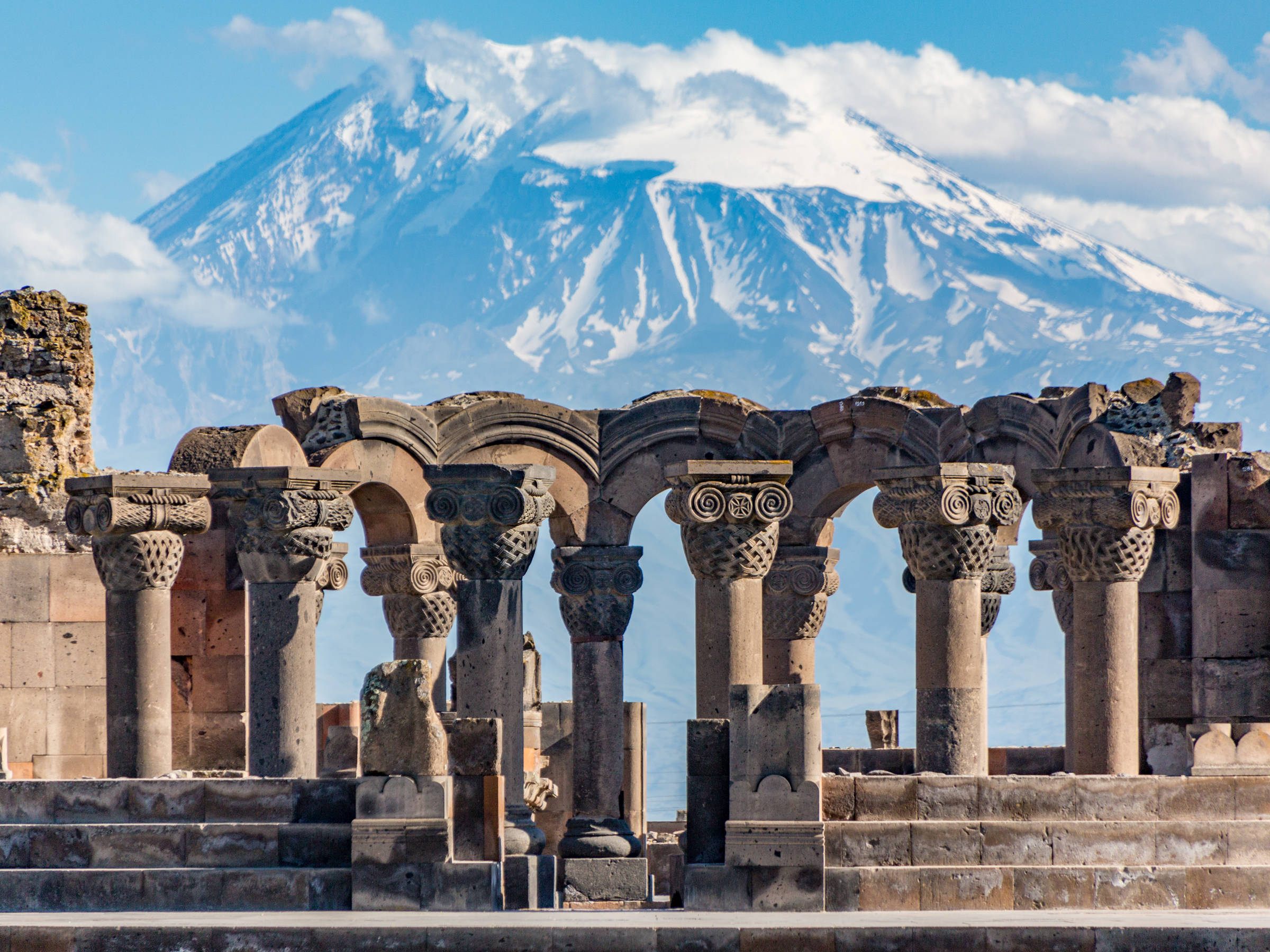
On the road back to Yerevan, the ruins of Zvartnots Cathedral are worth stopping for. Built in the 7th century under Catholicos Nerses III, it was one of the most ambitious architectural projects in early medieval Armenia – a circular, three-tiered cathedral that influenced Armenian ecclesiastical architecture for centuries before being destroyed by an earthquake around 930 AD. What survives is the foundation and some columns, reconstructed in outline, with a small but excellent museum of the carved stonework recovered from the site. The view from Zvartnots, with Ararat immediately behind the ruins, is one of the most photographed compositions in Armenia.
Location: Etchmiadzin is 18km west of Yerevan, reachable by marshrutka from Yeritasardakan Metro Station (AMD 300–500, 30–40 minutes). Zvartnots is on the road between Yerevan and Etchmiadzin, a short taxi ride from either. Etchmiadzin Cathedral website: etchmiadzin.am
Best time to visit: Sunday for the Divine Liturgy, with polyphonic chanting; weekday mornings for quiet exploration. Etchmiadzin is particularly moving during major religious festivals.
Ticket prices: Etchmiadzin Cathedral free. Treasury museum around AMD 1,500. Zvartnots archaeological site around AMD 1,500.
Good to know: Modest dress required throughout. The other early churches in Vagharshapat – Hripsime, Gayane and Shoghakat, all 7th century, all UNESCO-listed – are a short walk from the cathedral and together make a natural extension of the visit.
7. Khor Virap
Khor Virap means Deep Dungeon in Armenian, and the name refers to the underground pit in which Gregory the Illuminator was imprisoned for thirteen years by King Tiridates III, before curing the king of an illness and thereby converting him to Christianity in 301 AD. The king’s sister had a dream in which an angel told her that only the man rotting in the dungeon could save her brother; Tiridates was released, cured, and declared Armenia the world’s first officially Christian nation. The dungeon – a dark, damp stone pit about six metres deep and four and a half metres across – is accessible to visitors via a 27-rung iron ladder inside the St Gevorg Chapel. The ascent back up is the more difficult part.
The monastery complex itself, in its current form, dates largely from the 17th century, when Archimandrite David Virapetsi restored the buildings and revived monastic life after a long period of neglect. But the setting is what makes Khor Virap extraordinary. The monastery stands on a small hillock on the Ararat Plain, about 100 metres from the closed Turkish border, and looks directly at Mount Ararat rising 5,137 metres from the flat plain in front of it. The view – monastery, vineyards, the Araxes River marking the border, and the double summit of Ararat – is the canonical image of Armenia, the one that appears on every postcard, on the banknotes, on the coat of arms. In person it is, if anything, more arresting than the photographs suggest.
At the monastery, pilgrims release doves in the direction of Ararat. The doves presumably understand that the border is closed.
Location: 44km south of Yerevan, near the village of Pokr Vedi, Ararat Province. Reachable by shared taxi from Sasuntsi Davit Metro Station (AMD 500–700 to Ararat town, then 1.5km walk or short taxi to the monastery). Easiest by private taxi or organised tour from Yerevan (around AMD 8,000–12,000 return).
Best time to visit: Morning for the clearest views of Ararat; the mountain frequently clouds over by afternoon. Autumn and spring offer better visibility than summer.
Ticket prices: Free. The monastery is open daily 09:00–18:00 (extended hours during Easter and Christmas).
Good to know: Modest dress required; scarves available at the entrance. The descent into the dungeon pit requires some confidence in small, dark spaces and reasonable agility on a steep iron ladder. Khor Virap combines naturally with Noravank Monastery (further south) for a full-day excursion into the Vayots Dzor region.
8. Garni Temple and Geghard Monastery
The standard day trip east of Yerevan combines the only surviving Greco-Roman temple in the former Soviet Union with a medieval monastery partially carved from the living rock of a gorge, and manages to cover a journey from paganism to Christianity in about eight kilometres. Both are around 30–45 minutes from the city centre; the combination takes most of a day at a relaxed pace and is the most popular excursion from Yerevan for good reason.
Garni Temple sits on a triangular promontory above the Azat River gorge at 1,400 metres above sea level, looking like something a Greek architect misplaced on a long journey east. It was built in the 1st century AD by King Tiridates I in the Ionic order, conventionally identified as a temple to Mihr, the Armenian sun god. When Armenia converted to Christianity in 301, most pagan structures were demolished; Garni was spared, possibly because it was used as a royal summer residence. An earthquake in 1679 toppled it completely. Soviet archaeologists recovered the original stones and reconstructed the temple between 1969 and 1975 using the anastylosis technique – rebuilding with the original materials – making it simultaneously ancient and entirely 1970s. The result is honest about what it is and genuinely impressive regardless.
Eight kilometres further up the Azat valley, Geghard Monastery (Geghardavank, Monastery of the Spear) is a UNESCO World Heritage Site of an entirely different character. Founded in the 4th century at a sacred spring and substantially expanded in the 13th, the complex is built partly from cut stone and partly hewn directly from the cliff face, with rock-cut churches, chambers and khachkar-carved walls embedded in the surrounding mountain. The monastery takes its name from the Holy Lance that pierced Christ on the cross, brought to Armenia by the Apostle Thaddeus and kept here for around 500 years before being transferred to Etchmiadzin. The upper chambers, accessible by steep stairs, have acoustics that seem designed for polyphonic chanting, and if a service is in progress when you visit, this is the finest incidental music Armenia has to offer. The setting – at the end of a dead-end valley, cliff faces rising on three sides – gives the monastery an atmosphere of deliberate remoteness that the coach parties in the car park do not quite dispel.
Between the two, the Symphony of Stones is a natural formation of columnar basalt in the Azat gorge below Garni, shaped by volcanic cooling into hundreds of hexagonal columns resembling organ pipes. It is, genuinely, one of the more striking geological formations in the Caucasus and entirely worth the fifteen-minute walk from the gorge edge.
Location: Garni is 28km east of Yerevan; Geghard is 36km east. Marshrutka 266 from Gai Bus Station (Gai metro) to Garni, AMD 500. Taxi from Garni to Geghard AMD 3,000–5,000 return. Easiest by private taxi or tour from Yerevan (AMD 10,000–15,000 for both sites). Tour operators around Republic Square offer reliable daily group departures.
Best time to visit: Weekday mornings for Geghard before coach tours arrive. Garni is less sensitive to timing. Spring (April–May) for the gorge in blossom; winter for snow on the temple.
Ticket prices: Garni Temple AMD 1,500 adults. Geghard Monastery free. Symphony of Stones AMD 200 (small entrance to the gorge path).
Good to know: The lavash baking demonstration offered by various restaurants in Garni village is not pure theatrics – lavash is genuinely cooked in a tonir (underground clay oven) and the result is genuinely good. It makes a decent lunch stop. Geghard can be reached on foot from Garni via a moderately challenging 3–4 hour trail through the gorge, for those who want to earn the view.
9. The Blue Mosque
The Blue Mosque is the only functioning mosque in Yerevan, and its presence in the capital of the world’s first Christian nation is a more complex story than its peaceful blue-tiled courtyard might suggest. It was built in 1764 by Hussain Ali Khan, the Persian governor of the Erivan Khanate, and served Yerevan’s Muslim population until the Soviet period, when it was converted to a history museum and then a planetarium. It was restored and returned to use as a mosque in 1996 following restoration funded by the Iranian government, and now serves the small Iranian community and other Muslims resident in or visiting the city. The courtyard, with its blue-tiled prayer hall, fountain and garden, is one of the quietest and most beautiful spaces in central Yerevan, and is open to visitors of all backgrounds outside prayer times.
Location: Mashtots Avenue 12, a 10-minute walk south of Republic Square.
Best time to visit: Any day outside prayer times (Friday noon prayer is the main weekly service). The courtyard is accessible during daylight hours.
Ticket prices: Free. Modest dress required; shoes must be removed to enter the prayer hall.
Good to know: The Blue Mosque is an easy five-minute walk from the Vernissage market, making a natural combination. The restored tilework and the contrast of the blue dome against Yerevan’s characteristic pink stone is visually striking and worth seeking out specifically.
10. The Parajanov Museum
Sergei Parajanov (1924–1990) was one of the greatest film directors of the 20th century and, in the considered view of many critics, one of the most chronically underappreciated outside the Soviet world and a small number of Western film institutions that knew better. His 1965 film Shadows of Forgotten Ancestors and his 1969 masterpiece The Colour of Pomegranates – a visual biography of the 18th-century Armenian poet Sayat-Nova that contains almost no conventional narrative and approximately forty-five minutes of imagery that is among the most beautiful ever committed to film – made him a figure of international renown and profound inconvenience to Soviet authorities. He was imprisoned twice, spent four years in a forced labour camp, and was effectively banned from filmmaking for fifteen years.
The Parajanov Museum is housed in a 19th-century building in central Yerevan that Parajanov selected before his death, and it is a wild, exhilarating, maximalist experience that reflects his personality exactly. The collection includes collages, assemblages, drawings, dolls and found-object sculptures that he made obsessively throughout his life, many during his imprisonments, along with film stills, personal letters, costumes and objects from his films. The work is funny, eccentric, deeply strange, and formally inventive in ways that make the term “visual artist” feel inadequate. Even visitors who have not seen his films find the museum revelatory; visitors who have are unlikely to leave without stopping to reconsider everything they thought they knew about what art is for.
Location: 16 Dzoragyugh Street, Kanaker district, about 20 minutes by taxi from Republic Square (AMD 600–800). Website: parajanovmuseum.am
Best time to visit: Weekday mornings when it is uncrowded. Open Tuesday to Sunday.
Ticket prices: Around AMD 1,500 adults.
Good to know: The museum is slightly off the main tourist circuit and consequently quieter than it deserves to be. If you have any interest in cinema, visual art, or the relationship between artistic genius and Soviet repression, this is the most important museum in Yerevan. Watch The Colour of Pomegranates before or after visiting; either order works.