Copernicus Science Centre
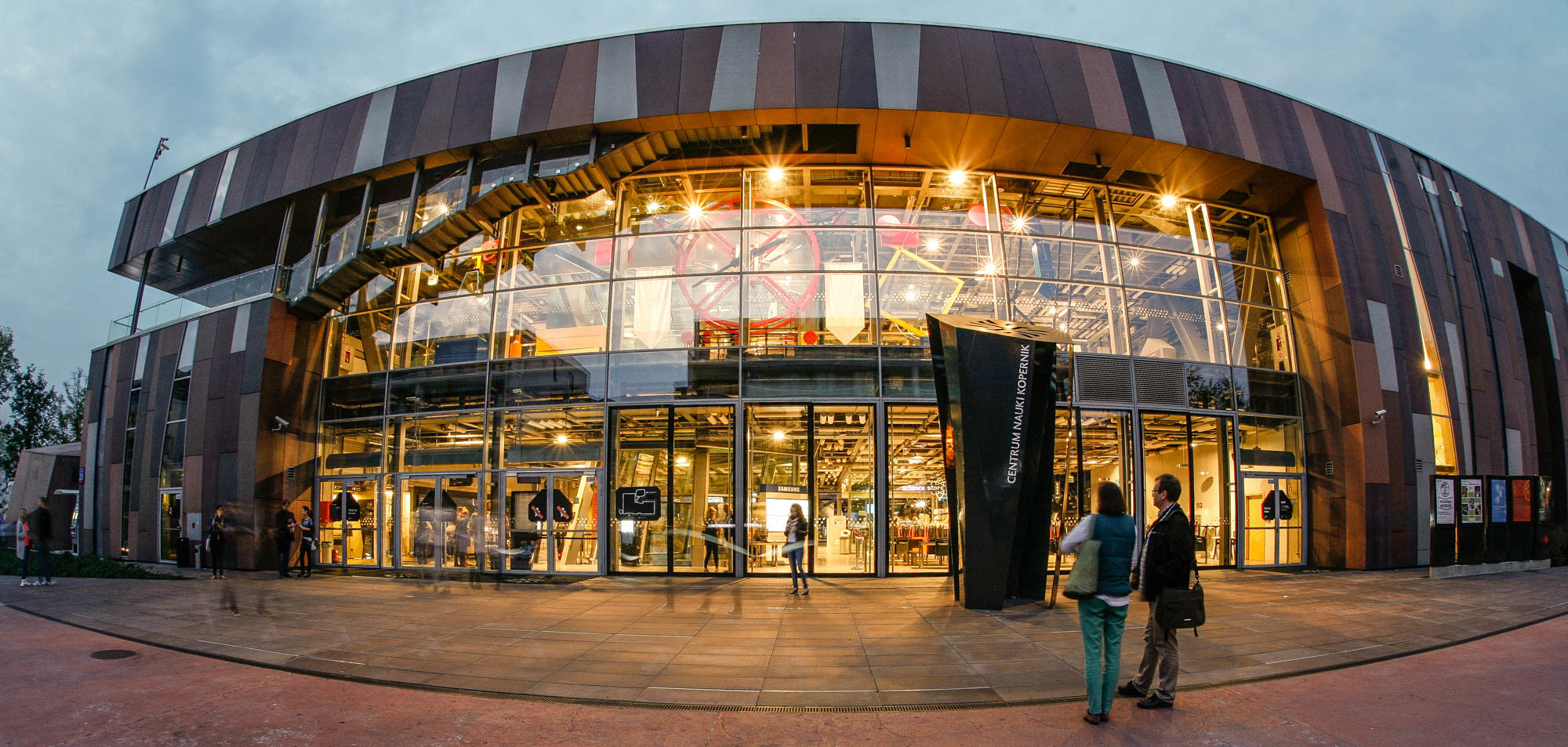
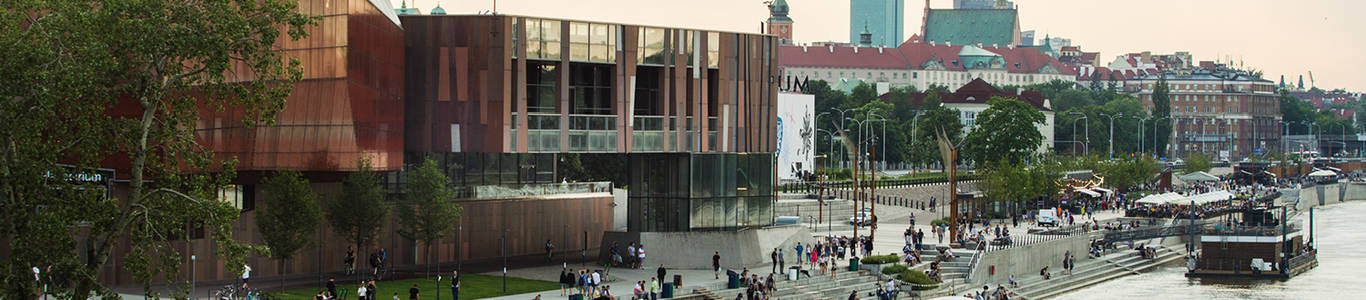
While the world’s attention was drawn towards the highly-visible, round-the-clock construction of Warsaw’s amazing new stadium on the left bank of the Wisła, work was also being carried out on the river’s right bank on a building that might well outshine the stadium once the Euro 2012 hoopla has died down. Built on time and on budget (well, just about), the Copernicus Science Centre (CSC) - - which stands almost directly opposite the stadium along the river - - looks set to become Warsaw’s top tourist attraction for years to come.
Getting there
The centre can be found in the shadow of the Swietokrzyski Bridge on the banks of the Wisła River. Served by buses 102, 105, 118, 128 and 162, a journey to the CSC from the centre of Warsaw should take around 10 minutes. Buses will drop you at the Biblioteka Uniwersytecka stop, requiring a short walk around the corner to the unmissable building. Alternatively visit the ‘About us’ section of the English language website www.kopernik.org.pl, where you can get directions by car, by bus, or by foot by typing in your address.
Introduction
A rare example of European Union funding being used in a genuinely visionary way, the CSC is many things, not least (in the words of Poland’s Education Minister shortly before the opening) an attempt to restate the case for science and research in what can still be an intensely and deeply religious country. In that sense, giving the centre the name of the man who did so much to end the church’s monopoly of education in the first place is little short of a masterstroke.
Not that Copernicus did it all his own way; in the aftermath of the tragic death of Polish President Lech Kaczynski in April 2010 the president’s political party, PiS (Law & Justice), lobbied heavily to have the CSC renamed for him. The request was politely, respectfully, refused.
Given the stunning, futuristic sight – all glass and steel - - that greets visitors at the €93 million (half of which came from the EU, half of which came from the Polish taxpayer) CSC today, it’s a little ironic that the building’s origins are slightly more humble. The idea of creating the centre first took shape at the informal Science Picnics - - outdoor science, culture and art events aimed at the general public that have been held in Warsaw’s Rynek Nowego Miasta since 1997. The idea of the picnics (which were organised by Polskie Radio, strangely enough) was to bring popular science to the masses through hands-on experiments. Each year, as the numbers of scientists, universities, schools and members of the general public taking part grew, it became clear that there was an expanding interest in science in Warsaw, while the large numbers of foreign visitors who came to the events suggested that there was an untapped market in the region for hands-on scientific learning. Construction of the CSC was the natural next step, though it took a number of years to secure the site and funding.
Given the ad hoc Science Picnic origins of the CSC, it is no surprise that the museum (if we can call it that) was opened in a slightly ad hoc, it-will-be-all-right-eventually fashion. The opening show, Wielki Wybuch (The Big Bang), directed by Peter Greenaway and Saskia Boddeke, was a little underwhelming (and at certain points quite bizarre), while visitors to the centre in the first couple of weeks were greeted by an annoyingly large number of ‘this exhibit is temporarily out of order’ signs. Yet throughout last year as the CSC rolled out sections of the museum to the public it quickly became clear that this is unquestionably the very best science centre in Europe, and today visitors can enjoy a fully completed attraction.
Visiting Today
Arriving at the main doors at the north end of the building, you will be met by the centre’s very own Robothespian. A fully programmable humanoid robot, the Robothespian was developed in Britain by the Eden Project in Cornwall. He speaks, interacts, mimics and performs, and visitors can prompt him to make a number of sounds, speech and movements by the adjacent control panel. This will keep the kids busy while you queue at the central ticket desk where you will be given a set of credit card-style entrance passes. You should keep hold of these as not only do they allow you to enter and exit the building throughout the day, but they will also become your ID card as you move through the exhibitions, many of which allow you to record your results (which are stored and then emailed to you afterwards).
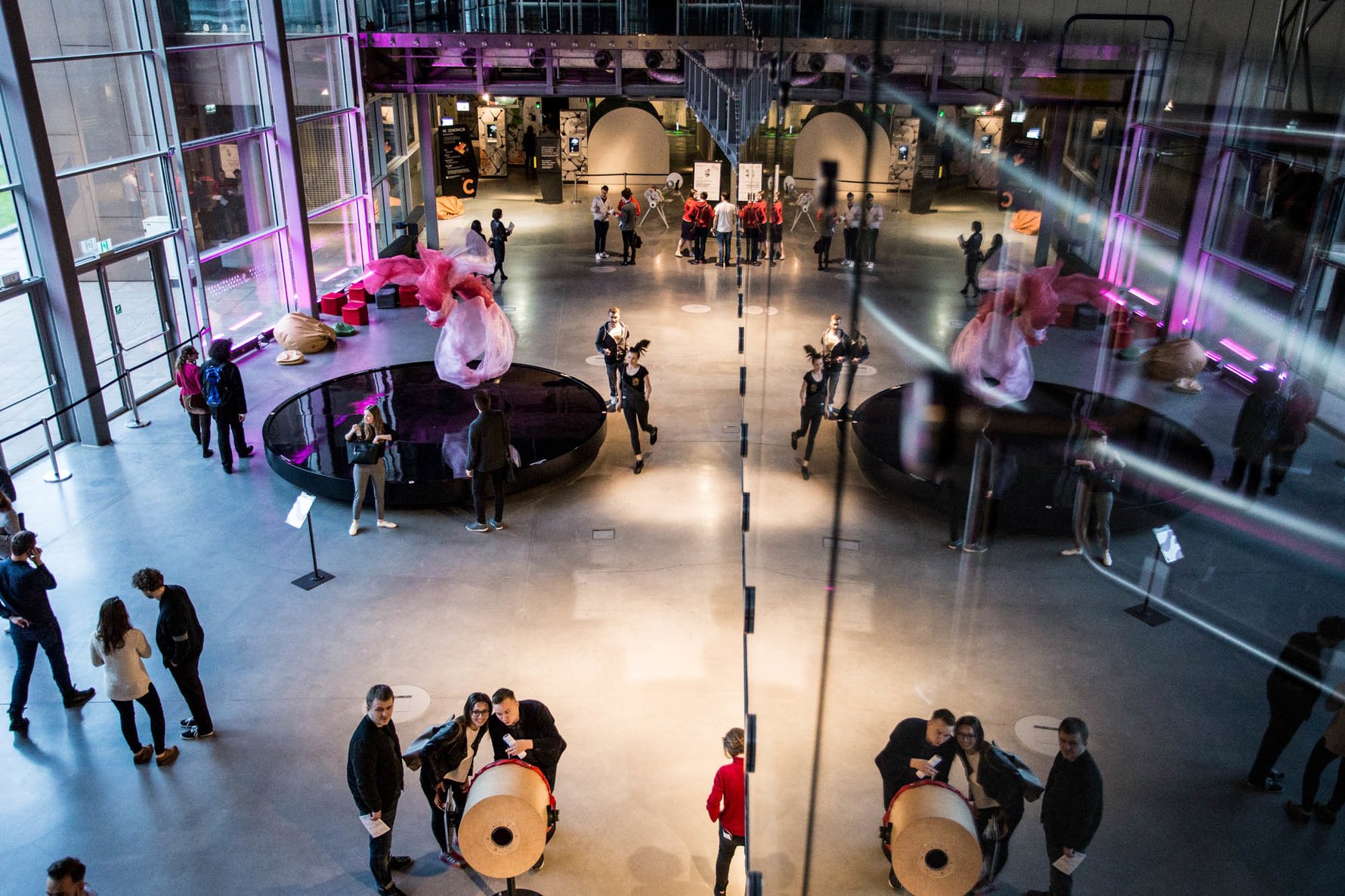
Passing through the barriers, the first display you come to is a huge swinging ball. The ball swings backwards and forwards, periodically knocking over mallets that strike a bell as they fall. These bells are lined up around the swinging ball in a circle and although the ball swings in a straight line backwards and forwards, the knocking over of the mallets proves that the earth is constantly, actually rotating.
Having admired this, the interactive exhibitions begin. First of all, register your card with your name and email address at one of the terminals so that you will be identified as you progress through the CSC. You currently have over 350 experiments to visit, spread over two floors and six areas: Roots of Civilisation, Bzzz! (for preschool children) and RE:generation (for young adults) on the ground floor, and Humans and the Environment, LightZone and On the Move located upstairs. Each area demonstrates a range of phenomenon by way of experiments, button pressing, quizzes and in some cases physical exertion with the aim of helping you to discover the secrets of the world around us.
Not only will you learn an awful lot, but the place is great fun, especially if you are (or are with) a child. There’s a genuine flying carpet, you can pilot a spaceship, take a picture of your own eye (and then try to recognise it among the others photographed that day), discover who or what is living next to us in a major city, get involved in some crime solving or - and this was our favourite - try to outdo animals at their own game by out-hanging an Orangutan or beating a hippo in a race at the arena. There’s plenty to do and you can easily spend a whole morning or afternoon there trying everything, particularly if you stumble on a day free of the ever-present school groups.
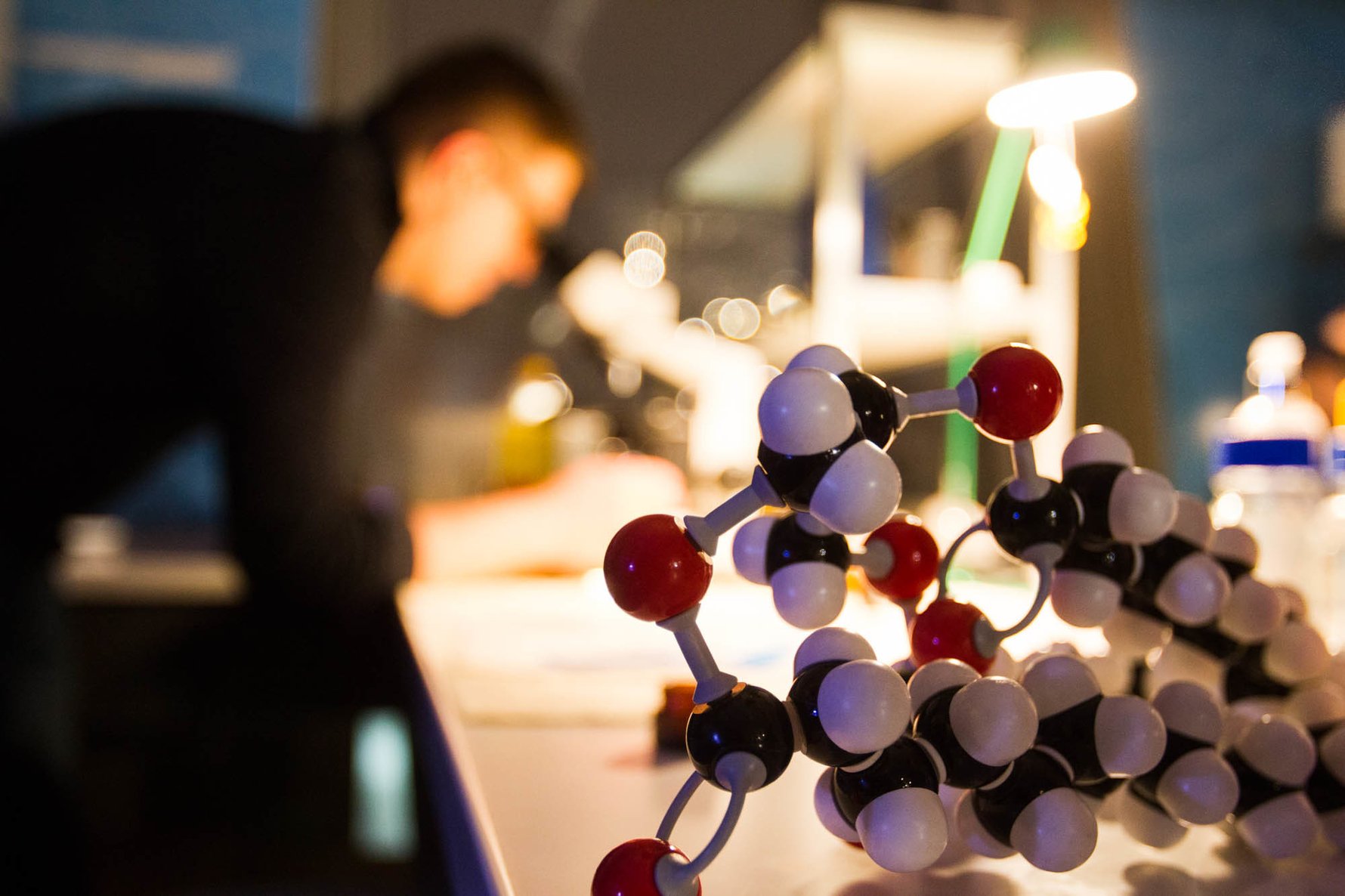
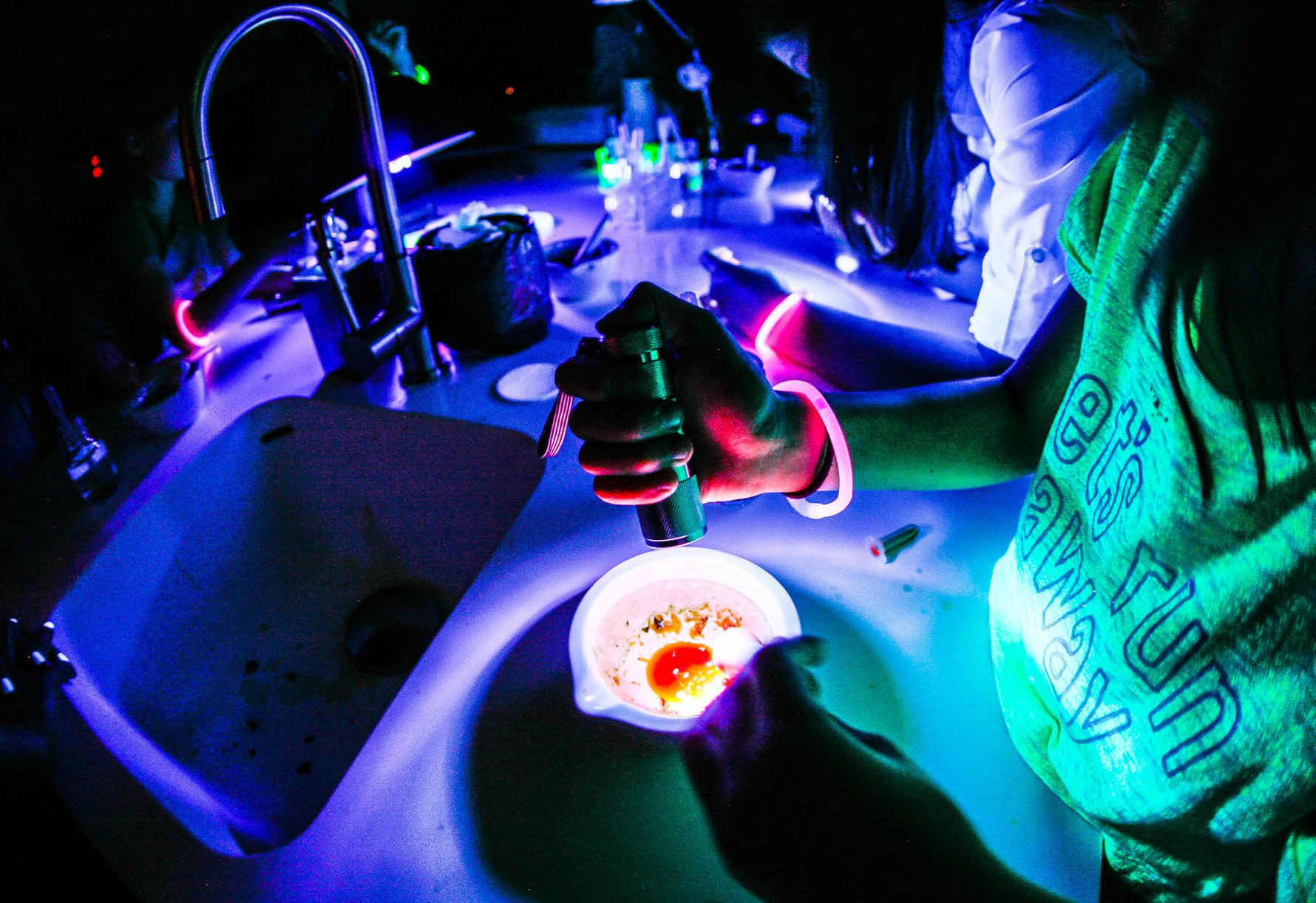
Additional hands-on activities geared especially towards teens can be found in the Re: generation Zone, where visitors over 14 can experiment with psychology, sociology, economics or biotechnology through 80 multimedia exhibits – we swear we’ve never seen teens more effusive and excited as they tried to identify a monkey’s emotions, or finish lyrics to popular songs. There’s also four interactive labs dealing with chemistry, biology, physics and robotics that offer supervised experiments for kids over 13 (instructions are in Polish however) and an outdoor Discovery Park filled with installations lining the Wisła.
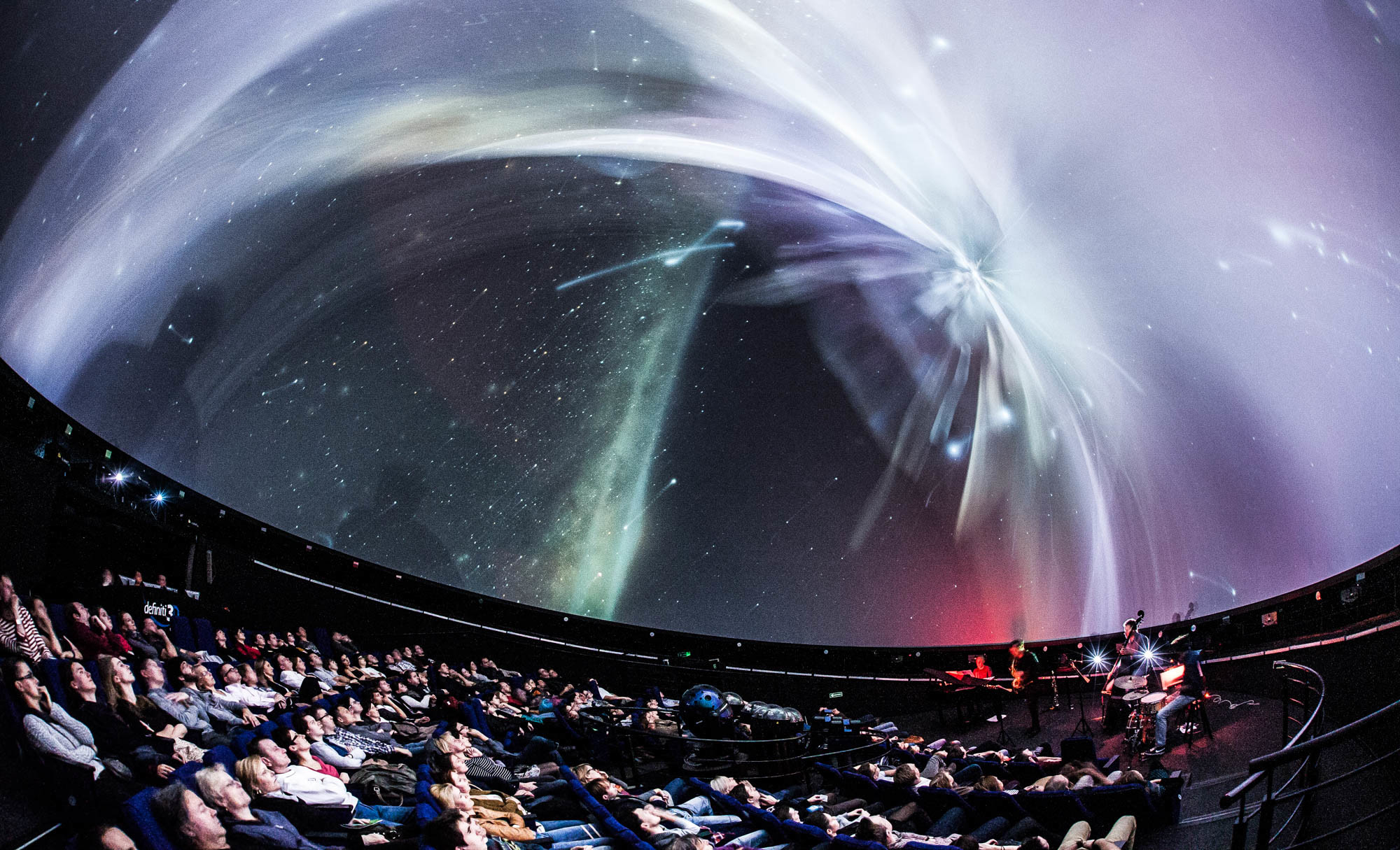
The attached Heavens of Copernicus planetarium adds yet another option for visiting science buffs as it immerses attendees in 20 million stars thanks to a giant spherical screen that surrounds the 137 seats on all sides. The seven different 40-minute films (which require headsets for English) are geared towards different age ranges and interests – tots will delight in the Sesame Street show “One World, One Sky” while teens will prefer the more mysterious “Black Holes: Journey into the Unknown.” Before each film is a 20-minute live show (which is unfortunately only in Polish, though still interesting due to the impressive venue) about the skies over Warsaw that changes with the seasons. School groups dominate the Planetarium’s seats during daytime hours, and booking tickets in advance is highly recommended – when we dropped in only one of the eight daily shows had available space.
It’s easy to declare that the centre is well-worth a few hours of your time and will impress you with its design and range of experiments. Factor in the main floor cafeteria and the packed Science Store (potentially the best spot for children’s gifts in Warsaw) and it’s a one-stop day of fun. The staff is keen, very helpful and English-speaking; we saw many interacting happily with kids and helpfully controlling the chaos. If there is one gripe we have it would concern the Robotics show, which can be found inside the Roots of Civilisation section. The 20-minute show we saw told an embarrassingly bad story about a robot that wants to become human in order to marry a princess, and used language that seemed slightly out of reach for young children. The various accents can also be baffling (one robot sounds like a drunken Sean Connery) and the robots themselves are like stiff mannequins that move back and forth on a small track. Completely skippable.
Considering the size and scope of this operation, one minor flaw in an otherwise awe-inspiring complex is a feat unseen in Warsaw. And if truth be told, it would have been very hard to imagine such a potentially world-class visitor attraction being built in this city just a few years ago. Yet here it is, which ought to be worth an exhibit in and of itself about how the impossible can become possible.
While the world’s attention was drawn towards the highly-visible, round-the-clock construction of Warsaw’s amazing new stadium on the left bank of the Wisła, work was also being carried out on the river’s right bank on a building that might well outshine the stadium once the Euro 2012 hoopla has died down. Built on time and on budget (well, just about), the Copernicus Science Centre (CSC) - - which stands almost directly opposite the stadium along the river - - looks set to become Warsaw’s top tourist attraction for years to come.
Getting there
The centre can be found in the shadow of the Swietokrzyski Bridge on the banks of the Wisła River. Served by buses 102, 105, 118, 128 and 162, a journey to the CSC from the centre of Warsaw should take around 10 minutes. Buses will drop you at the Biblioteka Uniwersytecka stop, requiring a short walk around the corner to the unmissable building. Alternatively visit the ‘About us’ section of the English language website www.kopernik.org.pl, where you can get directions by car, by bus, or by foot by typing in your address.
Introduction
A rare example of European Union funding being used in a genuinely visionary way, the CSC is many things, not least (in the words of Poland’s Education Minister shortly before the opening) an attempt to restate the case for science and research in what can still be an intensely and deeply religious country. In that sense, giving the centre the name of the man who did so much to end the church’s monopoly of education in the first place is little short of a masterstroke.
Not that Copernicus did it all his own way; in the aftermath of the tragic death of Polish President Lech Kaczynski in April 2010 the president’s political party, PiS (Law & Justice), lobbied heavily to have the CSC renamed for him. The request was politely, respectfully, refused.
Given the stunning, futuristic sight – all glass and steel - - that greets visitors at the €93 million (half of which came from the EU, half of which came from the Polish taxpayer) CSC today, it’s a little ironic that the building’s origins are slightly more humble. The idea of creating the centre first took shape at the informal Science Picnics - - outdoor science, culture and art events aimed at the general public that have been held in Warsaw’s Rynek Nowego Miasta since 1997. The idea of the picnics (which were organised by Polskie Radio, strangely enough) was to bring popular science to the masses through hands-on experiments. Each year, as the numbers of scientists, universities, schools and members of the general public taking part grew, it became clear that there was an expanding interest in science in Warsaw, while the large numbers of foreign visitors who came to the events suggested that there was an untapped market in the region for hands-on scientific learning. Construction of the CSC was the natural next step, though it took a number of years to secure the site and funding.
Given the ad hoc Science Picnic origins of the CSC, it is no surprise that the museum (if we can call it that) was opened in a slightly ad hoc, it-will-be-all-right-eventually fashion. The opening show, Wielki Wybuch (The Big Bang), directed by Peter Greenaway and Saskia Boddeke, was a little underwhelming (and at certain points quite bizarre), while visitors to the centre in the first couple of weeks were greeted by an annoyingly large number of ‘this exhibit is temporarily out of order’ signs. Yet throughout last year as the CSC rolled out sections of the museum to the public it quickly became clear that this is unquestionably the very best science centre in Europe, and today visitors can enjoy a fully completed attraction.
Visiting Today
Arriving at the main doors at the north end of the building, you will be met by the centre’s very own Robothespian. A fully programmable humanoid robot, the Robothespian was developed in Britain by the Eden Project in Cornwall. He speaks, interacts, mimics and performs, and visitors can prompt him to make a number of sounds, speech and movements by the adjacent control panel. This will keep the kids busy while you queue at the central ticket desk where you will be given a set of credit card-style entrance passes. You should keep hold of these as not only do they allow you to enter and exit the building throughout the day, but they will also become your ID card as you move through the exhibitions, many of which allow you to record your results (which are stored and then emailed to you afterwards).
Passing through the barriers, the first display you come to is a huge swinging ball. The ball swings backwards and forwards, periodically knocking over mallets that strike a bell as they fall. These bells are lined up around the swinging ball in a circle and although the ball swings in a straight line backwards and forwards, the knocking over of the mallets proves that the earth is constantly, actually rotating.
Having admired this, the interactive exhibitions begin. First of all, register your card with your name and email address at one of the terminals so that you will be identified as you progress through the CSC. You currently have over 350 experiments to visit, spread over two floors and six areas: Roots of Civilisation, Bzzz! (for preschool children) and RE:generation (for young adults) on the ground floor, and Humans and the Environment, LightZone and On the Move located upstairs. Each area demonstrates a range of phenomenon by way of experiments, button pressing, quizzes and in some cases physical exertion with the aim of helping you to discover the secrets of the world around us.
Not only will you learn an awful lot, but the place is great fun, especially if you are (or are with) a child. There’s a genuine flying carpet, you can pilot a spaceship, take a picture of your own eye (and then try to recognise it among the others photographed that day), discover who or what is living next to us in a major city, get involved in some crime solving or - and this was our favourite - try to outdo animals at their own game by out-hanging an Orangutan or beating a hippo in a race at the arena. There’s plenty to do and you can easily spend a whole morning or afternoon there trying everything, particularly if you stumble on a day free of the ever-present school groups.
Additional hands-on activities geared especially towards teens can be found in the Re: generation Zone, where visitors over 14 can experiment with psychology, sociology, economics or biotechnology through 80 multimedia exhibits – we swear we’ve never seen teens more effusive and excited as they tried to identify a monkey’s emotions, or finish lyrics to popular songs. There’s also four interactive labs dealing with chemistry, biology, physics and robotics that offer supervised experiments for kids over 13 (instructions are in Polish however) and an outdoor Discovery Park filled with installations lining the Wisła.
The attached Heavens of Copernicus planetarium adds yet another option for visiting science buffs as it immerses attendees in 20 million stars thanks to a giant spherical screen that surrounds the 137 seats on all sides. The seven different 40-minute films (which require headsets for English) are geared towards different age ranges and interests – tots will delight in the Sesame Street show “One World, One Sky” while teens will prefer the more mysterious “Black Holes: Journey into the Unknown.” Before each film is a 20-minute live show (which is unfortunately only in Polish, though still interesting due to the impressive venue) about the skies over Warsaw that changes with the seasons. School groups dominate the Planetarium’s seats during daytime hours, and booking tickets in advance is highly recommended – when we dropped in only one of the eight daily shows had available space.
It’s easy to declare that the centre is well-worth a few hours of your time and will impress you with its design and range of experiments. Factor in the main floor cafeteria and the packed Science Store (potentially the best spot for children’s gifts in Warsaw) and it’s a one-stop day of fun. The staff is keen, very helpful and English-speaking; we saw many interacting happily with kids and helpfully controlling the chaos. If there is one gripe we have it would concern the Robotics show, which can be found inside the Roots of Civilisation section. The 20-minute show we saw told an embarrassingly bad story about a robot that wants to become human in order to marry a princess, and used language that seemed slightly out of reach for young children. The various accents can also be baffling (one robot sounds like a drunken Sean Connery) and the robots themselves are like stiff mannequins that move back and forth on a small track. Completely skippable.
Considering the size and scope of this operation, one minor flaw in an otherwise awe-inspiring complex is a feat unseen in Warsaw. And if truth be told, it would have been very hard to imagine such a potentially world-class visitor attraction being built in this city just a few years ago. Yet here it is, which ought to be worth an exhibit in and of itself about how the impossible can become possible.
Admission 22/13-16zł, family ticket 57zł. (2adults+2children). Use of the labs is an extra 18/14zł and can only be used by non-school visitors on the weekends. Note that you must buy a separate ticket for the Planetarium. Admission 18zł/11zł, family ticket 47zł.
YOUR COMMENTS
Open:
Open 09:00 - 18:00, Sat, Sun 10:00 - 19:00. Closed Mon.Last entrance 60 minutes before closing.
Note that the Planetarium has different opening hours. Open 09:30 - 20:00, Fri, Sat, Sun 09:30 - 21:30. Closed Mon.
Address:
ul. Wybrzeże Kościuszkowskie 20Phone:
(+48) 22 596 41 00www:
http://www.kopernik.org.plView in maps.inyourpocket.com